

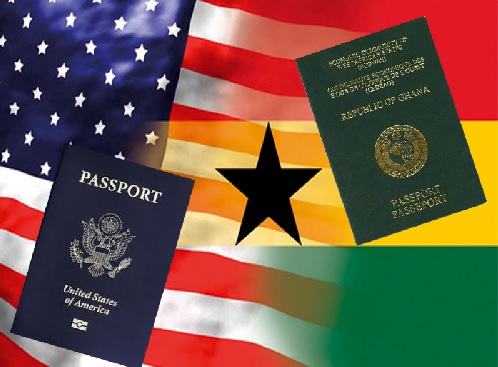
Do the laws of America apply in Ghana?
Dear Mirror Lawyer, my six-year-old granddaughter, Elsie, is fascinated by the concept of law, equality and justice for all. Last week, she asked me an intriguing question. 'Granny, do the laws of America apply in Ghana?'
I laughed with joy, wondering how a six-year-old could ask such an intelligent question. Interestingly,
I too, do not know the answer to this question because it appears that we have a lot of similarities in our legal system.
Is this a coincidence, or do the laws of the US actually apply in Ghana?
Sabina, Accra.
Dear Sabina, you have a very bright granddaughter. This is a brilliant question. The laws of Ghana can be determined by identifying the sources of law.
The primary sources of law in Ghana are stated under Article 11 of the 1992 Constitution and are generally known as the hierarchy of laws.
Article 11 states that the laws of Ghana comprise the Constitution of Ghana, which is the supreme law of the land.
This is followed by Acts of Parliament, which are legislation or enactments made by or under the authority of Parliament.
Orders, rules and regulations made by any person or authority under a power conferred by the Constitution or Act of Parliament also form part of the laws of Ghana. These are referred to as subsidiary legislation.
Existing laws also form part of the primary sources of law in Ghana. Article 11(4) defines existing law as the written and unwritten laws of Ghana as they existed immediately before the coming into force of the constitution.
These include previous Acts, Decrees by military governments, laws or statutory instruments. Necessary alterations can be made to these laws to conform to the Constitution as stated under Article 11(6).
The common law of Ghana is also a primary source of Law in Ghana. Article 11(2) defines the common law of Ghana as comprising the rules generally known as the common law, the rules generally known as the doctrines of equity and the rules of customary law, including those determined by the superior courts of judicature.
Rules of customary law are the rules of law that, by custom, apply to particular communities in Ghana.
The laws determined by the superior courts of judicature are what are commonly called judge-made laws or judicial precedent. They consist of binding judgments delivered by the courts in this country.
Secondary sources of law are writings about law. These include textbooks, articles, journals, legal periodicals, law reform documents, scholarly works, and websites.
Because Ghana is a sovereign nation with its Constitution and legislature, laws enacted in other countries, such as the United States of America, do not apply in Ghana.
If a law passed in another country is deemed beneficial to us, it will not take effect in Ghana until our Parliament domesticates it or passes it into law.
However, under circumstances where there's no law on a particular matter, the courts in this country could refer to a foreign judgment based on that foreign law, adopt and apply it as a persuasive authority in the current globalised world.
Until a court makes such a bold decision, foreign laws and judgments are still not binding in this country.
