
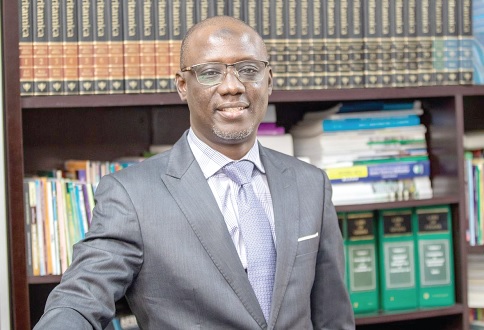
Improving reading culture: Library Authority bets on techonlogy to win younger generation
Ghana’s once-proud reading tradition is steadily eroding, alarming educators, parents, and policymakers alike.
Across the country, libraries sit half-empty and bookshops struggle to survive as more people, especially the young, turn to quick online content and social media for information and entertainment.
Students increasingly depend on the Internet and associated online materials, while storybooks have been almost entirely replaced by television and smartphones.
This decline threatens more than leisure habits. Reading develops comprehension, critical thinking, and creativity skills vital for national development in an information-driven economy.
When sustained engagement with books wanes, literacy levels stagnate, classroom performance suffers, and innovation slows.
The Ghana Library Authority (GhLA) operates 139 libraries nationwide, and although woefully inadequate for a nation looking to drive development through education, information access and lifelong learning, book stocks have climbed to over 1.28 million.
Still, many students admit they read only when required for exams.
Reviving Ghana’s reading culture will require coordinated action: affordable books, modern library infrastructure, parental involvement, and national campaigns that celebrate the written word.
Without urgent intervention, the nation risks raising a generation less equipped to think critically and compete globally.
Digital transformation
This is why the GhLA is responding by first harnessing the very technology reshaping reading habits.
The Acting Executive Director of the GhLA, Ziblim Alhassan Betintiche, said technology is central to reviving the country’s waning reading culture and ensuring that libraries remain relevant to young people.
In an exclusive interview with the Daily Graphic, he explained that today’s children were naturally drawn to gadgets, phones, tablets, and computers, so the Authority was deliberately using digital tools to meet them where they are.
He said the GhLA had developed a digital library app that allowed anyone, from students to parents, to access thousands of reading and research resources without visiting a physical branch.
“Even in your bedroom or kitchen, you can just go online and access resource material,” he added.
Mr Betintiche further stated that the Authority also operated mobile library vans fitted with digital resource materials and internet access, taking books and e-learning tools to remote areas without permanent libraries.
“Currently, a team is deploying AI training and coding programmes in some of our libraries, and even uploading examination past questions and examiners' reports for children to prepare themselves well for examinations and pass their exams very well,” he said.
Mr Betintiche stressed that these innovations transformed libraries from static book repositories into dynamic hubs for lifelong learning, ensuring inclusion for all, especially rural learners, the physically challenged, and families unable to afford textbooks, while making reading attractive and interactive for the next generation.
Sustainability
Mr Betintiche said the GhLA’s new management aimed to transform the country’s library system through stronger funding mechanisms and partnerships.
He stressed that the current 139 libraries were far too few for a population of about 33 million and that simply relying on central government financing would not close the gap.
To sustain growth, the team, he said, was lobbying Corporate Ghana and international partners such as UNICEF, Book Aid International, Books for Africa, the Electronic Information for Libraries (EIFL) and the Du Bois Centre to adopt libraries, provide textbooks, and support digital initiatives.
“We continue to contact them to support our activities and to take the library services to every part of this country. A country like Ghana, the Black Star of Africa, we must have something that we can be proud of as a library,” he said.
In addition to donor and corporate contributions, Mr Betintiche said the Authority plans to establish a dedicated “library fund,” a permanent, independent source of financing to reduce dependence on the national budget and ensure libraries can buy approved curriculum books and modern resources.
He also emphasised that the governing law, Act 327 of 1970, was outdated and therefore a comprehensive review was underway to align it with contemporary, technology-driven library practices and global standards, enabling rapid expansion and innovation nationwide.
National Library
The GhLA Executive Director also stressed that the country urgently needed a proper national library as the country’s intellectual and heritage hub - something his administration was laying the groundwork for.
Unlike public libraries, a national library preserves every publication for future reference and issues ISBN, ISSN, and ISMN numbers to publishers.
“A national library is the apex library for intellectual and research, as well as a heritage centre for the nation.
Currently, we have the George Padmore library functioning as a national library, but it doesn’t have all it takes to be a full national library,” he said.
Mr Betintiche also highlighted the need for dignified presidential and memorial libraries to document presidents’ tenures and safeguard their legacies for research and national memory.
Support
Mr Betintiche urged every sector, government, corporate bodies, and the public to actively support the nation’s libraries, stressing that many families and even schools could not afford the approved textbooks children need to learn.
He explained that libraries were a truly free, reliable source of essential study materials and lifelong learning resources.
Corporate Ghana, he emphasised, must adopt libraries as part of their social responsibility, helping to make them attractive, inclusive, and welcoming to children, the physically challenged, and street youth.
He further stated that broad national support would ensure libraries transformed lives and strengthened Ghana’s reading culture for future generations.
“As Ghanaians, we do not have an option but to support libraries because as a developing country, we must use information, knowledge acquisition and lifelong learning to shape policies that would lead to our transformation,” he said.
