Accra Reset Initiative unveils 18-member panel to overhaul global health governance
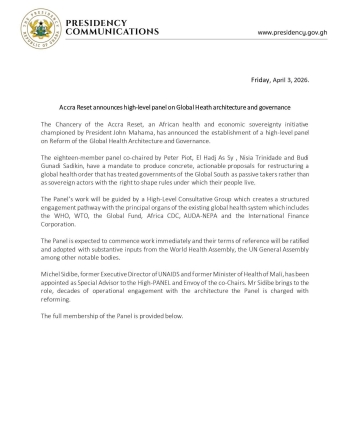
The Chancery of the Accra Reset has announced a high-level panel of global health leaders tasked with producing concrete proposals to restructure the world’s health governance system, which critics say has long treated Global South nations as passive recipients rather than sovereign equals.
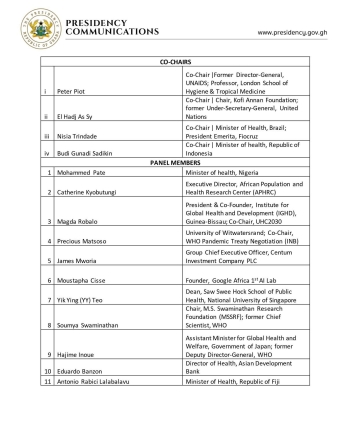
The 18-member panel, posted in a statement on Jubilee House’s Facebook page, will be co-chaired by four distinguished figures: Peter Piot, former director-general of UNAIDS; El Hadj As Sy, chair of the Kofi Annan Foundation; Nisia Trindade, Brazil’s Minister for Health; and Budi Gunadi Sadikin, Indonesia’s Minister for Health.
“This initiative represents a fundamental reimagining of how global health governance should function in the 21st century,” the statement said.
The panel has been mandated to draft actionable proposals to overhaul a global health order that has historically excluded governments in the Global South from shaping the rules governing their own populations’ health and economic well-being.
Notable members include Nigeria’s Health Minister, Mohammed Pate; John Nkengasong, executive director of the MasterCard Foundation and former head of Africa CDC; and Soumya Swaminathan, former chief scientist of the World Health Organisation (WHO).
Michel Sidibé, former executive director of UNAIDS and former Malian health minister, has been appointed as special advisor to the panel and envoy of the co-chairs. His decades of operational experience inside the very architecture the panel seeks to reform are expected to prove invaluable.
To ensure structured engagement with existing institutions, the panel’s work will be guided by a High-Level Consultative Group that includes WHO director-general Tedros Adhanom Ghebreyesus, WTO director-general Ngozi Okonjo-Iweala, and leaders from the Global Fund, Africa CDC, AUDA-NEPAD, and the International Finance Corporation.
The Accra Reset Initiative, which focuses on African health and economic sovereignty, positions the panel as a direct challenge to post-colonial power dynamics in global health decision-making. Its final recommendations are expected to reshape how pandemic preparedness, financing, and intellectual property rules are negotiated between wealthy nations and the Global South.