
ADR-SRI Masterclass equips professionals on Security Registration, Land Disputes
President of the Alternative Dispute Resolution Security and Research Institute (ADR-SRI), Dr Maxwell Acheampong has highlighted the importance of building capacity in security creation, registration and land-related matters as a means of promoting peace and stability in Ghana.
Dr Acheampong also underscored loan recovery as a major challenge in Ghana, advocating for greater legal awareness and dialogue between lenders and borrowers.
He noted that the institute’s goal is to foster peace through lawful and alternative means of resolving conflicts, stressing the need for parties to understand legal processes and include ADR clauses in contracts.
"Today's training program is concerning security creation and registration. And here we are hoping our ADL experts to really understand how to deal with security registration, land matters, in relation to dispute resolution."
"And as ADL-SRI Institute, our major objective is to make sure we give the needed training and to equip our members to work hard to understand how to resolve some of this conflict when it actually comes out," he said.
Event
Speaking at a Professional Executive Masterclass organised by the ADR-SRI in Accra on Thursday, December 11, he said the training was designed to equip ADR practitioners and professionals with the legal knowledge and practical skills needed to resolve disputes effectively.
The programme attracted a diverse group of participants, including bankers, real estate professionals, CEOs, lawyers, lecturers, and international participants from countries such as the United States and Nigeria.
According to Dr Agyemang, the broad participation reflects the growing relevance of alternative dispute resolution in addressing conflicts in areas such as land ownership, loan agreements and security registration.
"At the end of the day, what we would really like to achieve is to help Ghanaians appreciate the knowledge in relation to security creation, land issues, and in the area of borrowing and actually giving out loans as part of the training as well, how to deal with this aspect of it. And also loan recovery. I think it has become one of the serious matters in the country," he said."
"So as ADL-SRI, our major focus here is to find an environment where we can establish peace and stability within Ghana through alternative way of resolving conflict. And you can understand this if only you understand the laws. So when cases come to you, you know the processes or the procedure to help the parties resolve their own matters of their choice," he added.
Dr Acheampong encouraged individuals and institutions to enrol in ADR-SRI programmes to deepen their understanding of ADR and contribute to national stability.
Attendance
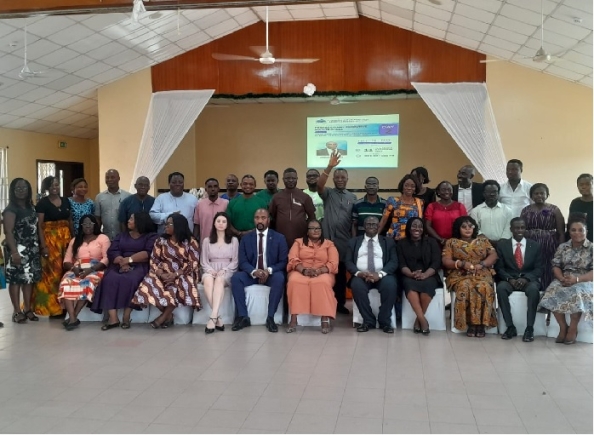
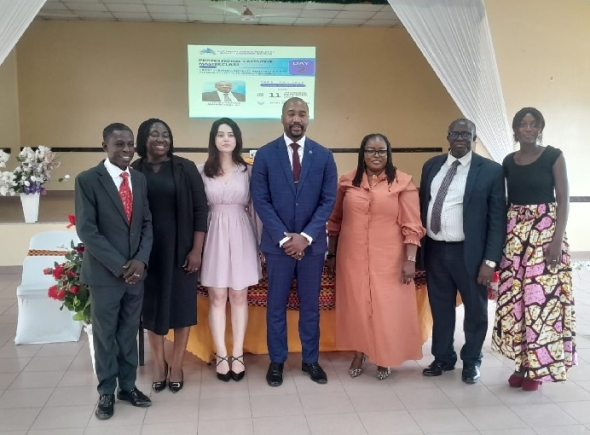
In attendance were Registrar of ADR-SRI, Mrs Abigail Agyeiwaa Acheampong, Acting Executive Secretary, National Labour Commission, Dr Bernice Welbeck, Member of Parliament for Ablekuma West, Rev. Dr Kweku Addo, CEO Astria Learning, Dr Jeff Bordes and Global Operations Coordinator at Astria Learning, Ana Fristavi.
Others were President, Women and ADR, Dr Irene Nartey, Facilitator at ADR-SRI, Lady Nancy Abena Osekuaa Aboagye and Global President-Share The Smile Ophelia Foundation, Her Excellency Ophelia Damptey.
Facilitator
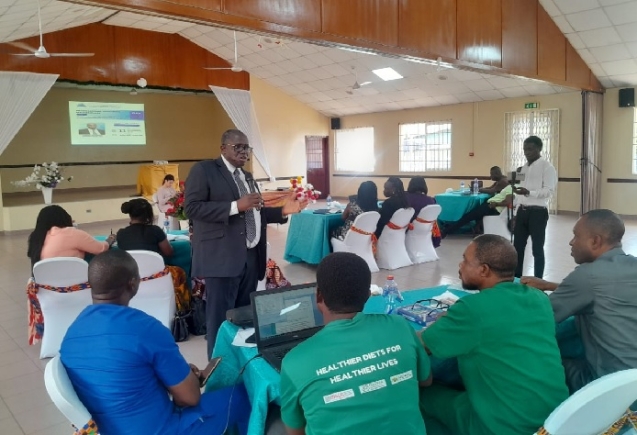
The masterclass was facilitated by Supreme Court Justice Sir Dennis Dominic Adjei, who explained the legal risks surrounding breach of contract, property used as collateral, and the importance of due diligence in lending transactions.
He stressed that property jointly acquired during marriage is legally deemed to belong to both spouses, even if registered in one person’s name, and cannot be mortgaged, transferred or used as collateral without the consent of the other spouse. Failure to obtain such consent has been a major cause of disputes that often reach the courts.
Justice Adjei cautioned banks and lenders to conduct thorough due diligence, noting frequent cases where spouses later challenge the use of family property as loan security.
He said these challenges led to the establishment of Ghana’s Collateral Registry, which simplifies the registration of security interests and protects lenders’ rights.
He outlined the objectives of the law governing collateral registration, including regulating borrower–lender relationships, providing a legal framework for registering and enforcing security interests, and granting priority to interests registered at the Collateral Registry over other registrations.
He further explained that enforcement of registered security may, in some cases, occur without court action.
“In matters relating to collateral, the law provides for enforcement such that where there is a breach and it is confirmed by the Collateral Registry, the lender may not need to go to court. The lender can take possession of the property used to secure the loan and may even render it unusable, including dismantling it, to prevent its removal,” he explained.
He further noted that priority is given to interests registered at the Collateral Registry over other registrations. “If you have registered your interest at the Lands Commission and I have registered mine at the Collateral Registry, the law gives priority to the one registered under the Collateral Registry. Therefore, even if a property is registered at the Lands Commission or a vehicle at the DVLA, it must also be registered at the Collateral Registry,” he said.
Justice Adjei also clarified that the definitions of “borrower” and “lender” under the law are broad, covering not only banks but also transactions involving goods or services provided on credit.
He encouraged professionals to rely on the Collateral Registry as a first point of search to reduce fraud, protect property rights and prevent costly legal disputes.
He added that once a borrower–lender relationship exists in respect of any subject matter, the Collateral Registry becomes the first point of reference. “The Bank of Ghana has a dedicated office managing the Collateral Registry. Conducting a search is simple and inexpensive—you pay less than GH¢500 for registration, and a search costs about GH¢50. Within an hour, you can confirm whether the property you intend to buy or use as security is encumbered,” he explained.
Commendations
Dr Irene Nartey described the masterclass as highly beneficial, noting that it deepened participants’ understanding of borrowing, lending, and land acquisition.
She highlighted the importance of recognizing that individuals do not own land outright but hold interests in it, and stressed the need for proper searches to determine whether land is stool or family-owned before purchase.
She added that the insights gained will enhance her work as a mediator, particularly in resolving land disputes that often arise from purchases made from the wrong parties, and will support the use of negotiation and mediation in settling such cases.
For her part, Lady Nancy Abena Osekuaa Aboagye said the programme has had a significant impact on her professional practice.
She noted that the training has equipped her with practical techniques for resolving complex land disputes and loan-related cases, especially where contracts are poorly drafted or absent.
She cited examples of excessive loan claims that become difficult to mediate without proper legal grounding and explained that the masterclass has improved her ability to handle such matters fairly.
She also emphasized the relevance of ADR training for bankers, financial institutions, brokers, employers, and large organisations, adding that including ADR clauses in contracts can ensure disputes are resolved through mediation before reaching the courts.
