
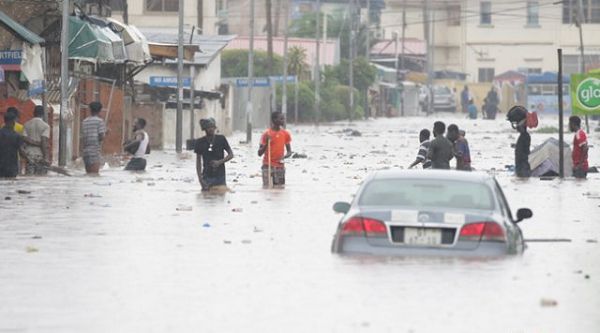
The Greater Accra Resilient and Integrated Development (GARID) project has been extended to 2027, with dredging works on the Odaw River only a little over 40 per cent complete despite continued efforts to address perennial flooding in Accra.
The project was originally scheduled to run for five years, from 2020 to 2025, before the World Bank-funded initiative's closing date was revised.
The Project Coordinator of GARID, Dr Kwadwo Ohene Sarfoh, said the two-year extension became necessary because a number of activities under the project were still outstanding.
Speaking in a radio interview monitored by Graphic Online on Accra-based Joy FM on Tuesday, June 30, 2026, Dr Ohene Sarfoh said the project, which began in 2020 and was expected to end in 2025, would now continue until 2027. Project records also confirm that the closing date has been revised accordingly.
He said progress across the various components of the project ranged between about 30 per cent and 75 to 78 per cent, depending on the activity.
According to him, dredging of the Odaw River between Caprice and the Korle Lagoon, one of the major interventions under the project, is only a little over 40 per cent complete.
Dr Ohene Sarfoh expressed the hope that the contractor would complete the backlog of dredging before the end of the year, after which routine maintenance dredging would continue until the Ghana Hydrological Authority takes over management of the channel.
On financing, Dr Ohene Sarfoh said the project has a total budget of US$285 million.
He explained that the World Bank initially approved US$200 million for the project, but US$65 million was later reallocated to support Ghana's COVID-19 response. An additional US$150 million was approved in 2023.
He said between US$140 million and US$150 million had so far been committed to contracts and consultancy services, while the remaining funds would finance activities yet to be procured.
Available records indicate that about US$127 million had been disbursed by mid-2025, leaving a substantial portion of the World Bank financing yet to be utilised.
Addressing concerns over delays, Dr Ohene Sarfoh said some contractors had slowed work because of delayed payments.
He attributed the situation partly to fiscal constraints arising from Ghana's debt restructuring programme and conditions under the country's programme with the International Monetary Fund.
Dr Ohene Sarfoh said project agreements provide for payments to be made within 60 working days after invoices are submitted. Although most payments had been made within that period, he said some invoices were still awaiting approval from the Ministry of Finance.
He said delayed payments were not the only reason for the slow pace of work.
According to him, construction teams encountered larger-than-expected rock formations, while the relocation of residents living close to some project sites also affected progress.
He added that some consultants engaged on the project were replaced after their contracts were terminated because of poor performance.
Dr Ohene Sarfoh also identified encroachment and unauthorised developments upstream of the Odaw Basin as major challenges facing the project.
He said ongoing construction activities had increased the amount of sediment entering the channel, while the indiscriminate dumping of solid waste into the basin continued to worsen the situation.
The GARID project is being implemented in 17 Metropolitan, Municipal and District Assemblies through which the Odaw River passes.
It is being implemented by the Ministry of Works, Housing and Water Resources in partnership with the Ministry of Local Government, Chieftaincy and Religious Affairs.
The project was initiated following the devastating floods that hit Accra on June 3, 2015, leading to the preparation of the Greater Accra Climate Risk Mitigation Strategy and the subsequent design of the GARID project.
