
The government has intensified its response to widespread flooding in Accra, Tema, and surrounding areas following sustained heavy rains that have affected homes, businesses, and public infrastructure since June 27, the Minister for Works, Housing and Water Resources has announced.
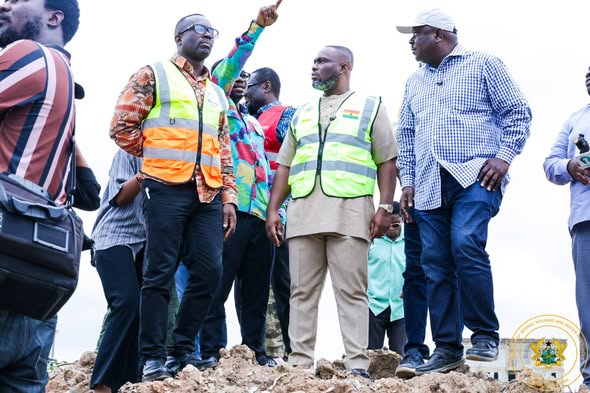
In a press release issued on June 29, Kenneth Gilbert Adjei explained that he accompanied President John Dramani Mahama and other members of the Anti-Flood Task Force on a tour of the affected areas to validate the causes of flooding and evaluate remedial solutions.
The Minister expressed sympathy to all individuals, families, and communities affected by the flooding, acknowledging the pain, disruption, and economic hardship imposed on households, traders, transport operators, and businesses. "To those who have suffered losses, we wish to assure you that Government remains fully committed to supporting relief, recovery, and reconstruction efforts," he said.
The Minister highlighted the growing challenges posed by extreme weather patterns, rapid urbanisation, and increasing pressure on drainage infrastructure, noting that "while climate variability continues to intensify rainfall events, the impact of human activities—particularly encroachment on waterways, indiscriminate waste disposal, and non-compliance with planning regulations—cannot be overstated."
He stressed that sustainable flood management requires shared responsibility among public institutions, local authorities, traditional leaders, businesses, and all citizens.
In response to the ongoing emergency, the Ministry, through the Ghana Hydrological Authority, is working closely with NADMO, the Greater Accra Regional Coordinating Council, MMDAs, and security services to implement immediate response measures.
These include deployment of emergency response teams, evacuation support, provision of relief items, assessment of damaged infrastructure, and intensified drainage clearing activities in flood-prone locations.
The Minister noted that over the past few weeks, the Greater Accra Regional Coordinating Council, in collaboration with MMDAs, has undertaken extensive enforcement operations to remove illegal structures and obstructions along drainage channels, waterways, wetlands, and other critical natural water retention areas. Urgent steps are also being taken to undertake extensive desilting and excavation of major drainage channels that have become silted and obstructed following the heavy rains.
The government is advancing broader interventions, including the expansion and rehabilitation of drainage infrastructure, enforcement of development controls in floodplains, strengthening of early warning systems, and restoration of wetlands and natural water retention areas.
The Minister urged all residents, particularly those living near rivers, lagoons, drains, and low-lying areas, to prioritise safety and adhere to established flood safety protocols. Residents are advised to move to higher ground when necessary, avoid walking or driving through floodwaters, and ensure children are kept away from flooded areas.
"We call on all citizens to support these efforts by refraining from dumping waste into drains, avoiding construction on waterways, and complying fully with environmental and planning regulations," the Minister added. "Together, through collective responsibility, discipline, and adherence to safety measures, we can significantly reduce the effects of flooding, safeguard lives and livelihoods, and build safer, more resilient communities."
