
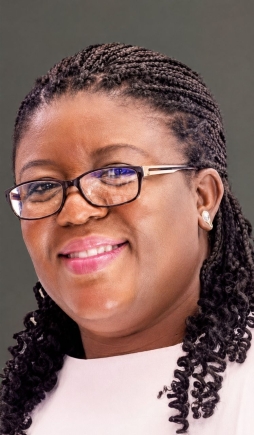
The defence team in the ongoing trial of former Director-General of the National Signals Bureau (NSB), Kwabena Adu-Boahene, has questioned the accuracy and completeness of records kept by prosecution witness Mildred Donkor, drawing attention to omissions in her handwritten notes and Excel spreadsheets and alleged discrepancies between those records and bank statements tendered before the court.
Under cross-examination by counsel for the accused, Samuel Atta Akyea, Ms Donkor admitted that her records, tendered in evidence as Exhibits G, J and J1, did not capture all transactions reflected in the bank statements linked to the case.
She, however, maintained that the records were compiled based on the manner in which instructions were received and the circumstances under which transactions were carried out.
The proceedings took place before the Accra High Court on Thursday (June 11, 2026). The court is hearing the case in which Kwabena Adu-Boahene, a former boss of the National Signals Bureau, his wife Angela Adjei-Boateng and two others are facing charges in connection with the alleged misappropriation of state funds.
Omissions
Questioned on the completeness of her records, Ms Donkor acknowledged that numerous transactions were omitted from the handwritten notes and spreadsheets.
Mr Atta Akyea put it to the witness that out of 26 withdrawal requests she personally initiated through emails, only four were captured in Exhibits G, J, and J1.
"Yes, my Lord," she replied.
The witness also agreed that several cheque withdrawals she personally delivered to Adu-Boahene were not recorded.
Asked whether she could have gone back to the cheque books and made proper recordings if she was interested in keeping a complete record, she answered: "Yes, my Lord."
Mr Atta Akyea further suggested that the witness's records did not reflect a number of withdrawals made on behalf of Stephen Arthur, Gerald Osei Tutu and Frank Anane Terkpertey pursuant to email instructions tendered before the court.
Referring to withdrawals made for Mr Terkpertey, counsel stated that out of numerous transactions initiated by the witness, only six were captured in her records.
"Yes. Based on how the instructions came and when," Ms Donkor responded.
Counsel also suggested that no transactions relating to Stephen Arthur and Gerald Osei Tutu had been recorded.
In response, the witness said: "My Lord, I can't tell."
Mr Atta Akyea further put it to the witness that more than 550 transactions reflected in bank statements relating to BNC Operations and other accounts had not been captured in Exhibits G, J and J1.
"Yes my Lord. Those transactions could not have been recorded because the final destination of the fund or the money were not known," Ms Donkor replied.
Explaining the omissions, she told the court: "There are times that you will be outside and Director (A1) will call me instructing me to send an amount to somebody. I used to carry all the cheque books with me because he could call at all times."
She added that she was sometimes instructed to distribute money to individuals or make withdrawals in her name before transferring the funds to third parties.
EOCO statements
A significant portion of the cross-examination centred on statements Ms Donkor gave to the Economic and Organised Crime Office (EOCO) on April 17, 2025.
Mr Atta Akyea referred her to portions of the statement in which she indicated that she never paid suppliers in the course of her duties.
The witness maintained that the statement was made when she was under investigation and had been coached on what to say.
"As I said earlier these statements were written when I was an accused person and I was coached," she told the court.
Mr Atta Akyea suggested that this was the position she took before she was converted from an accused person to a prosecution witness by the Attorney-General.
The witness maintained her earlier explanation.
When counsel suggested that she had been dishonest with EOCO, she responded: "Based on what I was coached on to say was what I said.
So if they were lies they were based on what I was coached and asked to write."
Mr Atta Akyea further suggested that after being converted into a prosecution witness, she had produced a handwritten document purporting to show payments to suppliers.
Ms Donkor disagreed, explaining that the document emerged after questions from her lawyer based on the charge sheet.
Bank records
Mr Atta Akyea also questioned entries contained in Exhibits J and J1.
He referred the witness to withdrawals of GH¢100,000 on October 5, 2020 and GH¢1 million on November 14, 2020, which he said were not borne out by the relevant bank statements.
The witness said she would be able to identify the transactions if they appeared in the statements.
"If it's there," she added.
During the proceedings, an attempt by the defence to rely on a bank statement previously rejected by the court drew an objection from Deputy Attorney-General Dr Justice Srem-Sai.
Dr Srem-Sai argued that the document had already been rejected and could not be reintroduced through the same witness. The court upheld the objection.
A separate bank statement was subsequently admitted into evidence as Exhibit 29.
Mr Atta Akyea then referred the witness to an entry in Exhibit J showing a withdrawal of GH¢11,428.50 on May 3, 2020.
After examining Exhibit 29, Ms Donkor told the court: "I don't see it in the statement. The statement was not done by me but I have it in my note."
Counsel subsequently put it to her that she had fabricated the transaction and presented it to the court.
"No my Lord. This excel was done way before this case," she replied.
Mr Atta Akyea further suggested that withdrawals of GH¢100,000 on October 5, 2020, GH¢1 million on November 14, 2020 and GH¢1.2 million on October 7, 2020 recorded in her spreadsheets could not be found in the relevant bank statements.
He also put it to the witness that Exhibits J and J1 contained fictitious transactions that could not be traced to any bank statement relating to the accounts.
"No my Lord. I don't agree with him. As I said earlier these excels in exhibits J and J1 were done way before today and with no intention of bringing up stories," Ms Donkor responded.
Background
Earlier in court Ms Donkor told the court that cash withdrawals and assistance she rendered to Adu-Boahene and his wife formed part of her official duties while she worked as an executive assistant.
She also maintained that her records reflected transactions she personally handled and were intended to help her keep track of assignments she carried out on behalf of her superiors.
The case has been adjourned to June 15, 2026, for the continuation of her cross-examination.
