
2025 ADEA Triennale: Participants identify 8 thematic areas to boost Africa’s education
Articipants at the just-ended continental conference on education last Friday have resolved to treat education as a strategic investment toward driving the continent's long-term development.
They also committed to building and funding education systems that are resilient, efficient and self-sustaining.
“This requires integrating education financing into national development and industrialisation agenda,” the report, presented by a member of the Technical Content Committee of the local planning committee of the 2025 Triennale on Education and Training of the Association for the Development of Education in Africa (ADEA), Dr Araba A.Z. Osei-Tutu, said.
Walking the Talk
The report, titled, “Walking the Talk, actualising sustainable and inclusive education for Africa and beyond,” acknowledged that Africa has made a lot of progress in improving and providing quality education.
“However, there is more to be done and that begins with treating education as a strategic investment, not a cost, toward driving Africa's long-term development.
“It also means building and funding education systems that are resilient, efficient and self-sustaining. It also requires integrating education financing into the national development and industrialisation agenda,” the report said.
The report called on countries to add value to their raw materials to constitute a bigger base for funding education.
It called for a need to enhance Africa-led efforts to improve the generation and quality of foundational learning data across the continent by aligning foundational learning assessments used by partners with the Continental Education Strategy for Africa (CESA) 2026 and 2035.
Sub-themes
“So our takeaways or the main ideas are highlighted using the main sub-themes, the eight sub-themes that the triennial focused on,” the report stated.
It listed the sub-themes as reimagining financing for education in Africa; prioritising multilingualism and trans-languaging in teaching and learning; promoting TVET, STEM education and digital skills training; repositioning higher education and scientific research; and strengthening policymakers' capacity to interpret and use data effectively for educational reform.
The rest are using technology and AI to personalise learning and improve accessibility for remote and rural areas; innovative and sustainable approaches in school leadership, teacher preparation, and continuing professional development; and gender, equity, inclusion, and climate adaptation.
Next step
The report stated that across the continent, “we have the expertise, we have the knowledge, we know what needs to be done, but what we need to do is to take the next steps”.
“We agree that we need to take steps; we have done a lot of talking, so what we need to do is to now walk the talk,” the report quoted the participants as saying.
The report called on countries on the continent to institutionalise second-chance education programmes that were flexible, affordable, and accessible to learners with diverse capabilities and those who had been left behind, including those in conflict and crisis situations.
Draft report
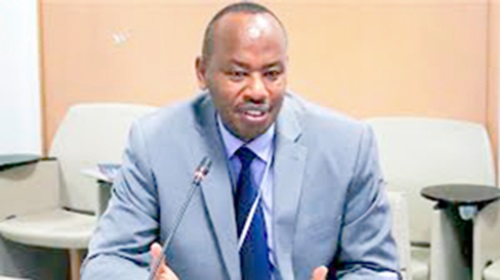
The Executive Secretary of ADEA, Albert Nsengiyumva, reminded all participating countries that the report was a draft and needed their input before it could become a working document.
He explained that the time was not there for final work to be done, adding that from all indications, there were a lot more countries had to offer and that was what informed the decision to share the draft copies for further input.
