

ActionAid launches £100,000 project to combat child labour in cocoa communities
New £100,000 initiative aimed at reducing child labour in four cocoa-growing districts in two regions has been launched at Goaso in the Ahafo Region.
Christened "Advancing Rights and Combating Child Labour in Cocoa Value Chains in Ghana (ARCCLG), the project is being implemented in the Dormaa Municipality and the Dormaa West District in the Bono Region and Asutifi North and Asutifi South in the Ahafo Region.
The one-year project, which is expected to end in March 2027, is targeted at 2,880 schoolchildren through awareness, protection and peer empowerment initiatives.
Additionally, the project is expected to engage 2,400 influential community members through sensitisation campaigns and training of 320 cocoa farmers and cooperatives in responsible sourcing and child labour prevention practices.
Launched by the ActionAid Ghana last Wednesday, the project is being funded by the Chartered Institute of Procurement and Supply (CIPS) Foundation and the Postcode Lottery (PL), with CIPS contributing £60,000 and PL £40,000.
Major concern
According to ActionAid Ghana, globally, agriculture accounts for about 70 per cent of child labour, with cocoa production in West Africa remaining a major concern.
It said Ghana and Côte d’Ivoire together produced nearly 60 per cent of the world’s cocoa, yet the sector continued to grapple with child labour, driven largely by poverty, limited access to quality education, weak social protection systems and gaps in corporate accountability.
In his presentation, the Fundraising Manager of ActionAid, Zakari Issah, said in cocoa-growing areas, many children were engaged in hazardous activities such as carrying heavy loads, using sharp tools and applying agrochemicals.
He said those conditions often led to school absenteeism, seasonal dropouts, poor academic performance and limited future opportunities, reinforcing cycles of poverty.
Project focus, impact
The ARCCLG project sought to contribute to a 20 per cent reduction in child labour in targeted 16 communities by strengthening community-based child protection mechanisms and promoting awareness and implementation of Ghana’s National Action Plan on Business and Human Rights.]
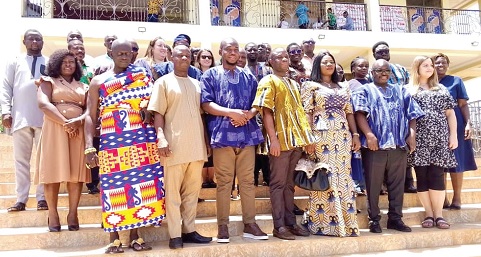
Stakeholders at the launch of the project in Goaso
Key interventions include the reactivation and training of 16 Community-Based Anti-Violence Teams (COMBATs), also known as Community Child Protection Committees, to enhance grassroots response systems.
Awareness campaigns will be conducted through community durbars, school engagements and radio programmes, with an estimated reach of 60,000 people.
The project will also establish and strengthen school-based child protection clubs in 16 schools, empowering children to speak up against exploitation and support their peers.
Farmers and cooperatives will be equipped with knowledge and tools to adopt ethical practices within the cocoa value chain.
To ensure coordinated action, district-level child protection committees and social welfare departments will be engaged to improve referral systems for handling child labour cases.
Also, 20 media practitioners in the project implementing areas will be trained to report on child labour issues ethically and responsibly, with a strong emphasis on child safeguarding.
Commitment
The Head of Programmes at ActionAid Ghana, Justin Bayor, said the project was rooted in a broader commitment to human rights, climate justice and economic equity.
He explained that the initiative sought to address fundamental rights enshrined in the United Nations Convention on the Rights of the Child (UNCRC), including access to education, health, safety and protection from exploitation.
Mr Bayor stressed that children in cocoa-growing communities were often deprived of those rights, disrupting their education and development.
He expressed confidence that lessons from the piloted project would provide evidence for scaling up interventions in the future and called on stakeholders to support its successful implementation.
Risks of child labour
The Ahafo Regional Minister, Charity Gardiner, described the initiative as timely and essential, given the region’s strong reliance on agriculture and the associated risks of child labour.
She emphasised that child labour had undermined national development, urging a collective, multi-stakeholder approach to address the issue.
The minister assured the organisers of the full support of the Regional Coordinating Council (RCC) and called on traditional authorities, district assemblies and community members to play active roles in protecting children.
Mrs Gardiner expressed the hope that the project would help strengthen community systems and create lasting change in cocoa-growing communities.
The participants called for the sustainability of the project to help eliminate child labour and promote the rights and well-being of children.
Writer's email:
