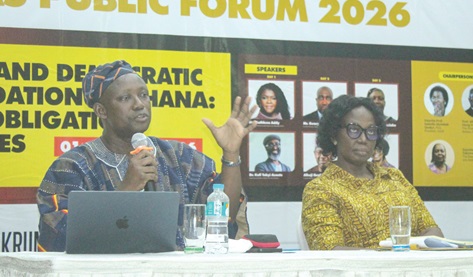
Citizens’ apathy threatens Ghana’s democracy — Speakers
Governance and anti-corruption advocates have cautioned that unless democracy delivers meaningful economic opportunities, quality public services and stronger accountability, growing public disillusionment could undermine the country’s democratic consolidation and weaken citizens’ commitment to democratic rule.
According to them, democracy in Ghana is facing a growing threat, not from military intervention or the collapse of constitutional institutions, but from increasing citizen frustration, disengagement and loss of confidence in the ability of democratic governance to improve everyday lives.
Speaking at a forum last Wednesday, on the theme, “Citizens and Democratic Consolidation in Ghana: Rights, Obligations and Duties,” the speakers said rising youth unemployment, persistent corruption, economic hardship and declining trust in public institutions were fuelling citizen apathy and threatening the long-term sustainability of the country’s democracy.
The speakers, lawyer and governance expert, Kwaku Antwi-Boasiako, and the Executive Director of the Ghana Anti-Corruption Coalition (GACC), Beauty Emefa Nartey, argued that democracy could not survive on elections and constitutional structures alone if citizens failed to see improvements in their daily lives.
They stressed that restoring confidence in Ghana’s democracy would require urgent action to create jobs, fight corruption, strengthen accountability systems and promote active citizen participation in governance, adding that continued public disengagement could have serious consequences for democratic stability.
Democracy
Speaking on the topic, “Democracy Without Dividends: Why Citizen Apathy Threatens Ghana’s Democratic Future,” Mr Antwi-Boasiako said democracy was often reduced to elections, constitutions and institutions, but its true value lay in its ability to improve the lives of citizens.
He said elections were merely the entry point to democracy, and that citizens ultimately judged democratic governance based on outcomes such as employment opportunities, affordable food, quality education, accessible healthcare, safe roads and fair treatment by public institutions.
“When democracy comes after the polls, citizens begin to question its value,” he said.
The lawyer and governance expert said citizens did not experience elections but rather the outcomes of governance, and where those outcomes failed to meet expectations, public confidence in democracy declined.
Youth unemployment, corruption
Mr Antwi-Boasiako described youth unemployment as one of the greatest threats to Ghana’s democratic future, and called for it to be treated as a national emergency.
He cited labour market statistics and reports indicating high levels of unemployment among young people and cautioned that growing economic frustration was pushing many young Ghanaians to seek opportunities abroad, often under dangerous circumstances.
He called for greater investment in skills development, entrepreneurship, agribusiness and innovation as well as strong support for private sector job creation.
Mr Antwi-Boasiako also identified corruption as a major factor contributing to citizen frustration and democratic disillusionment.
He argued that corruption not only diverted public resources but also suppressed opportunities for ordinary citizens and businesses.
He called for the prosecution of corrupt officials, enforcement of sanctions, protection of whistleblowers and reforms aimed at improving transparency in public financial management.
Citizen participation
Speaking on the topic, “From Passive Spectators to Active Citizens: Building a Culture of Accountability in Ghana’s Democracy,” Ms Nartey said democratic accountability depended not only on institutions but also on active citizen engagement.
She argued that citizen passivity had become a significant challenge to democratic governance because it allowed corruption and poor performance to persist without sufficient public scrutiny.
“Citizenship in action is not merely a symptom of dysfunctional democratic system. It is part of a structural process,” she said.
Accountability deficits
The GACC Executive Director said Ghana had established a range of accountability institutions, including the Office of the Special Prosecutor and the Auditor-General’s Department, but public confidence in those institutions remained low.
She said repeated reports of financial irregularities and corruption without corresponding sanctions had created widespread perceptions of impunity.
Ms Nartey said many citizens had become convinced that accountability mechanisms were ineffective, leading to growing public disengagement from the governance process.