
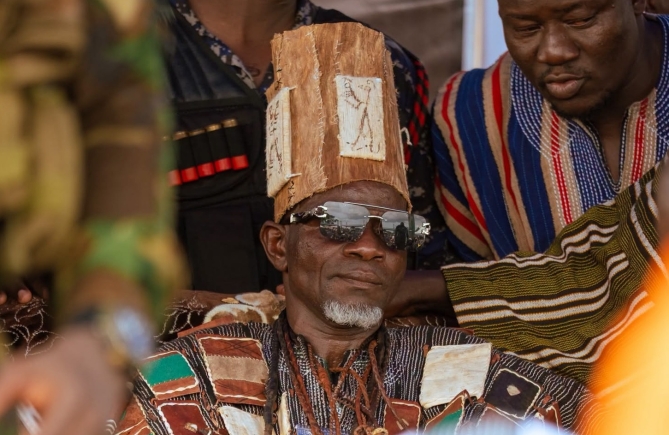
The kingmakers of the Dagbon Kingdom have enskinned the first son of the late Ya-Na Abukari II as Regent to oversee the affairs of the kingdom during the transition period following the passing of the Overlord.
The Regent with the skin name, Kampakuya Naa Yakubu, will serve as the traditional caretaker of the Dagbon throne in accordance with the customs and traditions of the kingdom until a new Ya-Na is selected and enskinned through the established customary succession process.
Per the Dagbon tradition, the title of Kampakuya Naa is conferred on the eldest son of the late Ya-Na.
The Regent is expected to work closely with the kingmakers and the Dagbon Traditional Council (DTC) to oversee the performance of the funeral of the late Ya-Na, maintain peace and stability and ensure the smooth administration of the kingdom.
The enskinment marks an important stage in the Dagbon succession process as preparations continue for the final funeral rites of Ya-Na Abukari II and the eventual enskinment of a new Overlord.
Ceremony
The event at the Gbewaa Palace in Yendi in the Northern Region brought together chiefs, politicians, government officials, religious leaders and people from all walks of life to witness the enskinment of the Regent.
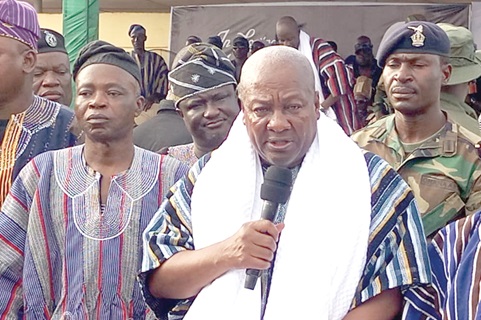
President Mahama speaking at the event
Among the dignitaries who attended the ceremony were President John Dramani Mahama, Flagbearer of the New Patriotic Party (NPP), Dr Mahamudu Bawumia; the Minister of Education, Haruna Iddrisu; the National Chief Imam, Sheikh Osman Nuhu Sharubutu; the Northern Regional Minister, Ali Adolf John, as well as other senior government officials, traditional rulers, religious leaders and representatives of various political parties.
Mourners, visitors
From the early hours of the morning, the Gbewaa Palace and Yendi town were filled with mourners, residents and visitors who had gathered to witness the historic ceremony.
The atmosphere was one of solemn reflection as mourners paid tribute to Ya-Na Abukari II's legacy of peace, unity and development while witnessing a significant milestone in the kingdom's customary succession process.
The ceremony featured both traditional and Islamic rites, including the shaving of the Regent's head, recitation of the Holy Quran and special prayers led by Islamic clerics, who prayed for Allah's mercy, forgiveness and eternal peace for the late Ya-Na.
Beyond the prayers and mourning, the occasion also provided an opportunity to showcase the rich cultural heritage of Dagbon, as traditional authorities, chiefs, drummers and cultural troupes displayed various aspects of the kingdom's customs, traditions and identity.
The performance of traditional rites, the appearance of chiefs in their regalia, and the sounds of traditional drumming reflected the historical significance of the Dagbon Kingdom and the enduring role of the Ya-Na as the custodian of its culture and traditions.
Unifier
In his remarks, President Mahama described the late Ya-Na Abukari II as a unifying leader whose reign contributed significantly to peace and development in the Dagbon Kingdom.
He added that the Overlord's commitment to reconciliation and stability would continue to inspire future generations of traditional leaders.
President Mahama urged the people of Dagbon to remain united and continue to uphold the values of peace, mutual respect and unity as the kingdom goes through the customary succession process.
He said Ya-Na Abukari II inherited a kingdom that had experienced divisions and a breakdown of peace, but through his leadership, he helped to restore unity and reconciliation among the people.
Beyond his peaceful nature, President Mahama pointed out that the late Overlord advocated strongly for the development of the area, particularly in areas such as agriculture, health care, road infrastructure, education and youth development.
"He was very passionate about agriculture, health, road infrastructure, education, youth development and many others," he stressed.
President Mahama pledged the government’s commitment to support Kampakuya Naa Yakubu to consolidate the peace and development agenda championed by his father.
Father for all
For his part, Dr Bawumia described Ya-Na Abukari II as a father to all, saying his leadership style contributed to the restoration of lasting peace in the kingdom.
He said the process of selecting the next Overlord must uphold the legacy of the late Ya-Na and be guided by the peace agreement reached among the royal gates.
Continue legacy
In a speech read on behalf of the Regent, the Paramount Chief of the Zanbalung Traditional Area, Naa Dr Jacob Yakubu Mahama, pledged his commitment to sustaining the bridges of peace built by Ya-Na Abukari II.
He said he would uphold the rotational arrangement for chieftaincy succession in Dagbon, describing it as a sacred agreement among the royal families and a foundation for lasting peace between the Abudu and Andani gates.
"My father demonstrated this wisdom when he enskinned more Abudu chiefs than Andani chiefs during his reign, choosing the peace of the kingdom over gate advantage," he said.
He stated that the rotational succession arrangement would be respected when it is time to select and enskin a new Ya-Na, stressing that the process would follow Dagbon traditions and the existing peace agreement.
The Regent added that he would continue development initiatives championed by the late Overlord, including the palace construction project, the Dagbon 10-year Development Plan, the University for Development Studies (UDS), Yendi Campus, and agricultural and energy development partnerships.
Background
The Overlord was laid to rest at Katini, the royal mausoleum, in accordance with Dagbon tradition last Monday.
He died in South Africa on July 12, 2026, where he was receiving medical treatment.
His remains were flown to Yendi, the traditional seat of Dagbon, for interment on Monday after the necessary rites.
The third-day and Seventh-day prayers (Adua) have since been performed in accordance with Islamic traditions.
