
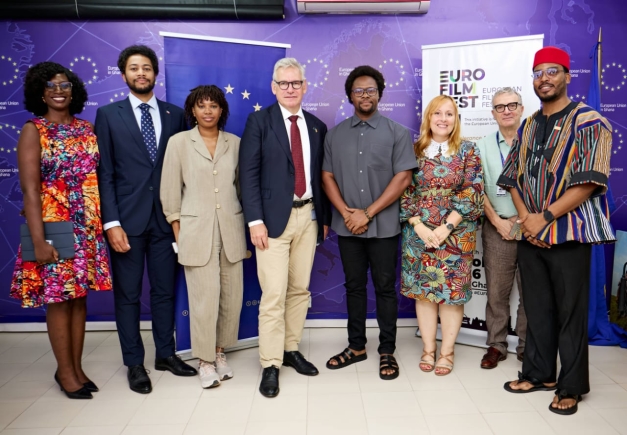
The European Union Film Festival (EUFF), an initiative that seeks to use film to deepen cultural exchange and create new opportunities for collaboration between Ghanaian and European filmmakers, has been launched in Accra.
The festival, which will take place from October 5 to 11 this year, provides a platform for filmmakers to network, explore co-production opportunities, and connect with international industry networks.
Organised by EUFF Ghana, the festival will be held on the theme: "Peace, Tolerance, and Inclusivity.”
It will take place across selected partner venues in Accra, including the Goethe-Institut Ghana, the British Council, Alliance Française, and the Austrian Embassy.
It will bring together Ghanaian and European filmmakers and players in the creative sector, who will exchange ideas about identity, culture, belonging, and shared human experiences.
Key features
At the launch last Wednesday, the Director of EUFF, Esiawonam Adisenu, stated that the programme was intended to promote peace, tolerance, and inclusivity.
“We want the audiences to not only watch films but also interact with filmmakers, participate in conversations, and leave the festival with fresh perspectives,” she said.
Ms Adisenu explained that the festival would organise masterclasses and workshops on European-Ghanaian co-productions, funding, mobility, sound, and inclusive representation.
“The sessions are expected to benefit emerging filmmakers, film students, practitioners, and other people interested in the creative and technical aspects of filmmaking,” she said.
The Director of EUFF added that a major feature of the festival would be the InuGana Pitch Café, which would bring together 10 emerging filmmakers at the early development stage to pitch their projects and receive feedback from experienced professionals.
Ghana-Europe partnership
The EU Ambassador to Ghana, Rune Skinnebach, said the festival would promote dialogue and understanding by exposing audiences to different realities through film.
He added that the festival reflected Ghana's broader partnership with the European Union, with culture serving as a means of connecting communities and countries.
The Deputy Executive Secretary of the National Film Authority (NFA), James Timothy Gardiner, said the 2026 edition of the festival would renew the dialogue between Ghanaian and European cinema by creating opportunities for audiences and film professionals to share stories, exchange ideas, and forge long-term creative partnerships.
He stated that film had the potential to bridge cultures, challenge assumptions, and highlight shared human experiences.
Mr Gardiner said the authority supported the festival because it provided Ghanaian filmmakers with opportunities to learn, network and collaborate with international film experts.
A choreographer and educator, Nii-Tete Yartey, said the festival resonated with Ghanaian communities that had traditionally used stories, music, dance, and performances to pass down knowledge, teach values, and help people understand their responsibilities.
He said while modern audiences consumed content privately on personal screens, cinema created a shared space in which strangers could laugh, feel, and reflect together.
