
Few public facilities fit for PWDs — Survey
An accessibility audit conducted on more than 60 public places across 10 districts in the country has revealed that only 14 per cent of the facilities have some level of retrofitting that make them accessible to persons with disabilities (PWDs).
The public places assessed during the exercise included hospitals, banks, churches, bus terminals and markets.
Additionally, only eight per cent of the facilities have accessible toilets, with a further assessment on transport systems showing zero accessibility standards across different sectors and locations.
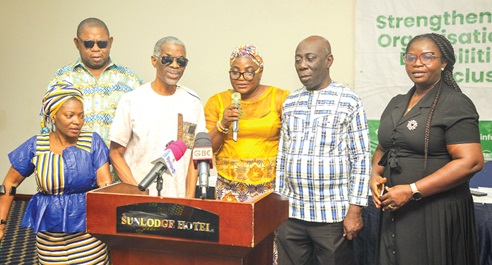
The results were contained in a Baseline Survey and Needs Assessment report of 16 Organisations of Persons with Disabilities (OPDs) presented at an event in Accra last Wednesday.
It was on the theme: “Strengthening Organisations of Persons with Disabilities: Inclusive Development through Capacity Building and Strategic Engagement”.
The survey was undertaken by the Ghana Federation of Disabilities (GFD) and funded by the European Union (EU).
It set out to establish a benchmark data on disability inclusion across selected metropolitan, municipal and district assemblies (MMDAs) and stakeholders, while also assessing the strengths, gaps and capacity needs of OPDs.
Findings
Speaking on the report, the Monitoring and Evaluation and Research Manager of the GFD, Moses Fordjour, said the findings further revealed that selected MMDAs that participated in the survey lacked the resources and plan to retrofit facilities, despite a 10-year moratorium from the country’s disability law.
He indicated that the MMDAs’ budget also did not include specific allocations for retrofitting facilities, leading to existing accessibility issues in public services.
With the state of the transport system, he called on the government to take a critical look at the approval process for transportation companies and to ensure that standards were in place to make buses and other public transport accessible for persons with disability.
Mr Fordjour suggested to the government to work collaboratively with OPDs to establish the right standards for accessible public transport.
Creative potential
The Social Policy Adviser to the Vice-President, Dr Miriam Rahinatu Iddrisu, who launched the report which was funded by the European Union (EU), said the initiative aligned with the government’s Reset Agenda, expressing the commitment to develop the creative potential for PWDs to participate in careers across the creative arts, culture and tourism industries.
She said the government was facilitating investment to ensure that tourist facilities and services were disability friendly, while enhancing accessibility to essential healthcare services for PWDs.
“In line with this commitment, the government moved swiftly to enact the Social Protection Act, 2025, which was passed by Parliament on July 31, 2025.
The Act establishes the Social Protection Fund and provides a robust legal framework for the implementation of social protection programmes,” she added.
She urged government agencies to partner OPDs on policy design, and urged development partners and civil society to continue to invest in and collaborate with the disability movement.
Social Protection Policy
The National President of GFD, Joseph Atsu Homadzi, commended the government for implementing the Social Protection Policy in terms of the free tertiary education for students with disability.
He expressed gratitude to the government for sustaining the Disability Common Fund (DACF) but urged that issues pertaining to disbursement should be addressed.
He further appealed to the government to capture women with disabilities when the Women’s Development Bank becomes operational.
