
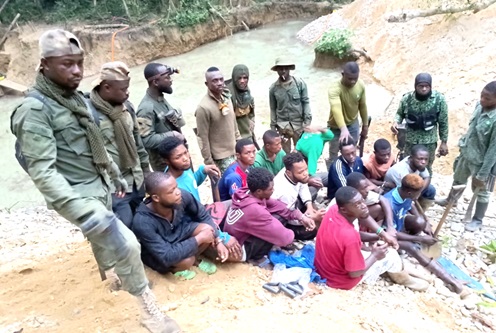
Forest Division raids Boi Tano, Jema forest reserves - Makes 13 arrests, destroys camp
The Western North Regional Directorate of the Forest Services Division has dismantled an illegal mining hub located deep in two forest reserves — the Boi Tano and Jema Asemkrom forest reserves.
The more than six-hour dawn raid, which was carried out between 1 a.m. and 6:30 a.m. last Tuesday by four teams, also led to the arrest of 13 illegal miners.
The exercise was carried out by personnel from the Enchi Forest District and the Regional Forest Services Division.
At the time of the raid, the illegal miners were busy degrading the two forest reserves.
Speaking to the Daily Graphic, the Enchi Forest District Manager, Joe Appiah Frimpong, said the team followed intelligence and mapped out the area and assigned team leaders to specific tasks, which led to the identification of the targets.
The task force also burnt five water pumping machines, mobile phones, four makeshift structures and seized two other water pumping machines.
Mr Frimpong said the suspects had been handed over to Enchi District Police Command for further investigation and prosecution.
The reserves
The Boi Tano and Jema Asemkrom forest reserves, he said, were two protected areas in the country and that the Boi-Tano Forest Reserve covered an area of 129 square kilometres and was known for its wet evergreen forest, with 90 per cent of it situated on slopes.
The reserves, he added, were home to diverse plant and animal species, including bats, which had been designated as a high-priority area for mammal conservation, which was now under threat from the activities of the illegal miners.
The Jema Asemkrom Forest Reserve, on the other hand, is a 66 square kilometre reserve designated in 1977, which is also part of the country’s protected areas.
It had received funding from the World Bank for biodiversity conservation, Mr Frimpong added.
The Enchi Forest District Manager said both reserves now faced threats from human activities, such as illegal logging, encroachment and bushfires, which contributed to biodiversity loss and degradation.
The regional forestry team, however, expressed its determination not to allow illegal activities to continue in the forest, emphasising that it was on a warpath to eradicate them.
