
The government has banned the land transit of several imported goods as part of new measures aimed at tightening border controls and preventing revenue losses.
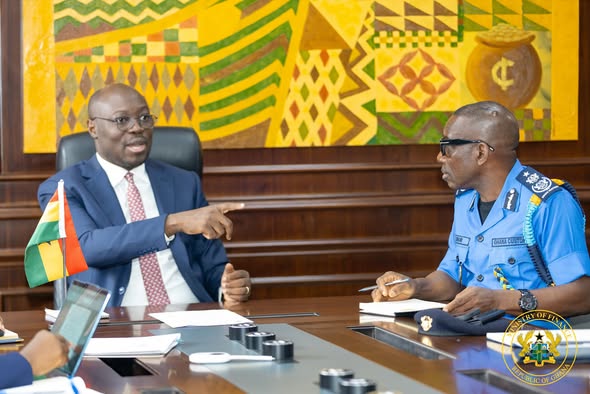
Finance Minister Dr Cassiel Ato Forson announced the directive after a meeting with the Acting Commissioner of Customs, Aaron Akanor, and the management of the Customs Division of the Ghana Revenue Authority (GRA).
The ban affects a range of commonly traded products including cooking oil, rice, sugar, frozen foods, textiles, flour, canned tomatoes, pasta and spaghetti, as well as pharmaceutical products.
Under the new arrangement, these goods must be routed exclusively through Ghana’s seaports and will no longer be permitted to enter the country or transit through Ghana via land borders.
Dr Forson said the decision followed discussions with customs officials on developments at the country’s borders and forms part of efforts to safeguard government revenue.
“Earlier today, I met with the Acting Commissioner of Customs, Mr. Aaron Akanor, and the management of the Customs Division of the Ghana Revenue Authority to discuss the recent developments at our borders and to take decisive steps to protect Ghana’s revenue,” the minister said in a post on Facebook.
He said the directive is intended to close potential gaps in the import and transit system that could lead to revenue leakages.
In addition to the restrictions on land transit, the Finance Minister has also ordered the recentralisation of the Customs Technical Services Bureau (CTSB), a unit responsible for valuation and technical support within the Customs Division.
The move will create a centralised platform for valuation services and strengthen intelligence-sharing among customs officers, including insights generated through the Publican artificial intelligence system used by the GRA.
According to Dr Forson, the reforms are designed to improve oversight of import processes and enhance the government’s capacity to monitor goods entering the country.
“These measures are intended to strengthen border controls, close revenue leakages, and safeguard government revenue,” he stated.
He has directed all relevant departments and units within the Customs Division of the Ghana Revenue Authority to ensure strict compliance with the new measures.
The directive comes at a time when authorities are stepping up efforts to improve domestic revenue mobilisation and tighten monitoring systems at the country’s entry points.
