
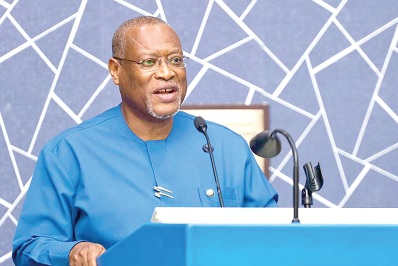
Government working to strengthen peace, security architecture — Vice-President
The government is working to strengthen the country’s peace and security architecture to address the risk of violent extremism in the country.
This includes collaborating with Ghana’s neighbouring countries to collectively address the threats of terrorism.
The Vice-President, Professor Naana Jane Opoku-Agyemang, stated this in a speech read on her behalf at the 14th Graduation Ceremony of the Kofi Annan International Peacekeeping Training Centre (KAIPTC) in Accra.
She highlighted ongoing diplomatic efforts to reintegrate Niger, Mali and Burkina Faso into the West African community, alongside collaborations with northern neighbours to counter violent extremism and promote regional peace.
“That is why the Government of His Excellency John Dramani Mahama remains unwavering in its determination to strengthen the country’s peace and security architecture.
“Ghana’s peace is bound to that of West Africa, and our progress depends on the collective stability of our neighbours,” the Vice-President said in the speech read on her behalf by her Chief of Staff, Alex Segbefia.
Event
The 14th Graduation was held on the theme “Building African Agency for Peace and Security in a Changing World.”
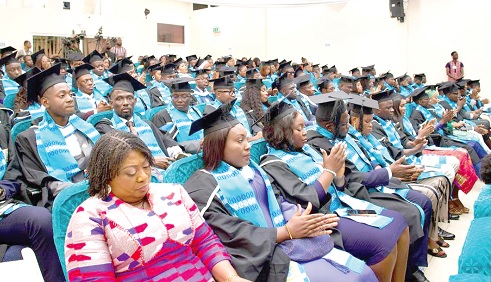
A total of 101 students from Ghana, Nigeria and Zambia, comprising 37 Master of Arts in Gender, Peace and Security as well as 63 Master of Arts in Conflict, Peace and Security, graduated.
Also, there was one PhD student, who was the only female doctoral graduate.
The ceremony included the conferment of MA and PhD degrees, as well as the presentation of Best Student Awards for both the MA in Gender, Peace and Security (MGPS) and the MA in Conflict, Peace and Security (MCPS) programmes and the recognition of the PhD graduating student.
The event brought together a distinguished gathering, including the Chief of the Naval Staff, the Chief of the Air Staff, the President of the National Defence University, the Commandant of KAIPTC, faculty members, generals and senior officers, traditional leaders, members of the diplomatic corps and graduates.
Africa’s destiny
The Vice -President urged Africa countries to take control of their own peace and development agenda.
“Africa must no longer be seen as a mere spectator in global affairs, but as a proactive and confident actor in shaping its own destiny,” she said.
She emphasised that the vision of the Mahama-led government was one of bold ownership — where Africa would take charge of its peace, economy and destiny through innovation, self-reliance and strategic partnerships.
Prof. Opoku-Agyemang acknowledged that Ghana, like other nations in the subregion, faced mounting challenges, including illegal mining, cybercrime and the threat of violent extremism.
The Vice President commended the Ghana Armed Forces and the leadership of KAIPTC for maintaining a world-class institution that continued to nurture professionals dedicated to peacebuilding, governance and stability across Africa.
She charged the graduates to become “active architects of solutions,” rather than passive observers, stressing that true security is achieved when justice, opportunity and dignity prevail in society’’.
Capacity expansion
Prof. Opoku-Agyemang stated that the government, through the Ministry of Defence, had approved the revival and completion of KAIPTC’s long-abandoned building complex through a public-private partnership.
“This government recognises the strategic importance of this facility not only as an educational space but as a continental hub for research, dialogue and capacity building in peace and security,” she said.
The project, the Vice-President explained, would enhance regional collaboration, reaffirm the country’s leadership in international peacekeeping and expand the centre’s training capacity-building in peace and security.
Prioritise collaboration
The Co-Founder of the West African Network for Peacebuilding (WANEP), Emmanuel Habuka Bombande, urged leaders to prioritise collaborative problem-solving , interdisciplinary collaboration to solve security and governance challenges.
He said there was the need for adaptability and resilience in responding to the fast-changing global peace and security landscape.
He underscored that ethical leadership and integrity must form the foundation of governance and peacebuilding efforts.
The Acting Commandant of KAIPTC, Air Commodore David Anetey Akrong, called on graduates to take the lead in developing innovative, African-led solutions to the continent’s growing peace and security challenges.
He emphasised that the continent’s youth represented a vital resource for crafting new ideas to address challenges ranging from violent extremism to terrorism, poor governance of natural resources, transnational organised crime, political vigilantism and democratic reversals.
