
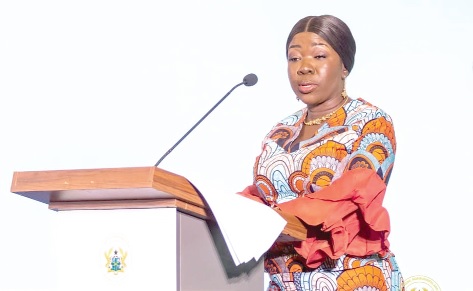
Govt pledges stronger integration of agriculture, industry
The government will continue to attract investment into the local production of high-quality raw materials that are in high demand both locally and internationally, the Minister of Trade, Industry and Agribusiness, Elizabeth Ofosu-Agyare, has said.
She said the initiative, which formed part of the government’s broader industrialisation agenda, was expected to strengthen the link between agriculture and industry by supporting the expansion of local manufacturing and boosting export trade.
Furthermore, she explained that the move was aimed at creating jobs and sustaining livelihoods, particularly at the district level, where agribusinesses formed the backbone of rural economies.
Mrs Ofosu-Agyare stated this in a speech read on her behalf by the Director of Research and Information Management of the ministry, George Amoah, at the opening of a two-day workshop in Accra to mark the official closure of the Rural Enterprises Programme (REP).
Responsive ecosystem
She noted that a competitive and efficient manufacturing sector required a responsive ecosystem that addressed the needs of micro, small and medium-sized enterprises (MSMEs) in rural communities.
To this end, she noted that the Ghana Enterprises Agency (GEA) had been well-positioned to enhance enterprise development through the provision of business development services and targeted financial support.
She further explained that the GRATIS Foundation and the 31 Technology Solution Centres (TSCs) were focusing on local technology solutions, spare parts production, and machinery maintenance, thereby reducing downtime and lowering production costs for enterprises.
The minister said projects such as the ENABLE Youth Factories and Common User Facilities established under REP were already contributing to value addition, product diversification and job creation for the youth engaged in agribusiness.
“This workshop marks the beginning of a new chapter; moving from project-driven interventions to institutionalised, nationally owned systems that can deliver long-lasting benefits,” she said.
She expressed appreciation to the International Fund for Agricultural Development (IFAD) and the African Development Bank (AfDB) for their financial and technical support throughout the implementation of the REP.
Acknowledgement
The minister also acknowledged the contributions of Metropolitan, Municipal and District Chief Executives (MMDCEs), traditional authorities, financial institutions, tertiary institutions, MSME clients and private sector partners whose commitment ensured the programme’s success.
“Together with our development partners, we will unlock Ghana’s rural potential and drive inclusive, resilient and sustainable industrialisation,” the minister said.
The REP, which spanned several phases with funding from development partners, provided business support services, vocational and skills training, and access to finance for rural enterprises.
It has been credited with enhancing value chains, supporting small industries and creating thousands of jobs in rural communities.
Stakeholders believe that institutionalising its interventions under MOTIA and other state agencies will help sustain its achievements, ensuring that rural MSMEs continue to play an integral role in national development.
