
The Minerals Income Investment Fund (MIIF) has recorded exceptional performance in mineral royalty collections during the 2025 financial year, improving collection by almost 11 per cent over the previous year.
The fund's data showed that total royalty receipts amounted to GH¢5.43 billion, representing a 10.8 per cent increase over the GH¢4.90 billion recorded in 2024.
The achievement marks the highest royalty collection since MIIF's inception and underscores robust operational efficiency and favourable market conditions.
The fund attributed its strong performance last year to a combination of strategic initiatives and favourable market dynamics, including the implementation of rigorous nationwide monitoring protocols across all mining operations to ensure strict compliance with royalty payment obligations.
This proactive enforcement mechanism significantly reduced payment delays and improved collection efficiency.
Again, international gold prices remained elevated throughout the year, positively impacting royalty valuations.
The sustained high pricing environment created positive conditions for increased revenue generation from gold mining operations.
Gold key pillar
A statement issued by MIIF stated that large-scale gold mines continued to underpin the country’s mineral revenue base as royalty receipts from the segment rose to GH¢5.1 billion in 2025, compared to GH¢4.7 billion in 2024, representing an increase of nearly GH¢394 million.
The strong performance reflects MIIF’s strong monitoring of the mines, collaboration with other stakeholders such as the Minerals Commission and the Ghana Revenue Authority (GRA), as well as elevated global gold prices throughout 2025 and expanded output, including production from Newmont Ahafo North Mine and Cardinal Namdini.
Manganese gains momentum
The manganese subsector emerged as one of the year’s strongest performers aside from gold.
Royalty receipts increased to GH¢212 million in 2025, up from GH¢186 million in 2024, representing a growth of approximately 14.4 per cent.
The increase was driven by higher production volumes and improved compliance with royalty obligations.
The other minerals, including granite, limestone, sand and salt, which contribute about one per cent to the total royalty receipts, fell slightly below the annual target.
The reasons include competitive pricing pressures across quarry operations, which compressed margins and reduced royalty accruals.
Others are restricted access to Sahelian regions, which are key export destinations for Ghanaian salt; a sharp decline in salt prices per bag, importation of salt from other countries, and weather conditions unfavourable to salt mining within the year under review.
Outlook
MIIF said the 2025 performance highlighted the resilience of Ghana’s mineral revenue base, anchored by gold and increasingly supported by improved manganese output.
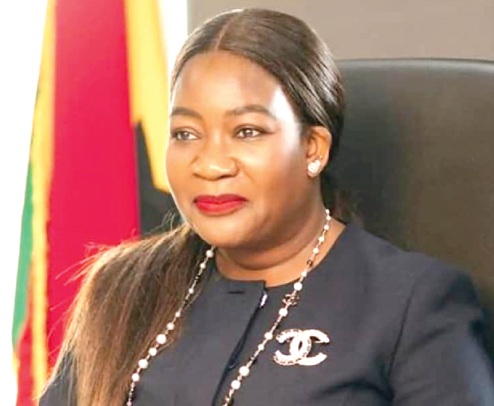
The Chief Executive Officer (CEO) of the fund, Justina Nelson, described the performance as welcoming and inspiring.
“It is a significant milestone, as this marks the first time since the fund’s inception that royalty inflows have exceeded the GH¢5 billion threshold, achieved despite challenging conditions,” Mrs Nelson stated.
She added that with total receipts surpassing GH¢5.43 billion in 2025, the Fund had entered 2026 on a stronger revenue footing.
The MIIF CEO explained that 2025 began with the dollar trading at about GH¢17, the rate used for projections on large-scale gold royalties.
However, as the year progressed, the cedi strengthened to about GH¢12 to a dollar.
Despite the cedi appreciation, the fund still recorded GH¢5.43 billion in royalties in 2025, up from GH¢4.90 billion in 2024 when the exchange rate was around GH¢17 to a dollar.
Mrs Nelson said MIIF would continue to collaborate with other state agencies, such as the GRA and Minerals Commission, to enhance compliance enforcement.
She added that the fund was determined to further tighten internal controls, expand field monitoring and encourage higher production across the extractive sector in the quest to exceed the receipts for last year.
Mrs Nelson pledged the commitment of the fund to remain focused on its mandate and ensure that Ghana’s mineral wealth continues to benefit present and future generations.
