
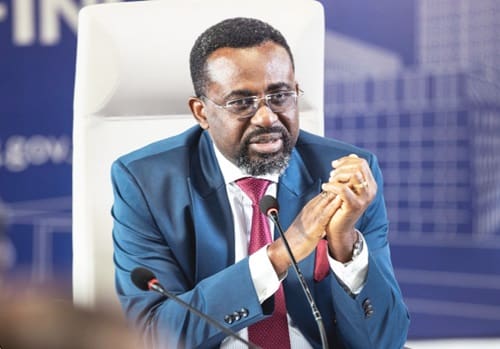
Ghana’s economic outlook has strengthened significantly in recent months, with inflation falling sharply and international reserves improving, but rising global uncertainties could complicate the country’s monetary policy path, Governor of the Bank of Ghana, Dr Johnson Pandit Asiama, has said.
Speaking at the opening of the 129th Monetary Policy Committee (MPC) meeting in Accra, the Governor noted that new economic data suggested the economy was stabilising faster than many had anticipated. However, he cautioned that emerging global risks required careful policy judgement to ensure the gains were sustained.
He said headline inflation had dropped to 3.3 per cent in February, marking the fourteenth consecutive monthly decline and bringing inflation below the Bank’s medium-term target band.
“These are numbers that, not long ago, would have been considered aspirational,” Dr Asiama said as he reflected on the recent improvements in macroeconomic indicators.
The Bank of Ghana governor also reported that the country’s external buffers had strengthened, with gross international reserves rising to about $14.5 billion, equivalent to 5.8 months of import cover. This represents an increase from the approximately $13.8 billion recorded at the time of the MPC’s previous meeting in January.
He added that economic activity was showing stronger momentum, with the Composite Index of Economic Activity growing by 8.4 per cent year-on-year at the beginning of 2026. The growth, he said, had been supported by stronger bank credit, improved industrial output, higher trade activity and increased household consumption.
According to him, both consumer and business confidence had improved in February as inflation continued to ease, indicating a gradual strengthening of economic sentiment.
Despite the encouraging domestic outlook, Dr Asiama warned that the global environment had become more volatile since the MPC’s last meeting in January. He pointed to the escalation of conflict in the Middle East, which he said had disrupted key shipping and energy routes, triggering greater volatility in global oil markets.
He explained that sustained increases in oil prices could raise the risk of imported inflation for Ghana, potentially forcing the central bank to tighten monetary policy and affecting domestic financial conditions.
Dr Asiama noted that while geopolitical uncertainty often pushes gold prices higher, which benefits Ghana’s trade balance, the broader impact of the external shock remained inflationary.
He also highlighted the government’s newly announced Ghana Accelerated National Reserve Accumulation Programme (GANRAP), which seeks to raise the country’s international reserves to 15 months of import cover by 2028, from the current level of about 5.8 months.
The governor said the programme would strengthen macroeconomic resilience but could also have implications for liquidity conditions and the central bank’s balance sheet, which policymakers would need to consider when calibrating monetary policy.
Dr Asiama further noted that Ghana’s banking sector remained sound, profitable and well-capitalised, with asset quality improving significantly over the past year. This, he said, would be important in ensuring that changes in policy rates effectively influence credit conditions for households and businesses.
He stressed that the MPC now faced a more complex decision than earlier in the year, as it had to balance clear domestic economic progress with growing external risks.
“The question before this Committee is not whether conditions have improved. They have, significantly and across the board,” he said. “However, how do we respond to that improvement when the conditions that enabled it are under pressure?”
He added that central banking required not only responding to crises but also ensuring that economic progress achieved through disciplined policy was maintained over the long term.
