
MDAs urged to appoint legal liaison officers
Ministries, Departments and Agencies have been urged to appoint legal liaison officers who will coordinate legal matters with the Office of the Attorney-General and the Ministry of Justice.
This would enable state attorneys to effectively defend the state in civil matters and also prevent judgment debts against the state.
Speaking at a sensitisation workshop for selected staff members of various MDAs, a Principal State-Attorney, Nancynetta Twumasi Asiamah, said it was difficult to get, identify, and make available credible witnesses with institutional memory or technical information expertise to support litigation matters in the defence of the state.
She, therefore, said appointing such liaison officers would help in effective compliance with procedural timelines.
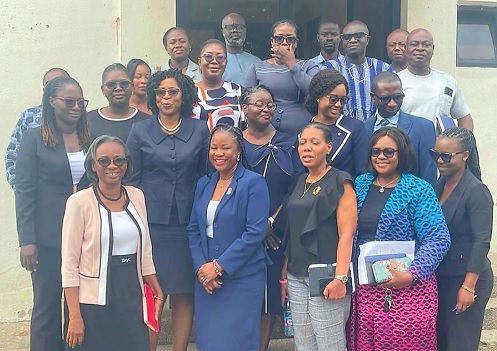
Organised by the Office of the Attorney-General and the Ministry of Justice, the day's sensitisation workshop was on the work processes of the office.
Officers of the various ministries, departments and agencies in Accra were taken through topics such as consequences of non-compliance for civil service, why expeditious trial matters, and the law-making process, among others.
Partnership
The Principal State-Attorney said: “Look at us as a partner in protecting the public purse. Before you sign any document or agreement, make sure the person signing is the right person.”
“And let the Office of the Attorney-General have an input, invite us to your meetings and negotiations. Once we do that, we are already winning the case, should there be any problems in the future,” she said.
Ms Asiamah further urged the participants to ensure they submitted all relevant documents, memos and records promptly to the A-G’s office upon receipt of court processes, while incorporating responsiveness to legal matters as a performance metric for civil service assessment and promotion.
The Principal State-Attorney said regulations were being developed to sanction officials whose actions led to the loss of state funds.
Rationale
The Solicitor-General, Helen Ziwu, also said the Ministry of Justice played a central coordinating role in the administration of justice, providing legal advice to the government, criminal prosecution, legislative drafting, public education on the law and the promotion of human rights.
Giving those wide mandates, Mrs Ziwu said it was essential that stakeholders had a clear understanding of how the Office of the Attorney-General and Ministry of Justice worked, including procedures guiding their operations.
She said the sensitisation workshop was, therefore, timely as it would provide an opportunity to clarify their internal processes, outline recent reforms and highlight home-grown initiatives aimed at enhancing efficiency and service delivery.
