
Observing Ramadan: Islamic leaders advocate social discipline
Islamic leaders have urged Muslims to translate spiritual devotion into ethical behaviour and responsible citizenship as the country prepares to begin Ramadan.
They emphasised that the fasting month should not only be about abstaining from food and drink, but also about personal discipline, honesty and fairness in public and private life.
They said Ramadan offered an opportunity for moral renewal that can positively influence governance, social order and interfaith harmony across the nation.
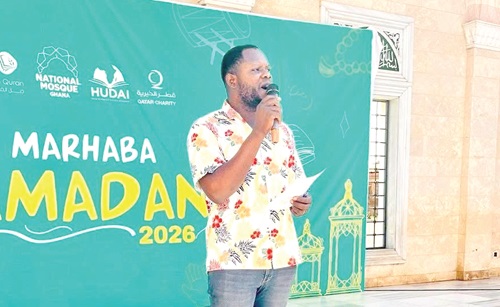
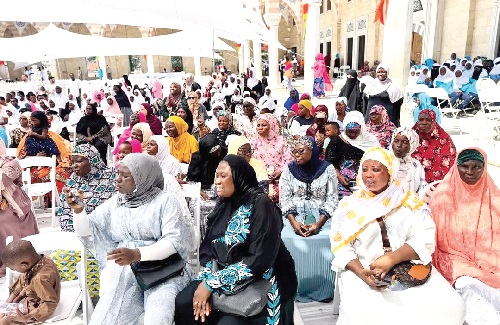
The Islamic leaders made the call last Sunday at the National Mosque in Accra during a ceremony to usher in the Holy Month of Ramadan.
Dubbed: “Marhaba Ramadan”, the event was organised in partnership with Hudai Foundation and Jil-Al-Quran and featured Quran and Hadith recitations, Nasheed performances and announcements of planned Ramadan activities, including food distribution and community outreach programmes.
Ramadan
Ramadan is the ninth month of the Islamic lunar calendar and is observed by Muslims worldwide as a period of fasting, prayer, reflection and charity.
The forum
From dawn to sunset, Muslims abstain from food and drink, seeking spiritual purification, self-discipline and closeness to God.
It also emphasises compassion, generosity and moral renewal.
This year, Ramadan began yesterday and also today, at the sighting of the moon.
Significance
The Personal Assistant to the Chief Imam, Dr Mohammed Marzuq Abubakr Azindoo, stressed that Ramadan must serve as a national moral reset, not merely a period of abstinence.
He warned that social media excesses and foreign cultural influences were eroding religious and African values, resulting in declining decency across society.
Ramadan, he said, should transform character from spirituality to civic responsibility, urging politicians to abandon insults, students to reject examination malpractice, and workers to move from corruption to fairness.
Dr Azindoo linked piety to patriotism, arguing that religious values—justice, unity, objectivity and excellence—are compatible with Ghana’s democratic governance and essential for national development and interfaith harmony.
“In spite of our secular democratic status, we are still Godly.
And that is why there is a need for us to emphasise the sense of religious pluralism.
That is interfaith harmony.
So that at the end of the day, all religions will be seen not just as serving God, but also as serving the nation, humanity and the interests of everybody,” he said.
Youth conduct, social welfare
A Deputy Administrator at the National Mosque, Jabir Ameer Yaadiga Kango, said the National Mosque would use Ramadan to guide young Muslims through structured programmes promoting educational focus, responsible digital conduct and civic awareness.
Youth were urged to limit social media use to essential business purposes, avoid online excesses and channel the period into discipline, productivity and informed participation.
The Hudai Foundation Director, Remzi Şeker, announced that beyond spiritual observance, the Hudai Foundation would intensify social support by distributing food to 7,000 vulnerable individuals and organising iftar meals for about 20,000 people.
He said the initiative aimed to cushion households facing economic strain while promoting mercy, peace and communal solidarity during Ramadan.
The Education Coordinator, National Mosque/Tinasco SHS, Orhun Kiyci, said the “Marhaba Ramadan” programme was designed to prepare communities physically and spiritually for the fasting month.
He emphasised that Ramadan’s personal transformation should radiate beyond Muslims, fostering good neighbourliness, social responsibility and community-wide benefit across religious lines.
