
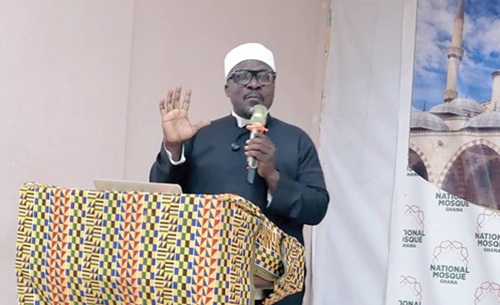
Ramadan anti-corruption strategy, governance training ground — Dr Abubakar
An Islamic Scholar and educationist, Dr Sheikh Said Mukhtar Abubakar, has described Ramadan as a powerful anti-corruption strategy and a governance training ground for contemporary Muslim societies.
He has therefore urged Muslims to institutionalise the spirit of Ramadan in governance, family life and professional conduct.
Delivering a public lecture at the National Mosque in Accra last Sunday on the theme “Attainment of Spiritual Growth and Moral Consciousness in Contemporary Muslim Societies: The Ramadan Factor,” Dr Abubakar argued that Ramadan must move beyond ritual fasting to institutional transformation.
“Ramadan is not a burden,” he told participants. “It is a huge opportunity; a spiritual reset, a moral accelerator and a community reform platform.”
He explained that the discipline of abstaining from food and water in private builds internal accountability — the kind required to fight corruption in public life.
“If a person can avoid food and water when no human being is watching, that same discipline can fight corruption,” he said.
The lecture, the second in the series, was organised by Hijra Club, an association formed in November 1992 by wealthy and enlightened Muslim men to assist needy Muslim youth to acquire tertiary education and to champion Muslim causes.
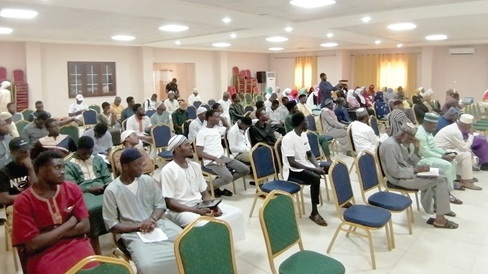
The participants in the lecture
One of the most notable successes of the club is advocacy for the declaration of Edul-Fitr and Eidul-Adha as Muslim national holidays and the award of scholarships to 400 brilliant Muslim students in 2022.
Dr Abubakar said “Ramadan trains taqwa: the consciousness that Allah is watching. If we carry that into procurement offices and business contracts, corruption would reduce drastically.”
Beyond governance, he described Ramadan as a “family restoration platform,” noting that the month strengthens bonds as families break fast together, pray collectively and rebuild strained relationships.
Dr Abubakar, however, challenged Muslim professionals to move from inspiration to structure, outlining five practical commitments.
These include forging strategic partnerships with youth organisations to professionalise Ramadan programmes, establishing structured accountability circles and launching Qur’an literacy and ethics clubs within mosques.
He also called for transparent mosque financial systems, urging Muslim technocrats, accountants and project managers to volunteer expertise to train mosque committees and improve reporting standards.
“Transparency builds trust. Trust builds growth,” he emphasised.
In workplaces, he proposed Ramadan-inspired ethical pledges, encouraging chief executives and managers to challenge staff to reflect on what they are doing differently during the holy month.
“Ramadan should not stay in the mosque,” he declared. “It must enter the office.”
