
Tema in 2025: Economic drive, energy revival and public safety
From the busy port and industrial enclave to significant developments in energy and security, Tema and its surrounding areas experienced events in 2025 that directly influenced livelihoods, investment and public confidence.
The stories of the year revealed an enclave balancing economic ambition with the realities of safety, enforcement and sustainable development.
Port and Industrial Enclave
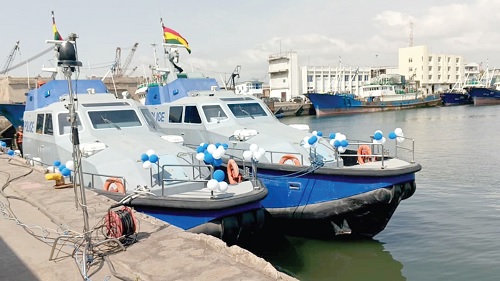
Port activities remained central to Tema’s economic identity. In January 2025, the Ghana Ports and Harbours Authority (GPHA) strengthened maritime operations with the commissioning of the 470-tonne multipurpose vessel MPV Gordon Anim.
Built in Turkey and named after a former Director of Ports, the vessel was designed to enhance pollution control, search and rescue, marine salvage and maintenance operations, improving safety and efficiency at the Tema and Takoradi ports and fishing harbours.
Industrial operations, however, were tested by a series of fire outbreaks.
In May, a major blaze at Flour Mills Ghana Limited at the GAFCO Yard destroyed key electrical installations, while in October, two separate fire incidents at Yota Energy Company in Shai Hills and the Akosombo Industrial Company warehouse caused extensive damage to machinery and stored materials.
Swift interventions by the Ghana National Fire Service prevented worse outcomes in some cases, but the incidents renewed concerns about industrial safety standards.
Still on the industrial front, workers of the Akosombo Industrial Company Limited (AICL), formerly Akosombo Textiles Ltd., in October, appealed for government intervention to secure a new investor.
The factory, grappling with heavy debts and declining production, had left employees unpaid for over six months.
At its peak, AICL employed more than 3,000 workers and produced about 36,000 metres of cloth daily; today, fewer than 450 workers remain.
Union officials cited ineffective management strategies as a key factor behind the decline, highlighting broader vulnerabilities within Tema’s manufacturing sector.
Energy
Energy sector activities featured prominently during the year. In March, the West African Gas Pipeline resumed natural gas transportation from Nigeria to the Tema Regulating and Metering Station after completing its scheduled five-year maintenance ahead of time.
The development contributed to more stable power generation to support the economy.
The government also advanced its clean energy agenda.
In April, a 253.26-kilowatt-peak solar mini-grid was inaugurated to supply electricity to island communities in the Ada East District, improving livelihoods for more than 3,700 residents.
In September, a one-megawatt integrated solar project was launched at the Dawhenya Irrigation Scheme through a collaboration involving the Ministry of Energy and Green Transition, the Ministry of Food and Agriculture and the Government of Korea, to support agriculture, food security and climate resilience.
In December, Tema witnessed a landmark development with the resumption of crude oil refining at the Tema Oil Refinery (TOR) after several years of inactivity.
Following the successful completion of turnaround maintenance works on its Crude Distillation Unit, the restart raised expectations of improved fuel availability, foreign exchange savings, job creation and greater stability in Ghana’s petroleum supply chain.
Security and safety
Security and enforcement actions defined much of the year, particularly at the Tema Port. In March, regulatory and intelligence agencies intercepted a large consignment of opioid drugs valued at about GH¢20 million, allegedly destined for Niger.
The seized pharmaceuticals were later destroyed under court supervision, underscoring Ghana’s commitment to combating illicit drug trafficking.
In the same month, National Security arrested 14 suspects in connection with missing shipping containers containing materials belonging to the Electricity Company of Ghana (ECG).
Investigations uncovered stolen power cables being smelted and stored in factories around Shai Hills and Kpone, prompting assurances of prosecution and asset recovery.
Environmental security also received attention as the Greater Accra Regional Security Council demolished illegal structures on waterways within the Sakumo Ramsar Site following floods in the Tema West Municipality.
The Greater Accra Regional Minister, Linda Akweley Ocloo, said the action was necessary to restore natural water flow and prevent future disasters.
However, while the Klagon community suffered extensive demolitions, areas around Communities 11 and 12, despite earlier warnings, appeared to have been spared.
In November, officials of Ghana Water Limited (GWL) uncovered illegal water connections at a sachet and bottled water manufacturing facility and a medical institution in the Shai Osudoku District.
The facilities were found to have diverted treated water from the main meter for extended use.
The discoveries formed part of the National Revenue Enhancement Taskforce’s crackdown on unauthorised water usage.
Railway Service and Safety
The Ghana Railways Development Authority (GRDA) activated commercial operations on the Tema–Mpakadan railway line on October 1, with Diesel Multiple Unit (DMU) trains providing a faster and more affordable alternative to road transport.
The Minister of Transport, Joseph Bukari Nikpe, described the launch as a milestone, noting its potential to reduce traffic congestion, lower business costs and improve cargo transport efficiency.
However, the service faced challenges. In November, a hearing-impaired man was tragically killed after walking on the tracks at Bediako near Afienya, despite repeated train horn warnings.
GRDA officials expressed regret and cautioned the public against trespassing along railway corridors.
Security threats persisted, including at least four incidents of stone-throwing at trains, two of which damaged windows and a windscreen.
The incidents prompted intensified collaboration with local authorities to clear encroachers and enhance patrols.
GRDA reaffirmed its commitment to safe, reliable and modern rail services under Ghana’s Railway Reset Agenda.
Maritime and police security
Maritime and coastal security saw notable upgrades during the year. In October, the Ghana Navy intercepted 10 stowaways aboard the Grand Venus, ensuring their safe escort to Tema Harbour.
Meanwhile, in November, the Ghana Police Service inaugurated four Avon Class patrol boats manufactured in Turkey and funded through partnerships involving the United Nations Office on Drugs and Crime (UNODC), the US Embassy and the Government of Japan.
The vessels are expected to strengthen law enforcement, maritime patrols, search-and-rescue operations and emergency response along Ghana’s coastal and inland waterways.
Writer’s email:
