
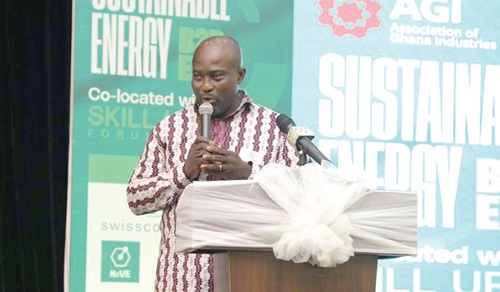
Transition to clean energy: EV charging infrastructure to be expanded
The Ministry of Energy and Green Transition (MoEGT) is to expand electric vehicle (EV) charging infrastructure across the country as part of measures to decarbonise the transport sector and support the transition to clean energy.
The Director of Renewable Energy at the ministry, Seth Mahu, said the initiative would be financed through the renewable energy fund, to encourage nationwide adoption of e-mobility solutions.
He explained that transportation remained one of the major sectors contributing to carbon emissions, making it necessary for the government to prioritise cleaner mobility interventions.
Speaking at the Association of Ghana Industries (AGI) Sustainable Energy B2B Expo in Accra, yesterday, Mr Mahu added that the ministry intended to ensure the charging infrastructure would be powered by renewable energy to support the nation’s broader net-zero emissions target by 2070.
Event
The expo, coupled with a skill-up forum, was designed to bridge the gap between clean energy providers and industrial consumers.
It was on the theme: “Powering industry through sustainable energy.”
The event served as a strategic platform for businesses to explore renewable energy and energy-efficiency technologies that could drive industrial competitiveness and reduce operational costs.
It features an exhibition of over 30 clean technology providers, productive B2B matchmaking sessions, and technology presentations from financial institutions and service providers.
It was organised by AGI Energy Service Centre.
Sustainable energy solutions
Mr Mahu said energy efficiency and renewable energy adoption were central to government policy, particularly in supporting businesses to reduce operational costs and improve sustainability ratings.

He said that ongoing initiatives such as solar integration, energy efficiency programmes, and e-mobility projects were key to strengthening the country’s long-term energy transition agenda.
“If we want to remain competitive and export the bulk of what we produce, we must ensure that we are producing in a more sustainable way, and that is exactly what these interventions are designed to achieve,” Mr Mahu added.
Competitiveness
The President of the Association of Ghana Industries, Kofi Nsiah-Poku, said that reliable and affordable energy remained critical to sustaining manufacturing growth and supporting the country’s broader 24-hour economy agenda.
Mr Nsiah-Poku added that renewable energy solutions, particularly solar power, offered significant opportunities to reduce pressure on the national grid while lowering operational expenses for businesses.
“We, therefore, encourage the expansion of incentives such as tax reliefs on renewable energy technologies, affordable green financing, and streamlined regulatory processes to support a faster industrial energy transition,” he said.
Partnerships
The Chief Technical Officer of AGI Energy Service Centre, Isaac Kofi Batini, also said that the country’s industrial sector was increasingly prioritising sustainable energy solutions due to rising electricity costs and global pressure for cleaner production systems.
He explained that the expo had been designed to move beyond dialogue and focus on practical partnerships, investments, and technologies that could accelerate the country’s energy transition.
Mr Batini said effective implementation of a national net metering programme remained critical to enabling industries to generate and manage their own clean energy more efficiently.
