
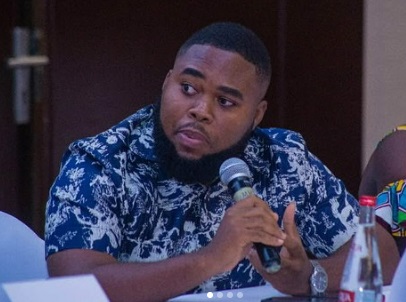
The arrest, prosecution, and repeated remand of Kwame Baffoe, popularly known as Abronye DC and the Bono Regional Chairman of the New Patriotic Party (NPP), has once again brought Ghana’s delicate balance between free speech and public order into sharp national focus.
As of May 2026, Abronye DC faces charges under laws prohibiting the publication of false news and statements likely to cause fear and alarm, particularly those involving criticism of a judge.
Courts have on occasion denied him bail, citing potential risks of further public infractions, which has led to periods of remand. This development has triggered strong reactions from the NPP , with figures such as Minority Leader Alexander Afenyo-Markin describing the actions as political persecution and a threat to constitutional rights.
The case serves as a vivid illustration of the broader tensions in Ghana’s democracy, where rapid digital communication collides with long-standing legal efforts to maintain societal stability.
At the heart of this debate lies Ghana’s 1992 Constitution, specifically Article 21, which explicitly guarantees every citizen the right to freedom of speech and expression, including the freedom to impart ideas and information without interference. However , these rights are not unlimited.
The Constitution permits reasonable restrictions through laws aimed at protecting public order , public morality, and the rights of others. This constitutional framework has given rise to two key statutory instruments that authorities frequently invoke in cases involving alleged misinformation.
The first is Section 208 of the Criminal Offences Act, 1960 (Act 29), which criminalizes the publication or reproduction of any false statement, rumor, or report that is likely to cause fear or alarm to the public or disturb the public peace, where the publisher knows or has reason to believe the information is false. This offense carries penalties of up to three years’ imprisonment, a fine, or both.
The second is Section 76 of the Electronic Communications Act, 2008 (Act 775), which addresses the digital realm more directly by penalizing the knowing transmission of false or misleading electronic communications that could endanger public safety or disrupt life-saving services, with even stiffer penalties including fines of thousands of penalty units and up to five years in prison.
These laws have deep historical roots and have been applied across different political eras.
Ghana took a significant step forward in 2001 by repealing criminal libel and sedition laws that had long been used to suppress media freedom. Yet the retention of false news provisions created a continuing legal avenue for prosecuting speech.
During the administration of President Nana Addo Dankwa Akufo-Addo from 2017 to 2024, there was a noticeable rise in arrests of journalists and political commentators. Prominent examples include Accra FM presenter Kwabena Bobbie Ansah, who was charged over unverified allegations involving the First Lady, and Mensah Thompson of ASEPA, who faced detention for claims about the presidential jet.
Government and party officials at the time often defended such actions as essential to counter character assassination and the destabilization of state institutions.
The current situation, in which a prominent NPP figure now finds himself subject to the same legal framework, highlights a recurring irony in Ghanaian politics: parties tend to support strong enforcement tools while in power, only to criticize them vigorously when they become targets.
Supporters of strict enforcement maintain that these laws play a vital role in safeguarding Ghana’s democracy. In an era of social media virality, deliberate falsehoods can rapidly erode public confidence in core institutions such as the Electoral Commission, the judiciary, and law enforcement agencies.
In a diverse and politically charged society like Ghana, misinformation also carries the risk of inflaming ethnic tensions or sparking real-world unrest.
Advocates argue that freedom of speech was never intended to include the freedom to deceive, defame, or incite disorder.
They emphasize the importance of cultivating a national culture of verification before dissemination, viewing responsible speech as a shared civic responsibility that helps preserve the hard-won stability of the Fourth Republic.
Nevertheless, these laws face significant criticism from legal experts, media practitioners, and civil society. Prominent voices, including veteran lawyer Samson Lardy Anyenini, have described Section 208 in particular as an archaic colonial-era relic that is overly vague and inconsistent with modern democratic standards. Critics point to subjective phrases such as “likely to cause fear and alarm” or “disturb the public peace,” which grant prosecutors and judges considerable discretion and create a high risk of selective application. This vagueness, they contend, can produce a chilling effect on legitimate political criticism, investigative journalism, and even satirical commentary.
There are also concerns about partisan patterns in enforcement, where actions appear timed to political convenience rather than consistent principles of justice. Many argue that criminal penalties, especially those involving potential imprisonment for speech-related offenses, represent a disproportionate response compared to civil remedies like defamation suits or non-legal approachessuch as media literacy campaigns and platform-level moderation.
Ghana is not alone in confronting these challenges, as many democracies worldwide continue to debate the appropriate response to digital-age misinformation. Some jurisdictions have moved toward narrower laws that focus strictly on imminent harm or direct incitement, while placing greater emphasis on transparency, fact-checking, and user education. In Ghana, proposals for broader misinformation legislation have repeatedly encountered resistance from bodies like the Ghana Journalists Association, which warn against overbreadth and threats to press freedom.
Achieving the right equilibrium will require thoughtful reform and a multi-faceted strategy.
Lawmakers should consider repealing or substantially narrowing Section 208 to demand clearer evidence of intent, actual harm, and higher standards of proof, bringing it more in line with the more targeted provisions of Section 76. Enforcement must be applied consistently and free from partisan influence, with the judiciary exercising careful oversight to protect constitutional rights, particularly by granting bail more readily in cases lacking clear ongoing threats. Beyond legislation, sustained investment in public education on media literacy, support for independent fact-checking initiatives, and encouragement of responsible conduct by politicians, media houses, and ordinary citizens will be essential. Ultimately, the goal should be a system that curbs genuinely dangerous disinformation without transforming the digital public square into a heavily policed zone where dissent is routinely criminalized.
In conclusion, the Abronye DC case and similar incidents underscore that Ghana stands at a criticaljuncture in defining the boundaries of free speech in the digital era. While the dangers of unchecked misinformation are real and cannot be ignored, overly broad or selectively enforced criminal laws risk undermining the very democratic values they claim to protect. It is equally important for the public to recognize the independence of the judiciary as a cornerstone of Ghana’s democracy. Citizens should refrain from involving the President in judicial matters or expecting executive interference, as the judiciary operates as an autonomous body and the President has no authority to interfere in the rule of law. Ghana’s long-term democratic health depends on fostering both a commitment to truth and a robust tolerance for robust debate and accountability. By pursuing precise, proportionate, and impartial legal frameworks alongside cultural and educational efforts, while upholding the separation of powers, the nation can better navigate the fine line between liberty and lawlessness, ensuring that its democracy remains vibrant, stable, and resilient for future
