
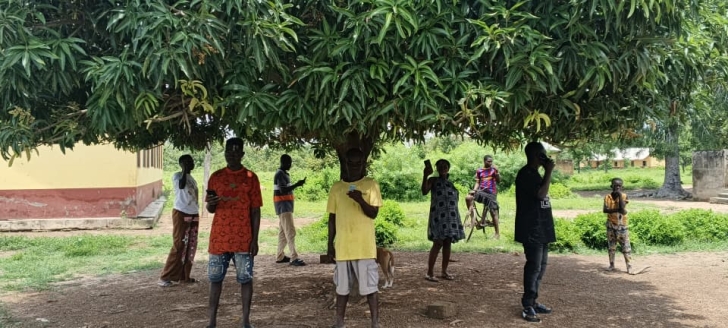
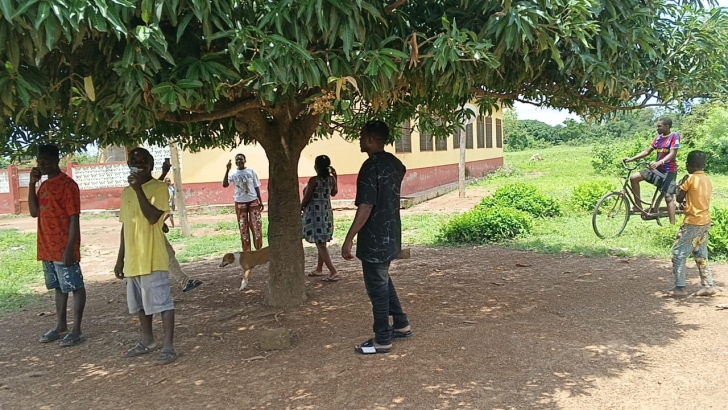
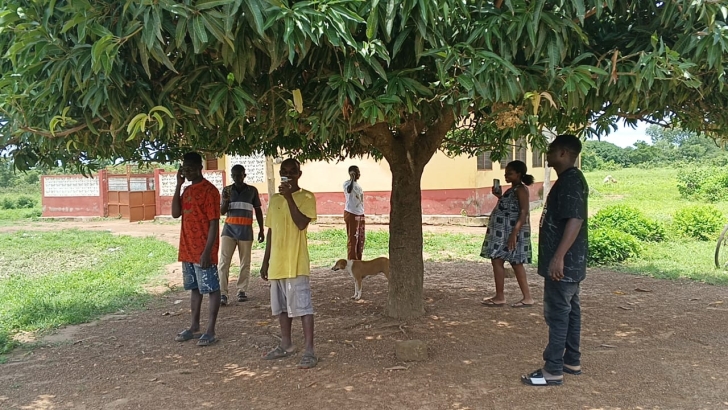
Under the shade of a sprawling mango tree in Chakori, a group of young men and women stand silently, their mobile phones raised towards the sky.
They are not taking photographs or recording videos.
They are searching for a mobile network signal.
For residents of Chakori, Bombare, Nanjuro and Konjado in the Kpandai District of the Northern Region, this unusual gathering has become part of daily life.
The mango tree, popular for its mobile signall than for its fruits or shade is located within the compound of the Chakori D/A Primary School and is one of the few places where a weak network signal occasionally appears, making it an unofficial communication centre for residents hoping to make calls, send messages or access the internet.
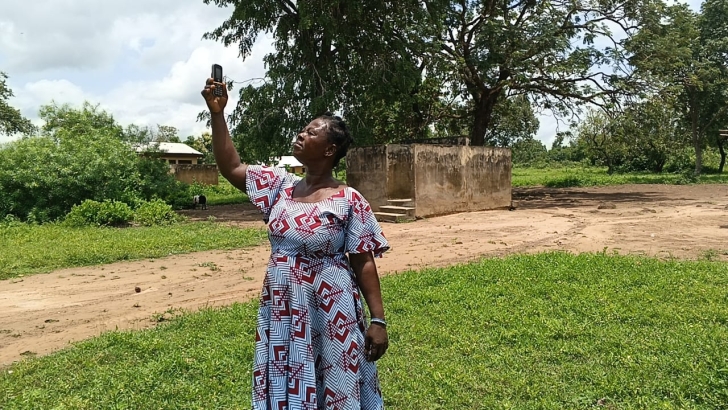
In an era where mobile technology has become essential for communication, business, education and emergency response, residents say they remain digitally isolated.
For years, they had struggled with poor or non-existent mobile network connectivity, a challenge which they stated had cost them opportunities, endangered lives and deepened their isolation from the rest of the country.
Daily struggle
Residents say making a simple phone call often requires walking long distances, waiting for specific times of the day, or gathering at locations where a signal can sometimes be detected.
At certain periods, scores of people gather under the mango tree, hoping to contact relatives, conduct business transactions, or receive important information.
“We gather here because this is the only place where we can sometimes get a signal,” the Assembly Member for the Nanjuro Electoral Area, Krah Yaw James, said.
“Even then, the connection is unstable. Calls drop frequently, and internet access is almost impossible,” he added.
The situation has become particularly frustrating for students and job seekers who increasingly depend on digital platforms for school admissions, examinations, recruitment opportunities and information.
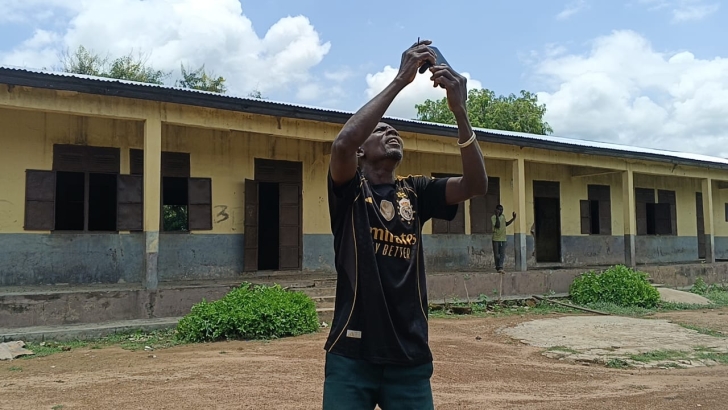
Missed opportunities
A community elder, John Katrapor, said several young people had missed employment opportunities because they were unable to receive interview invitations or respond to recruitment messages on time.
Others, he said, lost admission opportunities after failing to complete online registration processes before deadlines.
One such resident, Ezekiel Dei, said that after completing secondary school in 2022, he applied to tertiary institutions on two occasions but could not continue the admission process because notifications reached him too late.
“Since I could not gain admission, I ventured into the mobile money business.
However, delayed transaction alerts and unreceived transfers often created disputes with customers. Eventually, I had to quit the business,” he said.
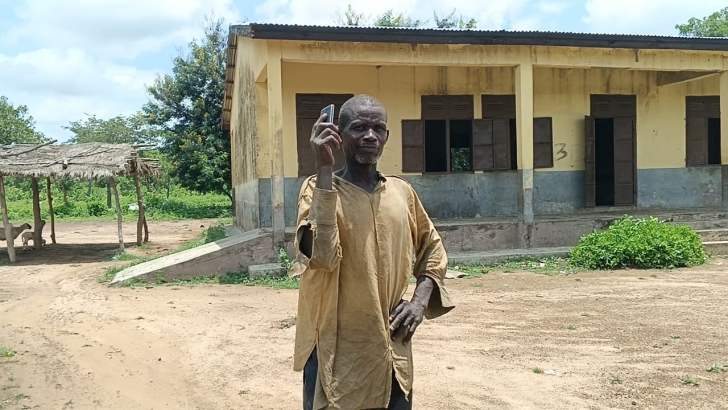
Lives at risk
Beyond the inconvenience, residents say the lack of reliable mobile network coverage compounded risks during emergencies.
Community members reported that over the past two years, at least 10 snakebite cases had been recorded in Chakori, resulting in two deaths.
According to residents, some emergencies became more difficult to manage because relatives and neighbours could not quickly contact health workers or arrange transportation.
In health emergencies, residents sometimes travel to neighbouring communities in search of network coverage before seeking assistance.
“When someone falls sick at night, or there is an emergency, we struggle to contact health workers or vehicle owners. Sometimes valuable time is lost before help arrives,” Mr Katrapor said.
Residents indicated the challenge also affects security and disaster response efforts, leaving communities vulnerable during critical situations.
Economic impact
The absence of reliable connectivity is also affecting economic activities in the predominantly farming communities.
Farmers say they are unable to access timely information on market prices, weather forecasts and agricultural extension services.
Many are also cut off from digital financial services such as mobile money, which has become a major means of conducting transactions across the country.
Although mobile money services are available in nearby communities, residents often travel long distances to access them, increasing transportation costs and reducing convenience.
Local traders and small business operators say limited communication with customers and suppliers continues to affect their operations and restrict business growth.
Privacy, digital exclusion
The few locations where network signals can be obtained have created another challenge: the loss of privacy.
Because residents must gather at specific points to make calls, personal conversations often take place in public spaces where others can easily overhear them.
Residents say this compromises confidentiality and discourages some people from discussing sensitive personal, family or business matters over the phone.
As Ghana advances its digital transformation agenda, residents fear they are being left behind.
From online banking and electronic payments to digital learning and e-government services, many aspects of modern life now depend on reliable internet and mobile connectivity.
Yet for thousands of residents in Chakori, Bombare, Nanjuro and Konjado, access to these services remains largely out of reach.
Social interaction
Beyond the inconvenience of making calls, the network challenge has hindered social interactions and the flow of information within the community.
Community leaders are therefore appealing to telecommunication companies, the Ministry of Communications, Digital Technology and Innovations, and other stakeholders to urgently address the situation.
They argue that access to mobile connectivity is no longer a luxury but a necessity for education, healthcare, economic development and social inclusion.
Assembly response
Responding to the concerns, the District Chief Executive (DCE) for Kpandai, Haruna Abdul-Karim, said the Assembly had taken note of the challenges and was working to secure a Rural Telephony Project through the Ghana Investment Fund for Electronic Communications (GIFEC) to improve connectivity in the area.
He said the Assembly remained committed to creating a conducive environment for residents through the provision of essential services that improve livelihoods and promote socio-economic development.
“Chakori, Kakpeni and many other communities that continue to struggle with mobile network connectivity have been taken into consideration.
It is my responsibility, together with the Assembly, to ensure that these communities also benefit from such critical amenities, which will enhance social interaction, create opportunities and stimulate economic activities,” he said.
As residents continue to gather beneath the mango tree each day, phones raised high in search of a signal, their plight serves as a reminder that despite rapid technological advancement, some communities remain disconnected from the opportunities of the digital age.
For the people of the Nanjuro Electoral Area, the simple ability to make a phone call remains a daily struggle — one they hope will soon become a thing of the past.
