
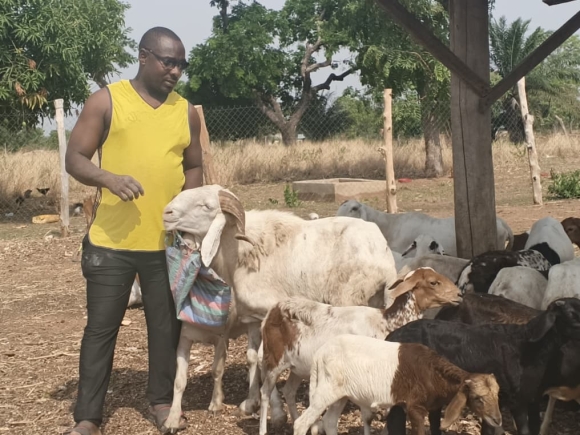
A northern farmer is utilising improved pasture, superior livestock breeds, and natural pest control to enhance productivity, generate wealth, and foster peaceful coexistence between farmers and herders.
In Kpandai, a livestock farmer is demonstrating how smart agriculture can transform rural livelihoods, boost food security, and help resolve the long-standing conflict between herdsmen and crop farmers.
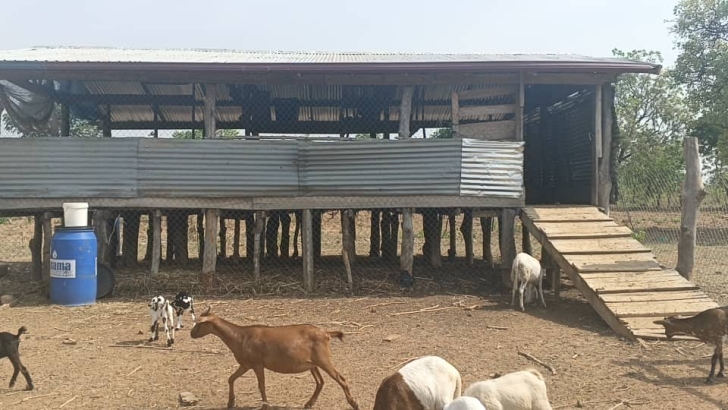
Mohammed Awal, a laboratory scientist by profession a livestock farmer by passion, is the founder of Premium Pasture Animal Farm — a semi-intensive livestock enterprise built on the simple but powerful idea of cultivating pasture to feed animals all year round.
For decades, livestock farmers across the savannah belt have depended largely on natural grazing.
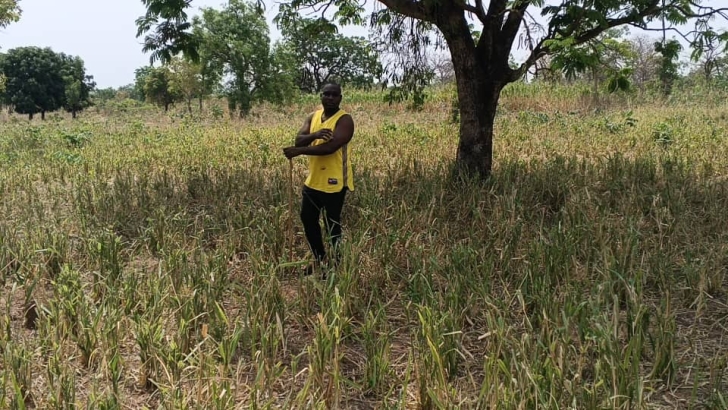
But the system becomes unreliable during the long dry season when bushfires and harsh weather conditions destroy green pasture.
Awal understands this challenge well. Having grown up as both a herdsman and a farmer, he witnessed how animals struggled to survive when pasture disappeared between November and April.
“I grow my own grass to feed my animals because during the dry season, there is no green grass due to bushfires. Animals suffer a lot during that period,” he explained.
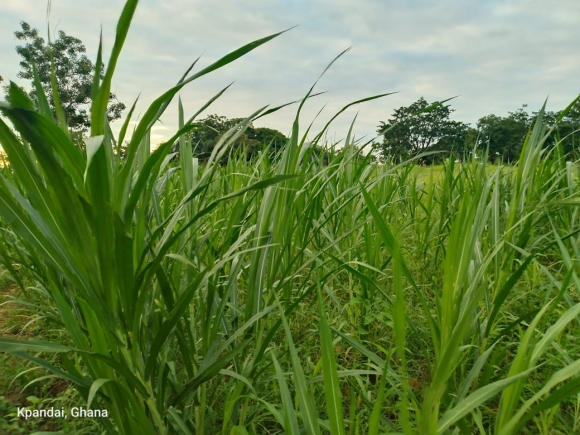
Determined to find a sustainable solution, Awal began cultivating improved pasture grasses on his farm — a decision that has transformed his livestock operation.
Building a sustainable livestock model
To ensure a reliable feed supply, Awal imported improved pasture species from India, Kenya, and Thailand. These include modified Napier grass, Brachiaria grass, and Mucuna, varieties known for their high nutritional value and resilience in dry climates.
The cultivated pasture now allows the farm to maintain a stable feed supply even when natural grazing fields dry up.
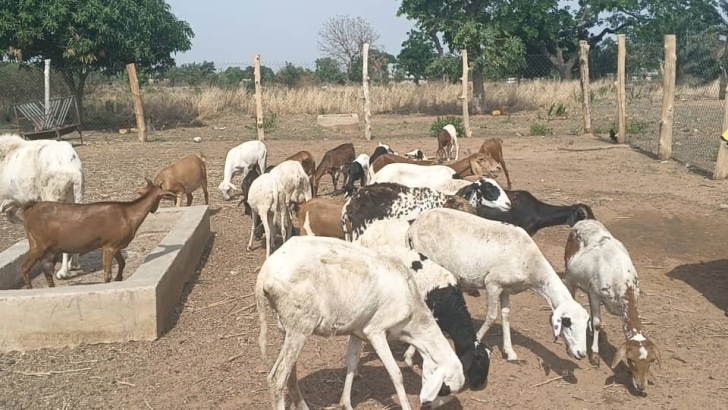
What started just three years ago with only 10 animals has rapidly grown into a thriving livestock enterprise with more than one hundred sheep and goats.
To further improve productivity, Awal introduced superior breeding stock from South Africa's Savannah goat, and the large, long-legged "Balibali" sheep from Niger. The improved breeds are more muscular and productive, making them ideal for crossbreeding with local animals in Kpandai to increase meat yield and herd quality.
According to him, improving the genetic quality of livestock can significantly increase farmers’ incomes while improving the quality of meat available on the market.
Natural solution to a costly problem
Beyond pasture cultivation, Awal has also adopted an innovative biological method to control ticks — a major challenge for livestock farmers.
Tick infestation previously posed a serious threat to sheep and goats on the farm, forcing Awal to rely heavily on chemical treatments.
Awal found a natural solution by introducing guinea fowls into the livestock system.
The birds feed on ticks found on the animals and around the farm environment. Since their introduction, tick infestation has drastically reduced.
“For the past two years we have not recorded any major tick problems on the farm,” he said.
The innovation has virtually eliminated the need for chemical tick control, reducing veterinary costs while improving the health of the animals.
Beyond the financial savings, the practice is environmentally friendly because it reduces the use of chemicals that could harm the ecosystem.
The guinea fowls themselves also provide an additional source of income for the farm.
Reducing conflict between farmers and herders
Livestock farming remains a major source of livelihood for many households in northern Ghana.
However, traditional grazing systems often trigger conflicts between herders and crop farmers when animals stray into crop fields.
Awal’s semi-intensive model offers a practical alternative.
By growing his own pasture and confining animals within the farm, the need for open grazing is significantly reduced.
This approach not only improves livestock productivity but also minimizes the risk of crop destruction — a major source of tensions between farmers and herders across many rural communities.
Agricultural experts say such innovations could help address long-standing disputes between herders and farmers across northern Ghana and other parts of West Africa.
Creating wealth through integrated farming
Awal has also adopted an integrated farming approach to strengthen the economic sustainability of his enterprise.
On his 20-acre farm, he cultivates crops such as yams, cassava, sweet potato, and maize to support animal feeding while diversifying income sources.
Interestingly, the cultivated pasture itself has become a source of income.
“Growing grass alone is generating income for me apart from the sale of animals and crops,” he noted.
Agricultural economists say diversified farming systems are critical for building rural wealth and improving farmers’ resilience against economic shocks.
Improving nutrition and food security
Livestock production plays an important role in improving nutrition and food security in Ghana.
Animal products such as meat and milk provide essential proteins and nutrients needed for healthy growth and development.
By improving livestock productivity and quality, farmers like Awal contribute to increasing the availability of nutritious food in local markets.
Better feeding systems and improved breeds also result in healthier animals and higher-quality meat production.
Climate-smart agriculture
Growing pasture as livestock feed is also considered a climate-smart agricultural practice.
Improved grasses such as Brachiaria help improve soil fertility, prevent erosion, and capture carbon from the atmosphere.
They are also drought-tolerant, making them suitable for areas experiencing climate variability.
By reducing reliance on open grazing, the model also helps prevent land degradation and promotes sustainable land use.
Challenges limiting expansion
Despite the progress made so far, Awal says the farm faces several challenges.
The most pressing issue is access to water during the dry season.
“In the rainy season, I harvest rainwater, but during the dry season, I struggle to get water. It comes with additional cost and burdens the farm,” he lamented.
Other challenges include limited access to capital, the threat of bushfires, lack of mechanised systems, and difficulty finding trained farm caretakers.
Access to affordable credit remains a major barrier for many farmers seeking to expand production.
Opportunities for youth and retirees
Awal believes that with the right support, his farm could serve as a model farm or training centre for livestock farmers across Ghana.
He says the model could also provide sustainable income opportunities for retirees and pensioners.
“This type of farming is flexible and can help retirees improve their livelihoods and generate income,” he explained.
He is also encouraging young people to consider livestock farming as a business opportunity.
“My farm is open for partnerships. I encourage the youth to team up and venture into livestock farming because it is lucrative,” he said.
A model for the future
Agricultural experts believe farms like Premium Pasture Animal Farm represent the future of livestock production in Ghana.
As climate change, population growth, and land pressure continue to challenge traditional farming systems, smart and integrated agricultural models could provide sustainable solutions.
With improved access to credit, water infrastructure, and technical training, such farms could play a major role in reducing poverty, strengthening food security, and promoting peaceful coexistence between farmers and herders.
For Mohammed Awal, the vision is simple but powerful — transforming livestock farming into a modern, profitable, and environmentally sustainable enterprise.
And on his 20-acre farm, that vision is already taking root.
