

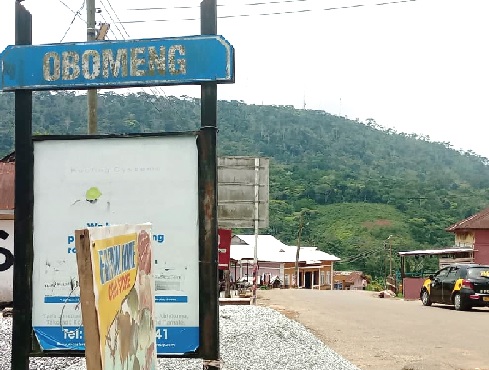
Kwahus gear up for Easter festivities: Feverish preparations in Obomeng, Atibie, Mpraeso, Bepong
The excitement associated with the annual Kwahu Easter festivities is already building across the Kwahu enclave, with feverish preparations underway in towns such as Obomeng, Mpraeso, Atibie, Abetifi and Nkawkaw, the main gateway to the area.
This year’s celebrations are expected to attract large numbers of holidaymakers and revellers, as residents and businesses prepare for what many anticipate will be a memorable festive period.
Across the Kwahu Range, from Mpraeso through Obomeng to Atibie, banners, billboards and posters announcing various activities lined up for this year’s Easter festivities have been mounted.
A visit by The Mirror team to the enclave on Monday revealed that many buildings and trading outlets had been repainted and refurbished in anticipation of the celebrations.
Since 2005, when paragliding was introduced by the late Jake Otanka Obetsebi-Lamptey, then Minister of Tourism, as a major Easter attraction on the Odweanoma Mountain at
Atibie, Kwahu has grown into one of the world’s recognised paragliding destinations.
The Ghana Tourism Authority (GTA) and the Ministry of Tourism have continued to sustain the event over the years.
Business forum
This year’s festivities will also feature a business forum bringing together prominent Kwahu business leaders to deliberate on strategies to transform the area and contribute to Ghana’s economic development.
The forum is expected to be addressed by the Chief of Staff, Julius Debrah.
Ghana Tourism Authority
The Eastern Regional Director of the Ghana Tourism Authority, Mr Jones Aruna Nelson, who anticipates high patronage this year, said the festivities would begin on Friday, April 3, and end on Monday, April 6.
He indicated that experienced pilots from the country, the United States of America, Germany, Romania, Peru and Ghana would participate in the paragliding event.
Mr Nelson explained that the cost per flight had been pegged at GH¢1,500, a price expected to attract both local and international tourists.
He appealed to the public to attend in large numbers to make the celebration memorable.
Other activities are musical concerts, beauty pageants, and tours to various tourist sites within the enclave.
Expectations
A seamstress at the Mpraeso Market, Hannah Owusua, told The Mirror that she was anticipating increased business during the festivities to enable her to raise funds to complete her building project.
She explained that after years of operating from rented premises, she hoped the Easter celebrations would provide the financial boost needed to finish her construction.
An indigene of Obomeng who operates a drinking bar, Cynthia Agyapong, also expressed optimism that the festivities would attract large numbers of visitors, including revellers from the diaspora.
According to her, heightened publicity and visible preparations suggested a successful celebration ahead.
“I wish the Kwahu Easter festivities were starting today because I am eager to be part of this year’s celebration and witness history being made,” she said.
A reveller from Kumasi, Richard Asante, who owns a boutique in Kwahu Bepong, noted that despite early concerns among some residents, he had already observed increasing patronage in the area.
Homecoming
The Kwahu people form part of the broader Twi-speaking ethnic group, which includes the Ashantis, Akuapems and Akyems.
Their ancestral home is located along the Kwahu Scarp in the Eastern Region, a segment of the Akuapem-Kintampo mountain range, where they settled approximately 400 years ago after migrating to present-day Ghana.
Although the area has vast arable land along the scarp and the nearby Afram Plains suitable for farming, many Kwahus are traditionally traders.
Consequently, many have migrated to major cities such as Accra, Kumasi and Sekondi-Takoradi, as well as towns including Koforidua, Sunyani, Suhum and Asamankese to pursue commercial activities.
This migration pattern leaves ancestral towns such as Mpraeso, Obomeng, Oboo, Bepong, Abetefi, Nkwatia, Pepease and Abene — the seat of the paramountcy — relatively less populated for much of the year.
Kwahus can be found across the country engaged in trading, operating shops and mechanised stores, or managing industrial and merchandising businesses.
Unlike many Ghanaian ethnic groups that celebrate traditional festivals such as Odwira among the Ashantis and Akuapems, Ngmayem among the Krobos, and Hogbetsotso among the Anlos, the Kwahus do not traditionally return home during such festivals or even Christmas, which is often a peak trading season for them.
Instead, Easter has become the period for their annual homecoming.
During this time, thousands of Kwahus, both in Ghana and abroad, return to their towns. The homecoming serves four main purposes: contracting marriages, recreation, strengthening family bonds with elderly relatives, and organising fund-raising activities to support development projects in the area.
Writer’s email:
