
Ghana's anti-LGBTQ+ Bill: The differences between what Parliament passed in 2024 and 2026
Last Friday (May 29, 2026), the Parliament of Ghana passed the Human Sexual Rights and Family Values Bill, 2025.
It was the second time the House was passing a similar bill, which seeks to impose three years’ minimum jail term and five years’ maximum incarceration on those who engage in and promote homosexual activities in Ghana.
The object of the Private Members’ bill is to provide for human sexual rights and family values and related matters.
It is to align with the Ghana’s legal framework with deeply rooted cultural, religious and traditional beliefs and to explicitly prohibit LGBTQ+ activities.
It will also criminalise advocacy, promotion and funding related to lesbian, gay, bisexual, transgender and queer (or Questioning) LGBTQ+.
The 8th Parliament unanimously passed a similar Bill on February 28, 2024 and forwarded it to former President Nana Addo Dankwa Akufo-Addo for presidential assent.
But it did not receive the needed presidential assent to become law until it expired on January 6, 2025 at the end of the tenure of President Akufo-Addo and that of the 8th Parliament.
President Akufo-Addo even before the Private Member's Bill, was passed, had expressed concerns about the contents in relation to human rights compliance. It was also for the same reason he did not assent to it for it to become law before his tenure ended. Read also: President Akufo-Addo speaks on LGBTQ+ Bill - Says institutions will determine human right compliance
Again, President Akufo-Addo withheld his assent or otherwise following a then pending interpretation of a Supreme Court case over the legislation. The situation was, however, escalated with a series of events – a) Parliament’s attempt to transmit the Bill to the presidency, an exercise of its duty; b) a strongly worded letter from the presidency instructing Parliament not to attempt transmission and c) the Speaker of Parliament’s response to the presidency by halting consideration of the President’s nominations for various ministerial and deputy ministerial positions. And to add to it, Parliament adjourned sine die at the time. It was also an election year, and election year politicking was high on the table.
Read also: Dec 18, 2024 - Supreme Court dismisses 2 suits on anti-LBGTQ+ bill
In a unanimous decision on December 18, 2024, a seven-member panel of the Supreme Court held that two suits that challenged the constitutionality of the process used by Parliament in passing the Bill failed to properly invoke the jurisdiction of the court to interpret and enforce the Constitution.
It was the view of the court that the Bill was still in the process of being enacted into law and, therefore, it was premature for its constitutionality or otherwise to be determined.
That paved the way for President Akufo-Addo to either assent to or decline to assent the Bill. President Akufo-Addo did not assent until his tenure ended.
- Related articles
- Feb 28, 2024: Parliament passes LGBTQ+Bill - Criminalises homosexual activities
- May 29, 2026: Parliament passes anti-LGBTQ+ Bill
The new Bill
Following that development and the public debate, on July 24, 2025, the Member of Parliament for Assin South, Rev. John Ntim Fordjour, on behalf of other sponsors of the Bill re-presented the Bill to the 9th Parliament.
The sponsors are Samuel Nartey George, Emmanuel Kwasi Bedzrah, Helen Adwoa Ntoso, Nurudeen Muhammed Mummuni, Vincent Ekow Assafuah, Alhassan Tampuli Sulemana, Rita Naa Odoley Sowah, Abdul-Karibu Tiah Mahama and Anthony Mmieh.
The new Bill, at its final stage in Parliament last Friday [May 29, 2026] triggered a debate over some changes, especially, one of its most debated provisions, with the Minority side in Parliament, arguing that the latest version differs from the one approved by the previous Parliament.
At the centre of the disagreement was Clause 9, which deals with the promotion and advocacy of activities prohibited under the bill. While the legislation retains its main prohibitions and penalties, the version passed on May 29, 2026, introduces a set of exemptions that were not expressly stated in the Bill unanimously approved on February 28, 2024.
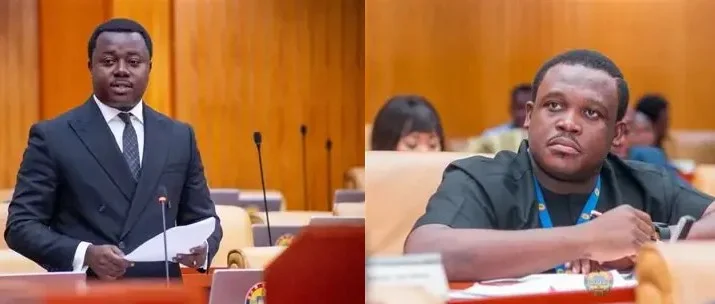
The current debate has even exposed divisions in the positions of the sponsors of the Bill, especially between the Member of Parliament for Assin South, Rev. John Ntim Fordjour and the Member of Parliament for Ningo Prampram, Samuel Nartey George.
Some Members of Parliament have described the changes as a dilution of the original Bill, while others insist they merely clarify constitutional protections that already exist under Ghanaian law.
No change to core provisions
The main provisions of the 2024 and 2026 versions remain largely unchanged.
Both criminalise same-sex sexual conduct and prescribe a maximum prison term of three years.
Both prohibit public displays of romantic relationships between persons of the same sex, same-sex marriage, cross-dressing with the intention of engaging in prohibited acts, procuration and the operation of premises for prohibited sexual activities.
The two versions also prohibit the formation, funding and sponsorship of LGBTQ organisations, require their disbandment, place a duty on citizens to report offences under the Act, bar LGBTQ+ persons from adoption and foster care, and make offences under the legislation extraditable through amendments to the Extradition Act, 1960.
Clause 9
The most notable amendment relates to Clause 9, titled "Prohibition of Propaganda of, Promotion of, and Advocacy for Activities Prohibited under this Act."
In the bill passed by Parliament on February 28, 2024, Clause 9 prohibited any person from producing, procuring, marketing, broadcasting, disseminating, publishing or distributing material promoting activities prohibited under the Act.
The clause was qualified only by the phrase "subject to the Constitution". No specific exemptions were listed in the legislation.
In the version passed on May 29, 2026, Clause 9 retains the same prohibition and the penalty of between five and 10 years' imprisonment.
The difference is that it now expressly lists activities that shall not be considered advocacy or promotion under the Act.
The eight exemptions added to Clause 9 are as follows.
One, the provision of legal advice or legal representation. A lawyer representing or advising a person accused of an offence under the Act will not be treated as an advocate for the prohibited conduct.
Two, submissions or representations made to a court, tribunal, Parliament, a commission of inquiry, or a body exercising judicial or quasi-judicial functions. A person who appears before such an institution and makes a submission will not be treated as having engaged in prohibited advocacy.
Three, the publication of an academic, scientific or medical opinion. Such publications must meet the standards of peer-reviewed or formally published academic and scientific work.
Four, the dissemination of information by a governmental body, non-governmental organisation, development partner or other body engaged in the delivery of health services or health-related programmes. The exemption covers health-related work such as tuberculosis outreach and early childhood disease programmes.
Five, the provision of medical, surgical, psychological or counselling services in accordance with accepted professional practice. The sponsors say the phrase "accepted professional practice" refers to standards set by bodies such as the Ghana Medical Association and the Ghana Health Service. Procedures not recognised by those bodies are not covered.
Six, the reporting of current affairs or news by a media house or journalist in the ordinary course of journalism.
Seven, the performance of public health functions, including HIV and AIDS prevention, testing, treatment and care.
Eight, communication privilege under the Evidence Act. Conversations between a doctor and patient, a lawyer and client, or a pastor and congregant are protected as privileged communications under Ghana's Evidence Act. The exemption means the duty-to-report requirement in Clause 16 does not override those existing legal protections.
Clause 10
Majority Leader Mahama Ayariga told Parliament that Clause 10, which deals with propaganda directed at children, was amended in the same manner as Clause 9.
According to him, the committee sought to provide greater clarity to the phrase "subject to the Constitution", which appeared in the earlier version of the legislation.
Minority objections
The New Patriotic Party Minority Caucus opposed the amendments and staged a walkout before the final vote.
The Member of Parliament for Assin South, Rev. John Ntim Fordjour, argued that the exemptions were not part of the Bill approved by the Eighth Parliament and submitted to former President Akufo-Addo.
"The provision of medical, surgical, psychological or counselling services in accordance with accepted professional practice was not part of the bill you wanted Akufo-Addo to sign. That is not the law we sponsored in the Eighth Parliament. That is not the law we are sponsoring today," he said.
The Member of Parliament for Bosome Freho, Nana Asafo-Adjei Ayeh, said the changes weakened the original intent of the legislation.
Minority Leader Alexander Afenyo-Markin also criticised the amendments, describing them as a departure from the position previously taken by the Bill's proponents.
Majority's explanation
Defending the amendments, Majority Leader Mahama Ayariga said the Bill's purpose remained unchanged.
"This bill does two major things. One, this bill prohibits any practice of LGBTQ in this country. Two, this bill prohibits any advocacy of LGBTQ in this country," he said.
The lead sponsor of the bill, Samuel Nartey George, was not seen or heard during last Friday's debate in the Chamber.
But speaking on radio, in Accra based Joy FM's Newsfile programme the next day on Saturday [May 30], he rejected claims that the amendments weakened the legislation.
Mr George said the exemptions merely set out protections already recognised under the Constitution and existing laws.
"All of these exemptions we have created are all constitutional provisions or derived from legislation that draws its powers and strength from the Constitution. We've not imported any new thing," he said.
What next?
The bill now awaits transmission to President John Dramani Mahama for assent.
Smuggling exemptions
During the debate in Parliament last Friday ahead of its passage, the Minority expressed strong opposition and warned to withdraw the bill before it got passed.
They accused the Majority of smuggling an amendment that was never part of what the Committee on Constitutional and Legal Affairs considered - an exemption for certain categories of professionals, individuals and institutions “who are the very perpetrators of the LGTBQ+ practices”.
For instance, they said professionals and institutions engaged in acts that infringed on the very offences that “we are introducing into this act”.
They cited doctors, journalists, civil society organisations who promoted anti-gay practices yet they had all been exempted.
“What we are saying is that if an institution, individuals, professionals, are going about their lawful duties, which are not promoting LGBT activities, whether they are lawyers, CHRAJ, journalists, academics, whichever professions, institutions and governmental or non-governmental they are, if those activities are promoting lawful duties or functions, they are already exempted.
“So why would you come in again and introduce new things, smuggle it in, which we, the sponsors, have not agreed to and not discussed with the sponsors.
Accusing the Majority of engaging certain foreign countries that dictated that certain amendment be introduced to protect professionals and institutions that handled those who engaged in LGBT practices, the Minority said “Our worry is about the same people that under this government, they are granting exceptions so that they can conduct acts to promote, advocate, and support activities of LGBT simply because this country gets money from them”.
Bill not watered-down
Throwing light on the Minority’s opposition to the bill, the Majority Leader, Mahama Ayariga said the proponents of the bill proposed in clauses 9 and 10 that subject to the Constitution, the committee decided to elaborate on the rendition of subject to the Constitution.
“The committee felt that when it comes to the right to counsel and the freedom of lawyers to represent persons accused of offences under the Act, we cannot treat advocacy in that instance as promoting LGBTQ practice,” he said.
In the same way, he said the committee also felt that they should propose to the House that media houses reporting matters relating to LGBTQ should not be accused of the offence of promoting LGBTQ.
“And academics and researchers conducting research into matters of LGBTQ should be free to publish their reports.
“The publication of those reports or research findings should not amount to an offence under this Act,” he said.
Lastly, the committee proposed that when people practising LGBTQ went to the hospital and were attended to by doctors, whether it was counselling, treatment or surgery, “we should not accuse those doctors of promoting or supporting LGBTQ”.
“These are the simple provisions of the recommendations that the committee made to this House and instead of remaining in this chamber for us to discuss it and build a consensus, our colleagues in the Minority have left and they are out there misleading Ghanaians that what is being passed today is a watered-down version of the bill that was presented to President Akufo-Addo to assent.
“That is far from the fact as one of the sponsors of the bill, Rev. Ntim Fordjour allowed the rendition subject to the Constitution and so even if this House had not attempted to elaborate on what subject to the Constitution is, I am convinced that any court would have struck down any attempt to convict a doctor providing medical services to any person involved in LGBTQ,” he said.
The Majority Leader also said he was also convinced that any court in the country would have struck down any attempt to prosecute a media house for reporting on a matter relating to LGBTQ.
Besides, he said he was also convinced that no court would have tolerated the punishment of a lawyer who attempted to provide legal services in defence of a person practising LGBTQ.
“These are the only issues on which the minority is standing to say that the bill has been watered down. This bill is not watered down,” he said.
Double standard
The Minority Leader, Alexander Afenyo-Markin, said the country had witnessed an unprincipled political act by the Majority.
He said while in opposition, NDC MPs resisted any attempt at amending their proposed sponsored bill.
He said the very law that they wanted former President Akufo-Addo to sign, when they were faced with the same law, they amended and diluted that same law.
Such a double standard, he said, did not pass for “a man with principles”.
“It is not enough to say one thing while in opposition and when you get power, you change your stand, thinking that nobody can read through you,” he said.
He pointed out that none of the NDC sponsors of the bill was in the Chamber in spite in of their names advertised in the motions.
He said it was the reason why, without the leave of the House, the Majority Chief Whip moved the motion.
“When it came to motion 42, again, none of the sponsors who could have moved the motion was in to move the motion,” he said.
Writer's email:
Follow @enochfrimpong Follow @Graphicgh
