

Coping with NHIS: The tales of private healthcare providers
In 2004, the government started implementing a National Health Insurance Scheme (NHIS) to help remove cost as a barrier to access quality healthcare. This changed the healthcare system significantly and had far reaching consequences for healthcare providers.
Providers’ initial experiences
The healthcare services to the NHIS registered members are provided by contracted, accredited public and private health care facilities, which in turn are reimbursed for service costs by the NHIS.
According to Alice Dora Amoyaw, a nurse-midwife in charge of Alidor Maternity Home at Asesewa in the Eastern Region, it is not easy giving care under cash and carry. There are times patients bring their beads, cloths and their most treasured possessions to pay for delivery at the maternity home.
She recounts that during the first few years after being contracted by the National Health Insurance Scheme, her facility was reimbursed on time.
“I could pay my workers, buy drugs, pay my utilities and even mechanise the borehole in the maternity home to improve water supply for the clients. It even helped me to build an administration block,” she said.
Mr George Afrifa, the General Manager of the Pentecost Hospital which serves as the municipal hospital for the La Nkwantanan-Madina Municipality in the Greater Accra Region, for his part, sees the NHIS as a very good social intervention programme.
“People were detained; some patients absconded because they could not pay for the service. The expectation was that this intervention was going to help us reduce this problem,” he stated.
Generally, expectations and experiences of healthcare providers with the NHIS were positive.
Providers’ experiences today
As of October 2015, the NHIS had a subscriber base of about 10.9 million people, representing 40 per cent of the total population. The scheme is currently operational in all 170 district offices across the country.
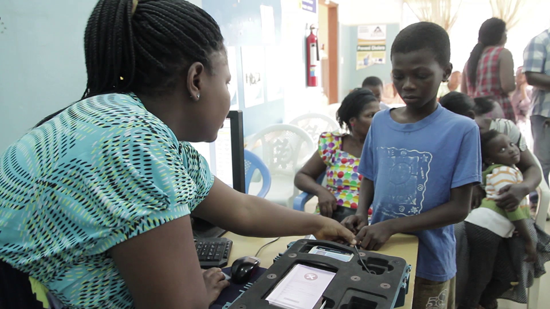
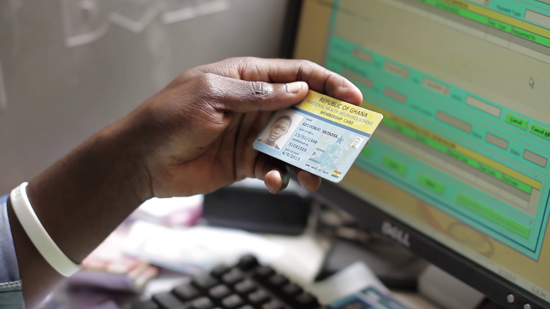
According to Dr Ebenezer Owusu Asiamah, the medical director of Anton Memorial Hospital, the NHIS has made significant strides in improving and strengthening the system, with interventions such as the introduction of the biometric system which has helped to reduce the incidents of impersonation.
Dr Asiamah explained that currently the NHIS claims were in arrears for over eight months. “The NHIS has serious financial challenges,” he added.
Claims financing
The major sources of funding for the NHIS include a national health insurance levy of 2.5 per cent on certain goods and services, 2.5 per cent monthly payroll deduction being part of the contribution to the Social Security and National Insurance Trust (SSNIT) for formal sector workers. Currently, the members from the informal sector pay between GH¢7.20 GH and GH¢47.70 to the scheme. There is no other cost sharing or co-payments with the NHIS, except the premium paid.
The Director of Claims of the NHIS, Dr Lydia Dsane Selby, says one of the challenges in the NHIS implementation process is the size of the benefit package. Ghana started off with a benefit package which covered nearly everything.
“I am not saying that is wrong, but the financing is not matching what we want to do as a country,” Dr Selby said.
She hinted that the Minister of Health had set up a review team to study the challenges in the NHIS and suggest reforms.
“The revenue base may have to be increased, whether by increasing the premiums a little or having some other tax,” she emphasised.
Last year, when the Christian Health Association of Ghana (CHAG) withdrew services for NHIS card holders because of the low tariffs and the delays in the claims reimbursements, the authority started an interim review of 12.5 per cent increase in the tariff structure with the hope to finalise the tariff review by September 2014. The tariffs have not been reviewed since.
The Director for Financial Accounting at the NHIS, Mr Rudolf Zimmerman, says the only way of solving the problems associated with the delays in payment of claims is by closing the funding gaps. He says the scheme paid GH¢18 million in total claims in 2005; but currently the claims have risen to as much as GH¢Ȼ 986 million in 2014.
“No insurance scheme can survive with such funding gap,” he hinted.
Providers’ views on the future
According to Dr Selby, another way of sustaining the scheme for the future is to ensure health system strengthening by improving and upgrading the ICT systems in the NHIS.
“Too much of our work is being done on pieces of paper,” she said.
Under the present arrangement, all the NHIS levies collected by the Ghana Revenue Authority go into the consolidated fund, where payments to service providers of the NHIS are paid from. However, according to Pastor Eric Mintah Dankwah, the administrator of Florence Maternity Home at Anloga in Kumasi, this presents administrative challenges and inefficiencies.
“The delays in the claims payment would be solved if the NHIS is allowed to manage its own funds,” he said
Credit fund intervention
PharmAccess, through the Medical Credit Fund (MCF) and uniBank, with support from the NHIA, recently developed a loan product to pre-finance outstanding NHIS claims. This loan product, the first of its nature in the health insurance sector, provides relief to accredited NHIS service providers while they await claims payment from the scheme to enable them to, for example, pay salaries or restock their pharmacy.
Eligible claims of registered facilities will be assigned to the bank, after which the bank will pay a discounted amount of the claim value to the service provider.
The product guarantees liquidity to support continuous quality healthcare delivery by NHIS service providers.
The NHIS requires urgent financial reforms to remain sustainable. Private healthcare providers do not want the NHIS to fail.
“People will die, thousands of people; we don’t want to go back to the cash and carry system. That would be like taking a step back almost 20 or 30 years,” one service provider said.
