
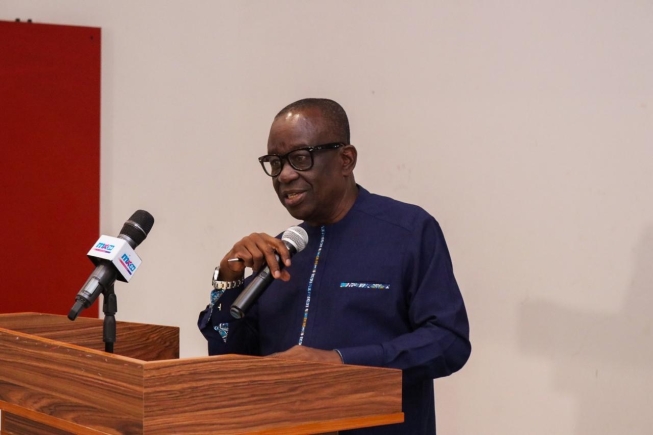
Former Minister for National Security, Albert Kan-Dapaah, has declared that the ultimate solution to ending political violence and vigilantism in Ghana lies in dismantling the demand for vigilante services among political elites, rather than relying solely on legislative bans.
Speaking on the second panel of the National Policy Dialogue on the Vigilantism and Related Offences Act, 2019 (Act 999), held at the Kofi Annan International Peacekeeping Training Centre (KAIPTC), the former National Security Minister emphasised that legislative enforcement will remain uphill unless political parties critically address their internal dynamics and appetite for informal security groups.
“We have vigilantes who are distributors, causing harm everywhere. But the real issue is the people who demand vigilante services, Mr Kan-Dapaah told the gathering of security analysts, statesmen, and civil society leaders.
“We must stop them from demanding vigilante services, and there will be no need for you to come up with any law forever,” he added.
Addressing the root cause: Political party governance
Reflecting on the persistence of vigilante activity despite the criminalisation under Act 999, Mr Kan-Dapaah insisted that security agencies and policymakers must confront the core political drivers of the phenomenon.
It all goes back to how we handle our political parties, he asserted. If you want to solve a problem, look at some of the political issues. Some of the issues we have are tied directly to broader national security concerns, including terrorism.
His remark highlighted a growing consensus among national security practitioners that political party operations and electoral competition create the supply-and-demand chain for vigilante groups. By targeting the top-level sponsors, those who hire, fund, and protect the vigilante network, the state can effectively choke off the incentive for political violence.
Surging national security threats
Kan-Dapaah’s commentary comes at a pivotal moment as West Africa faces heightened threat vectors, including coastal spillover from Sahelian violent extremist organisations (VEOs). Experts at the dialogue noted that unaddressed political violence and militarised party youth wings create fertile ground for extremist infiltration and domestic destabilisation.
The National Policy Dialogue, organised by Election Watch Ghana under the theme "Assessing the Implementation of the Vigilantism and Related Offences Act, 2019 (Act 999) and Its Implications for National Security and Democratic Governance," brought together key national stakeholders to forge a non-partisan path toward political accountability ahead of upcoming electoral cycles.
