
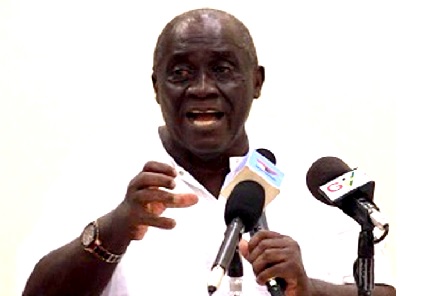
Veteran football administrator, Nana Fitzgerald Barkers Woode, popularly known as Nana Fitz, has called on the Government of Ghana to institute an investigation into the Ghana Football Association's (GFA) expenditure on the Black Stars' participation in the FIFA World Cup.
He said although FIFA discourages government interference in the administration of football, that should not prevent the GFA from accounting for public funds used to finance the activities of the national teams.
Speaking in an interview with the Graphic Sports yesterday, the former Cornerstones boss argued that since the Black Stars and other national teams are largely funded by taxpayers' money, the GFA has a responsibility to be transparent and accountable to Ghanaians.
"The government should immediately call on the GFA to account for every amount spent on the World Cup, including previous tournaments," he said.
Nana Fitz questioned whether FIFA was fully aware of the extent of government funding for football in Ghana, arguing that the world governing body's regulations should not be used to shield football administrators from public scrutiny.
He noted that government officials often lead Ghana's delegations to major international tournaments, raising questions about why the state could play such a significant role in financing and representing the national teams while having little influence over football administration.
"Whenever the national team travels for international competitions, it is a government representative who leads the delegation. If government is involved at that level and provides the funding, why should it not demand accountability for how the money is spent?" he asked.
The veteran football administrator also called for reforms to the GFA's electoral system, arguing that the current structure gives too much influence to a limited group of stakeholders.
According to him, the composition of the GFA Congress, which is made up largely of club owners and their representatives, makes the electoral process vulnerable to manipulation.
"Those who vote at Congress are mainly club owners and their representatives, and many of the clubs are owned by or closely associated with football officials. That makes it easier for a few individuals to influence the outcome of elections," he alleged.
Nana Fitz further argued that the GFA often cites FIFA regulations only when it perceives attempts at external interference.
He questioned whether FIFA had approved the decision to amend the association's statutes to allow the GFA President to serve up to three terms in office.
The experienced football administrator maintained that the current leadership of the GFA had failed to adequately address the challenges confronting Ghana football and called for reforms that would broaden participation in football governance while attracting more experienced administrators to help revive the game.
He also questioned the continued expenditure on the Black Stars without what he described as adequate public accountability, particularly at a time when other sporting disciplines and sectors within sports continue to face financial constraints.
While acknowledging that football has become a major global business, Nana Fitz lamented that Ghana had derived little benefit from the substantial investments made in the sport over the years.
He urged the Minister for Sports and Recreation to provide stronger leadership in promoting accountability in football administration and called on the GFA President to place the long-term development of Ghana football above personal interests.
