


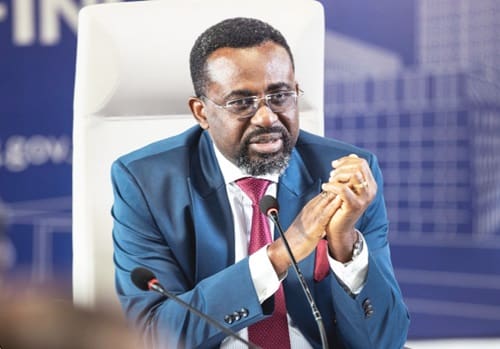
The Governor of the Bank of Ghana, Johnson Pandit Asiama, has told Parliament that Ghana’s economy is showing clear signs of recovery after a period of severe macroeconomic pressure, citing a sharp fall in inflation, a stronger cedi and renewed stability in the banking sector.
Appearing before the Parliamentary Committee on Economy and Development (Ghana) in Accra on Monday, March 9, 2026, the governor said the central bank’s policy measures since early 2025 had begun to deliver tangible results across the economy.
Dr Asiama explained that when he assumed office in February 2025, the country was still dealing with the aftermath of a difficult economic period marked by sovereign debt restructuring, rapid currency depreciation and surging inflation.
At the end of 2024, inflation stood at 23.8 per cent, far above the Bank of Ghana’s target band of 8 per cent plus or minus two percentage points. The situation, he said, had significantly weakened purchasing power, complicated business planning and undermined confidence in the economy.
The pressure was also reflected in the foreign exchange market, where the Ghanaian cedi had depreciated by 24.8 per cent in 2024, worsening imported inflation and further straining economic stability.
The financial sector was also adjusting to the effects of the Domestic Debt Exchange Programme, which required creditors to restructure government bonds in order to restore debt sustainability.
Dr Asiama said the programme was necessary but had placed pressure on financial institutions, constrained lending and contributed to high interest rates that exceeded 30 per cent in some cases.
He also disclosed that the central bank itself was not immune to the impact of the restructuring, noting that the Bank of Ghana absorbed a 50 per cent haircut on government securities it held.
Despite these challenges, the central bank introduced a range of measures aimed at stabilising the economy. These included maintaining a tight monetary policy stance, intensifying open market operations to absorb excess liquidity in the banking system, and strengthening foreign exchange reserves.
The governor said the bank also introduced a new foreign exchange operations framework in November 2025 to improve transparency and stability in the currency market.
Another key measure involved strengthening Ghana’s external buffers through higher export earnings, remittances and the Domestic Gold Purchase Programme, which helped increase the country’s gold reserves.
However, the rapid rise in global gold prices in 2025 significantly increased the share of gold in Ghana’s international reserves. According to Dr Asiama, gold accounted for about 42 per cent of the country’s reserves by October 2025, raising concerns about portfolio concentration risk.
To address this, the central bank converted part of its gold holdings into foreign exchange assets in order to diversify the country’s reserves.
Dr Asiama emphasised that the move did not represent a loss of national assets but rather a strategic adjustment aimed at maintaining a balanced and liquid reserve portfolio capable of supporting the country’s external obligations.
He told the committee that the policy measures have produced measurable improvements in the economy.
Headline inflation fell sharply from 23.8 per cent in December 2024 to 5.4 per cent by the end of 2025 and further to 3.3 per cent in February 2026, one of the lowest levels recorded in recent years.
The Ghanaian cedi has also stabilised and strengthened, while borrowing costs have begun to decline as inflation expectations eased. The Monetary Policy Rate was reduced by 900 basis points during 2025, ending the year at 18 per cent.
Ghana’s external reserves have also strengthened, reaching 13.8 billion US dollars by the end of 2025, equivalent to about 5.7 months of import cover.
The banking sector, which had been under pressure following the debt restructuring programme, has also shown signs of recovery.
Capital adequacy in the sector has improved to 17.5 per cent, comfortably above the regulatory minimum of 13 per cent, while non-performing loans have declined from 21.8 per cent to 18.9 per cent.
Total banking sector assets increased from GH¢368 billion to GH¢447 billion, while deposits rose by nearly 18 per cent.
Credit growth has also picked up, with gross loans rising from GH¢95 billion to GH¢111 billion, signalling a gradual recovery in lending to businesses and households.
Despite these improvements, Dr Asiama acknowledged that the stabilisation efforts had financial implications for the central bank.
He explained that costs associated with absorbing excess liquidity in the banking system, the restructuring of government securities and operational costs under the Domestic Gold Purchase Programme would be reflected in the Bank’s financial statements.
However, he stressed that these accounting outcomes do not affect the Bank of Ghana’s ability to carry out its core mandate of maintaining price stability and supporting economic growth.
Looking ahead, Dr Asiama said the central bank expects its financial position to gradually improve as assets are reinvested at higher yields, reserve management returns strengthen and liquidity management costs decline as inflation stabilises.
He said the government would also support the central bank in sharing part of the costs associated with the gold purchase programme.
Dr Asiama concluded that the recent macroeconomic improvements demonstrate that the country’s stabilisation efforts are working.
“For ordinary Ghanaians, the real measure of this progress is simple: prices are stabilising, the cedi is steadier, and the economy is moving back toward normal,” he told the committee.
He added that although the outlook remains positive, the central bank will continue to monitor global risks such as financial market volatility and commodity price shocks while maintaining a disciplined approach to monetary policy.