
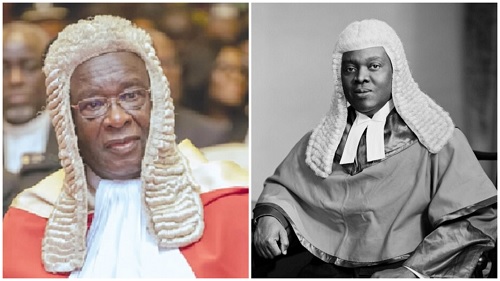
The longevity of an institution is not, in itself, remarkable; what invites reflection is whether it has remained faithful to the purpose for which it was established.
In the case of Ghana’s Supreme Court, which marks its one hundred and fiftieth anniversary in 2026, that fidelity to the principles of justice, constitutional order, and the protection of citizens’ rights has not merely been aspirational.
It has been the standard by which successive generations of jurists have measured themselves.
This article is written in the spirit of that reflection, an honest and considered appraisal of where this apex court has come from, what it has built, and what the next season of its existence demands of it.
Reflections
The Supreme Court of Ghana traces its legal history to the Supreme Court Ordinance of 1876, which re-established the highest court for the Gold Coast Colony after its abolition in 1866.
Before that Ordinance, the people of this land were subject to a court hierarchy abroad, first to the West African Court of Appeal, which was established in 1928, and beyond that to the Judicial Committee of the Privy Council in London.
The final word on the law was spoken far from our communities, by men who had little knowledge of our customs or our sense of what justice should look like.
Ordinary Ghanaians could not see themselves in that process.
The establishment of a truly indigenous Supreme Court was therefore more than a legal development.
It was a statement that Ghanaians had the right to adjudicate and set judicial standards. It brought the law home.
This history has been documented in one of the most respected legal publications in our jurisdiction: Reflections on the Supreme Court of Ghana, 2015, written by the retired Justice of the Supreme Court, Prof. Samuel Kofi Date-Bah.
In Chapter 10, on the Court's contribution to the development of Ghanaian law, and Chapter 11, on the Court's broader societal role, Prof. Date-Bah shows how this Court's decisions have shaped not just legal doctrine but the very culture of governance in Ghana.
His overarching view is that the Court must continuously extend the boundaries of law within the limits of rationality and good governance.
Since 1876
Since 1876, this Court has lived through the colonial era, independence in 1957, and the First, Second, Third and now Fourth Republic.
The Supreme Court was abolished twice by military governments: first by the National Liberation Council in 1966, and again by the National Redemption Council in 1972, when the 1969 Constitution was suspended.
Each time it was abolished, it returned.
That fact alone tells us something important.
You cannot permanently remove the need for justice.
On this occasion, it is right that we honour our twenty-eight Chief Justices who have led this Court since 1876: From Sir David Patrick Chalmers (1876) to our current Chief Justice, His Lordship Paul Baffoe-Bonnie (2025 to present).
Among the decisions that have defined this court, none is more quoted than Tuffour v. Attorney-General [1980] GLR 637.
The Court held that the parliamentary rejection of a sitting Chief Justice was unconstitutional, and affirmed a principle that has since become the bedrock of our constitutional culture: that any Ghanaian citizen may invoke the Supreme Court to protect the constitutional order, requiring no personal interest beyond the simple fact of citizenship.
In that same judgment, the Court gave us words that have never lost their power. Per Sowah J.S.C. at pages 647 and 648: a written Constitution such as ours is not an ordinary Act of Parliament. It embodies the will of a people.
It mirrors their history. It contains within it their aspirations and their hopes for a better and fuller life.
The Constitution, the Court held, is a living organism capable of growth and development, as the body politic of Ghana itself is capable of growth and development.
A broad and liberal spirit is required for its interpretation.
A doctrinaire approach will not do.
To illustrate that principle, the Court turned to the words of St Paul in his First Epistle to the Corinthians, Chapter 12, verses 14 to 20, King James Version, reminding us that the body is not one member but many, and that every part must be given its proper effect.
Every word in the Constitution has an effect.
Every part must be given effect. That has remained the instruction this Court follows in its best moments.
We also recall Sallah v. Attorney-General [1970] GLR 55.
The Court held that the Constitution must be read in a way that protects the people it serves, not in a way that swallows its own protections, rejecting the argument that transitional provisions had swept away the appointments of all public servants at once.
The case is also remembered for something that happened off the bench.
When the Court ruled in Mr Sallah's favour, Prime Minister Busia publicly stated, 'No court.'
That statement, and the Court's quiet refusal to be intimidated, remains one of the clearest demonstrations in our history of what judicial independence really means.
The Court delivered its judgement. It stood by it.
We must also mention the important case of New Patriotic Party v. Attorney-General [1993-94] 2 GLR 35, decided in 1994, where the NPP challenged the use of public funds to celebrate the 31st December coup anniversary.
The Court held that such a celebration was inconsistent with the 1992 Constitution and affirmed that no political question in Ghana is beyond the Constitution’s reach.
Coming in the very first year of the Fourth Republic, the case set a powerful tone: the Supreme Court would not be a passive observer of constitutional breaches, whoever committed them.
These decisions, read alongside Articles 1, 2(1) and 130 of the 1992 Constitution, which vest in the Supreme Court the exclusive original jurisdiction to enforce and interpret the Constitution, confirm that this is not merely a court of law.
It is a guardian of the constitutional order. It is the people's court.
Supreme Court under contemporary era
Like every living institution, the Supreme Court has had to change with the times, and it has done so. In discharging its duties under Article 130 of the 1992 Constitution, the Court has shown a willingness to adapt.
The 2012 presidential election petition, In Re Presidential Election Petition: Akufo-Addo, Bawumia and Obetsebi-Lamptey v. Electoral Commission and NDC [2013] SCGLR (Special Edition) 73, which lasted eight months, confirmed the need for more efficient procedures.
The Rules of Court Committee responded, and the process for future election petitions has been significantly streamlined.
The Court has also encouraged, through its judgements, the use of Alternative Dispute Resolution as a genuine option for settling disputes, easing the burden on the formal court system and bringing resolution closer to ordinary people.
Above all, the Court has remained faithful to the broad and purposive approach to constitutional interpretation first articulated in Tuffour v. Attorney-General.
The Constitution has been read not as a frozen document but as one that grows with the nation it serves.
That faithfulness is the Court's most important contribution to our democracy.
Honesty requires that we speak plainly about the difficult chapters too. On June 30, 1982, Justice Frederick Poku Sarkodee, Justice Cecilia Koranteng-Addow, Justice Kwadwo Agyei Agyepong, and Major Samuel Acquah were abducted and murdered at the Bundase Military Range for what they represented.
Ghana honours their memory every year on Martyrs' Day, and this 150th anniversary is yet another solemn occasion to do so.
More recently, public confidence in the judiciary went through a difficult period.
Research conducted during this time pointed to a real decline in the trust citizens placed in this institution.
I am glad that steps were taken to address those concerns directly.
The judiciary's willingness to face that problem honestly and respond to it shows that it understands something fundamental: the law it is appointed to protect draws its authority from the sovereign will of the people, as Article 1(1) of the Constitution states.
When the Court listens to the people, it honours its own foundation.
Part three: Role
Baron de Montesquieu, writing in De l'Esprit des Lois in 1748, taught us that in every government there are three kinds of power: the legislative, the executive and the judiciary, and that the liberty of citizens depends on keeping these three separate.
Yet, Montesquieu also understood that these organs, though independent, are bound by the nature of things to work in concert.
Separation does not mean isolation.
Article 127 of the 1992 Constitution entrenches the independence of the judiciary and guarantees its funding from the Consolidated Fund.
The executive has been, since this Court was established in 1876, a consistent source of the institutional support that makes justice possible.
But the relationship goes deeper than funding. It was an executive decision by the PNDC administration that started the process which gave birth to the 1992 Constitution under which this Court now operates.
The consultations with the Ghanaian people, the drafting by the Committee of Experts, the validation, and the Referendum that gave that Constitution its authority were all initiated and carried out under executive authority.
Constitutional democracy in Ghana, as we know it today, was born of that process.
When the Constitution needed review, it was again the executive that established the Constitutional Review Commission in 2010, chaired by Professor Albert Fiadjoe, whose report and the White Paper that followed laid the groundwork for constitutional reform. Under the current administration, that work continues.
On January 30, 2025, President Mahama inaugurated the Constitutional Review Committee.
Following the submission of the 2025 Constitutional Review Committee Report, the Government is expected to move into the implementation phase with the establishment of an Implementation Committee.
This next stage will focus on engaging Parliament, political parties, and the public to build consensus around key proposed reforms.
Through all of this, one thing has remained constant.
The judiciary has always delivered without fear.
The executive respects that.
The executive salutes it.
And the executive remains committed to the partnership that the Constitution expects between these two great arms of the state.
Part four: 150 Years on: SC at crossroads
This anniversary is both a moment to look back and a moment to look ahead. I offer seven thoughts:
The foundational principles built through Tuffour, Sallah and NPP v. Attorney-General must continue to guide this Court for the next one hundred and fifty years.
They are not old cases to put away.
They are living instructions about what this Court is for.
Justice cannot remain untouched by artificial intelligence and digital technology.
The Court must use technology to cut delays in hearings, in processing cases, and in executing judgments.
Slow justice is expensive justice, and expensive justice is justice that only some people can reach.
Our jurisprudence must neither become rigid and closed, nor so open that it loses its grounding in Ghanaian values.
We can learn from others without losing ourselves.
Public legal literacy and access to justice must be real priorities.
If ordinary Ghanaians cannot understand, afford, or trust the courts, then the most brilliant judgements will not serve their purpose.
Outreach, plain language and genuine openness are not extras.
They are part of the job.
The Court must guard its culture of excellence and independence carefully.
Institutions are made by the people within them.
How judges are appointed, the standards they are held to, and the example they set for the Bar all matter greatly.
The next one hundred and fifty years will be built the same way.
Our judges must remain, as Tsatsu Tsikata so powerfully stated, ‘in the vanguard for justice and legality’.
The Court must stand as the final fortress against arbitrariness, abuse of power, and constitutional erosion.
The Court must deepen gender-sensitive inclusiveness and broaden access to justice for all, especially women, persons with disabilities, and the poor.
The doors of the law must remain open to the vulnerable, the unheard, and the underserved.
Conclusion
One hundred and fifty years ago, the Supreme Court of Ghana was established in the Gold Coast.
Since then, it has lived through colonialism, independence, the making and unmaking of constitutions, governments that came and went, four republics and chapters both proud and painful.
Through all of it, the Court has survived.
Through all of it, it has served.
As this noble institution steps into its next century and a half, may it continue to be guided by the sacred symbolism of holding aloft the Scales of Justice higher than power, higher than politics, higher than popularity, and to do so, as it has always pledged, without fear or favour, affection or ill will.
In the immortal words of the prophet Amos, Chapter 5, verse 24: "Let justice roll on like waters, and righteousness like an ever-flowing stream."
Justice without borders of time (2) - 150 Years of Supreme Court, relationship with executive
The first part of this article was published on Thursday April 30 2026
The Court has also encouraged, through its judgements, the use of Alternative Dispute Resolution as a genuine option for settling disputes, easing the burden on the formal court system and bringing resolution closer to ordinary people.
Above all, the Court has remained faithful to the broad and purposive approach to constitutional interpretation first articulated in Tuffour v. Attorney-General. The Constitution has been read not as a frozen document but as one that grows with the nation it serves.
That faithfulness is the Court's most important contribution to our democracy.
Honesty requires that we speak plainly about the difficult chapters too. On June 30, 1982, Justice Frederick Poku Sarkodee, Justice Cecilia Koranteng-Addow, Justice Kwadwo Agyei Agyepong, and Major Samuel Acquah were abducted and murdered at the Bundase Military Range for what they represented.
Ghana honours their memory every year on Martyrs' Day, and this 150th anniversary is yet another solemn occasion to do so.
More recently, public confidence in the judiciary went through a difficult period. Research conducted during this time pointed to a real decline in the trust citizens placed in this institution.
I am glad that steps were taken to address those concerns directly.
The judiciary's willingness to face that problem honestly and respond to it shows that it understands something fundamental: the law it is appointed to protect draws its authority from the sovereign will of the people, as Article 1(1) of the Constitution states.
When the Court listens to the people, it honours its own foundation.
Role
Baron de Montesquieu, writing in De l'Esprit des Lois in 1748, taught us that in every government there are three kinds of power: the legislative, the executive and the judiciary, and that the liberty of citizens depends on keeping these three separate.
Yet, Montesquieu also understood that these organs, though independent, are bound by the nature of things to work in concert.
Separation does not mean isolation.
Article 127 of the 1992 Constitution entrenches the independence of the judiciary and guarantees its funding from the Consolidated Fund.
The executive has been, since this Court was established in 1876, a consistent source of the institutional support that makes justice possible.
But the relationship goes deeper than funding.
It was an executive decision by the PNDC administration that started the process which gave birth to the 1992 Constitution under which this Court now operates.
The consultations with the Ghanaian people, the drafting by the Committee of Experts, the validation, and the Referendum that gave that Constitution its authority were all initiated and carried out under executive authority. Constitutional democracy in Ghana, as we know it today, was born of that process.
When the Constitution needed review, it was again the executive that established the Constitutional Review Commission in 2010, chaired by Professor Albert Fiadjoe, whose report and the White Paper that followed laid the groundwork for constitutional reform.
Under the current administration, that work continues.
On January 30, 2025, President Mahama inaugurated the Constitutional Review Committee.
Following the submission of the 2025 Constitutional Review Committee Report, the Government is expected to move into the implementation phase with the establishment of an Implementation Committee.
This next stage will focus on engaging Parliament, political parties, and the public to build consensus around key proposed reforms.
Through all of this, one thing has remained constant.
The judiciary has always delivered without fear.
The executive respects that.
The executive salutes it. And the executive remains committed to the partnership that the Constitution expects between these two great arms of the state.
150 Years on: SC at crossroads
This anniversary is both a moment to look back and a moment to look ahead. I offer seven thoughts:
The foundational principles built through Tuffour, Sallah and NPP v. Attorney-General must continue to guide this Court for the next one hundred and fifty years.
They are not old cases to put away.
They are living instructions about what this Court is for.
Justice cannot remain untouched by artificial intelligence and digital technology.
The Court must use technology to cut delays in hearings, in processing cases, and in executing judgments.
Slow justice is expensive justice, and expensive justice is justice that only some people can reach.
Our jurisprudence must neither become rigid and closed, nor so open that it loses its grounding in Ghanaian values.
We can learn from others without losing ourselves.
Public legal literacy and access to justice must be real priorities. If ordinary Ghanaians cannot understand, afford, or trust the courts, then the most brilliant judgements will not serve their purpose.
Outreach, plain language and genuine openness are not extras.
They are part of the job.
The Court must guard its culture of excellence and independence carefully.
Institutions are made by the people within them.
How judges are appointed, the standards they are held to, and the example they set for the Bar all matter greatly.
The next one hundred and fifty years will be built the same way.
Our judges must remain, as Tsatsu Tsikata so powerfully stated, ‘in the vanguard for justice and legality’.
The Court must stand as the final fortress against arbitrariness, abuse of power, and constitutional erosion.
The Court must deepen gender-sensitive inclusiveness and broaden access to justice for all, especially women, persons with disabilities, and the poor.
The doors of the law must remain open to the vulnerable, the unheard, and the underserved.
Conclusion
One hundred and fifty years ago, the Supreme Court of Ghana was established in the Gold Coast.
Since then, it has lived through colonialism, independence, the making and unmaking of constitutions, governments that came and went, four republics and chapters both proud and painful.
Through all of it, the Court has survived.
Through all of it, it has served.
As this noble institution steps into its next century and a half, may it continue to be guided by the sacred symbolism of holding aloft the Scales of Justice higher than power, higher than politics, higher than popularity, and to do so, as it has always pledged, without fear or favour, affection or ill will.
In the immortal words of the prophet Amos, Chapter 5, verse 24: "Let justice roll on like waters, and righteousness like an ever-flowing stream."
May that charge continue to animate this Honourable Court in every season.
May it reach into every corner of this nation, finding the vulnerable and the unheard, flowing past the barriers of wealth and influence, and carrying with it the assurance that in Ghana, no one stands outside the protection of the law.
On behalf of His Excellency the President and the Executive Arm of Government, we say to the Judiciary of Ghana: congratulations.
You have earned this celebration.
The nation is grateful.
Happy 150th Anniversary to the Supreme Court of Ghana.
May justice continue to reign in our land.
The writer is the Deputy Chief of Staff (Finance and Administration), Ghana, and Ghana’s first Minister for Gender, Children and Social Protection.
