


President John Dramani Mahama has nominated five people to serve on Ghana’s Fiscal Council, a statutory body created to assess fiscal policy and ensure compliance with public debt and spending rules.
The nominations, announced on April 8, 2026, are aimed at operationalising the Council and strengthening oversight of public finances under the amended legal framework, at a time when the country is seeking to consolidate fiscal discipline and rebuild confidence in economic management.
A statement signed by the Minister of Government Communications and Presidential Spokesperson, Felix Kwakye Ofosu, said the appointments were made in accordance with Section 11D of the Public Financial Management Act, 2016 (Act 921), as amended by the Public Financial Management (Amendment) Act, 2025 (Act 1136).
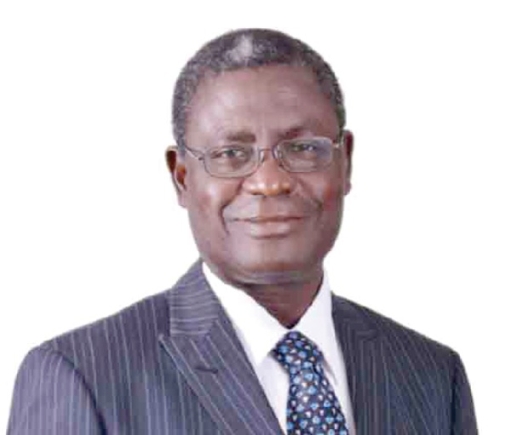
Dr Emmanuel Oteng Kumah, an international economic consultant with experience at the International Monetary Fund and a former Board Chairman of Standard Chartered Bank Ghana, has been nominated as Chairperson of the Council.
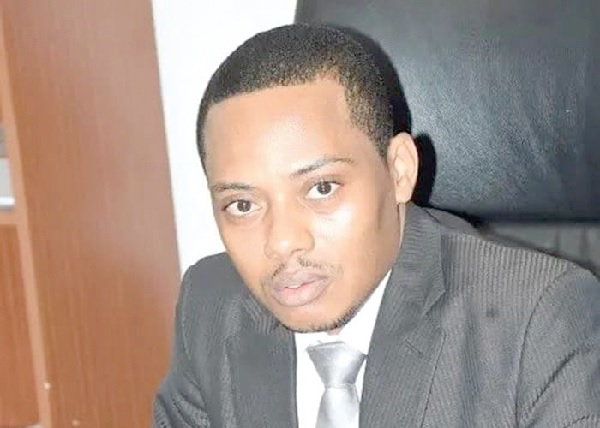
Associate Professor Patrick Opoku Asuming of the University of Ghana Business School has been nominated to represent academia. He is a development economist with a PhD from Columbia University and has published extensively on health economics and public policy in Ghana.
Mr Leslie Dwight Mensah has been nominated to represent a research think tank, while Mr J. Kweku Bedu-Addo has been named as a former public policy expert from the Ministry responsible for Finance.
Establishment
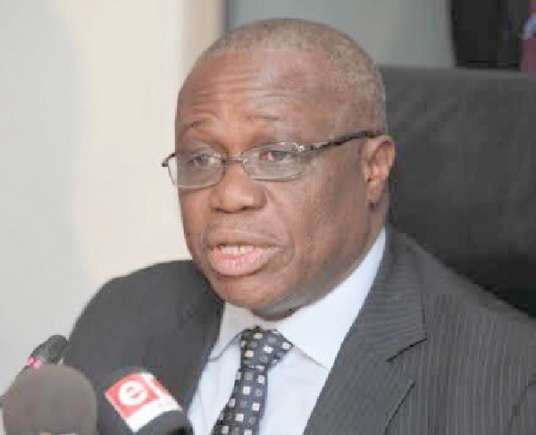
Dr Henry Akpenamawu Kofi Wampah, a former Governor of the Bank of Ghana, has been nominated as the Council’s representative from the central bank, in line with legal requirements.
All five nominees are expected to undergo parliamentary approval before the Council becomes fully operational.
The Fiscal Council was established under the 2025 amendment to the Public Financial Management Act, which repealed the Fiscal Responsibility Act, 2018 (Act 982) and incorporated its provisions into the main legislation.
The amendment also replaced the Presidential Fiscal Advisory Council, which had been in place since 2018, with a more formal statutory body backed by law.
Under the revised framework, the Council will operate as an independent institution with a mandate to supervise the government, particularly the Ministry of Finance, in applying fiscal rules.
The law bars members of the Council from holding any government position, a provision aimed at safeguarding its independence and credibility.
The Council is expected to advise the government on fiscal policy and provide Parliament’s committee responsible for the budget with independent assessments of compliance with primary balance and public debt rules.
The Council is also required to engage the media at least twice a year to brief the public on its work and findings, a move intended to enhance transparency and public understanding of fiscal policy decisions.
The Presidency said the creation of the Council, alongside tighter fiscal rules, forms part of broader efforts to improve accountability and support sound decision-making in public financial management.
Post-IMF strategy
The establishment of the Fiscal Council is also closely linked to Ghana’s broader post-programme strategy as the country prepares to exit its arrangement with the International Monetary Fund.
Earlier, the Deputy Minister of Finance, Thomas Nyarko Ampem, disclosed plans to establish an independent fiscal council as part of measures to strengthen financial oversight and decision-making after the programme ends.
He made this known during a courtesy call by Ms Emmanuelle Boulestreau, Head of the Regional Economic Department of France for Nigeria and Ghana, and Mr Julien Frioux, Head of the French Economic Department at the French Embassy in Ghana.
The meeting focused on strengthening economic ties between France and Ghana, with emphasis on regional development initiatives and opportunities for mutual growth.
Mr Ampem expressed optimism about Ghana’s economic recovery, attributing recent progress partly to international partnerships, including support from France.

He noted that IMF programme targets remain on track, inflation has declined to 3.8 per cent, and key macroeconomic indicators are showing signs of improvement.
He also welcomed deeper collaboration between Ghana and France to sustain economic growth and support long-term development.
According to the Deputy Minister, the proposed Fiscal Council will be made up of locally appointed members and will provide advisory support on financial controls and fiscal decision-making.
He indicated that the Council would be implemented after Ghana exits the IMF programme, reinforcing local ownership of fiscal management and helping to safeguard macroeconomic stability.
Ms Boulestreau reaffirmed France’s commitment to supporting Ghana’s economic development, particularly in the areas of infrastructure and energy.
She noted that French businesses were well-positioned to invest in Ghana’s expanding economy and contribute meaningfully to the country’s development agenda.

Strengthening confidence
By embedding fiscal responsibility rules within a stronger legal and institutional framework, the government aims to signal a long-term commitment to prudent economic management.
The success of the Council, however, will depend largely on its independence, technical capacity and the extent to which its recommendations are taken seriously by policymakers.
With parliamentary approval pending, attention is now shifting to how quickly the Council can be operationalised and begin delivering on its mandate of enforcing fiscal discipline and promoting transparency in Ghana’s public finances.