


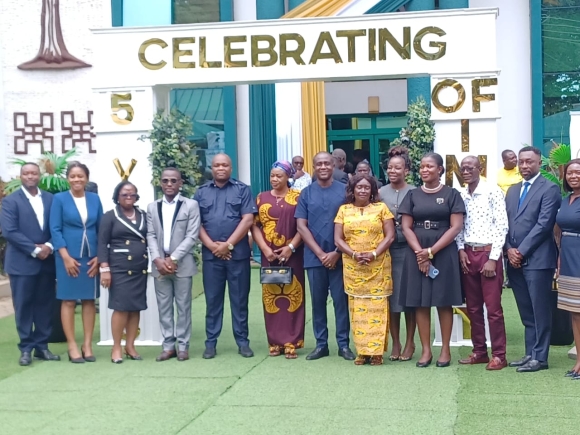
The Development Bank Ghana (DBG), a wholesale development finance institution, has unveiled a lending package for women for them to access feasible loans to expend their businesses and be financially stable.
The facility, a dedicated financing initiative, has been designed to expand access to affordable long-term capital for women-owned and women-led businesses across Ghana.
Tagged the ‘DBG Women's Lending Programme’ , it is specifically designed to address the structural barriers that had long prevented women entrepreneurs from accessing formal finance on equal terms.
It is also further proof of the bank’s commitment to increasing access to long-term finance for businesses in Ghana's productive sectors.
The initiative was launched at an event held in Kumasi as part of DBG’s fifth anniversary celebrations
The event, a customer appreciation dialogue, provided a platform for some women to share their ordeals and the obstacles they face in accessing funds for their businesses.
It generated open conversation between entrepreneurs, financial institutions and the DBG team about what was working, what barriers remained, and how Ghana's development finance ecosystem could be strengthened — particularly for businesses operating in underserved sectors and regions.
For the under-served
Addressing the dialogue, the Chief Executive Officer (CEO), Prof. Randolph Nsor-Ambala, admitted that women owned and led a significant share of Ghana's MSMEs, yet remained systematically under-served by conventional lending systems.
“ Women face disproportionate collateral requirements, stringent documentation standards, limited access to productive assets and high borrowing costs that put affordable capital out of their reach”, he noted.
He said women entrepreneurs were critical to Ghana's economic future, and that through the programme , it was creating practical pathways for more women-owned businesses to access the capital they needed to grow, create jobs and build resilient enterprises.
Prof. Nsor-Ambala stated that an estimated 1,000 women-owned and women-led businesses would benefit from the Women’s Lending Programme between 2026 and 2028.
“Eligible sectors span agriculture and agribusiness, manufacturing, education, technology, creative industries,hospitality and services,” he explained.
The DBG CEO noted that since the bank’s establishment in 2021, it had focused on closing the long-term financing gap facing Ghanaian businesses by providing wholesale capital and capacity-building support to financial institutions nationwide.