


Economy on track to exit IMF programme — BoG Governor
The Governor of the Bank of Ghana (BoG), Dr Johnson Pandit Asiama, has expressed confidence that Ghana is on course to successfully exit its programme with the International Monetary Fund (IMF) next year, as key economic indicators continue to improve.
He said the country had “turned the corner”, with inflation dropping sharply to about 9.4 per cent and growth showing strong recovery above the projections of the programme.
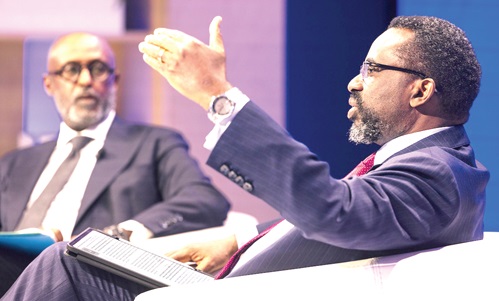
Speaking at the 2025 IMF-World Bank Annual Meeting in Washington DC yesterday, Dr Asiama attributed the progress to sound monetary management, fiscal consolidation, and the innovative gold-for-reserves initiative that had boosted foreign exchange stability.
He stressed that with continued discipline and policy consistency, Ghana would be well positioned to sustain growth and financial stability beyond the IMF programme.
He stressed that with continued discipline and policy consistency, Ghana would be well positioned to sustain growth and financial stability beyond the IMF programme.
“And so, we came into office with lots of liquidity, and high inflation. And I remember when we came in, there was talk about whether we should cancel the programme altogether.
There was doubt as to whether we would be able to carry on with the programme.
“I am happy to say that eight months down the road, we have turned the corner. Ghana is back, inflation which was at nearly 24 per cent is currently down to 9.4 per cent. We are seeing a strong rebound in growth. We are running ahead of programmes,” he said.
Governor talks
The Governor was speaking at the “Governor Talks” series.
The series, which is part of the annual meetings, provide a platform for central bank governors and finance ministers to share their regional or national perspective on a range of global issues.
It was on the topic: “From crisis to confidence: Ghana’s journey to macroeconomic stabilisation”.
The forum was moderated by the Director of the African Department at IMF, Abebe Aemro Selassie.
Economic turnaround
Dr Asiama explained that Ghana’s economic turnaround had been driven by coordinated reforms between the central bank and the Ministry of Finance, supported by the IMF’s technical and policy guidance.
He said the policy mix, which included tight monetary control, fiscal consolidation and structural reforms, had restored macroeconomic stability faster than expected.
He said Ghana had achieved “remarkable progress” in stabilising the cedi, with the exchange rate remaining relatively firm throughout the year.
He added that gross international reserves had improved to about 4.5 months of import cover, reflecting stronger foreign exchange management.
The Governor said the success of the Gold-for-Reserves initiative had been critical in reducing external vulnerabilities by generating about $8 billion in inflows.
He stressed that the central bank’s focus on responsible gold sourcing had also enhanced transparency and curbed leakages in the gold export value chain.
He said the gains demonstrated that the government’s policy framework was now resilient enough to function beyond the IMF’s support period.
Dr Asiama, however, cautioned that sustaining these achievements would depend on maintaining fiscal discipline and rebuilding the bank’s balance sheet.
He expressed the commitment of the bank to support private-sector credit growth to drive jobs and inclusive development for Ghanaians.
He said with continued policy consistency, Ghana would not only exit the IMF programme successfully, but also set a model for resilient recovery across Africa.
Building buffers
The Governor further stressed the importance of improving the country’s debt sustainability and building buffers against future shocks.
He explained that Ghana’s current progress reflected lessons learned from past crises, which underscored the need for prudent fiscal and monetary coordination.
He said the central bank would continue to anchor inflation expectations firmly within its medium-term target range to preserve price stability.
He stated that reforms in public financial management, coupled with strengthened oversight of the financial sector, had helped to restore confidence among investors and market participants.
Dr Asiama added that the Bank of Ghana remained committed to working closely with the IMF and other development partners to complete outstanding reforms and ensure a smooth and successful programme in 2026.
Context
The IMF approved a $3 billion, three-year loan programme for Ghana in May 2023.
The IMF team reached a staff-level agreement with Ghanaian authorities regarding the fifth review of the country's economic programme to unlock $385 million in financial support under the Extended Credit Facility (ECF).
The agreement — which still awaits approval from IMF Management and consideration by the Executive Board — follows discussions in Accra between September 29 and October 10, 2025, involving an IMF mission team led by Ruben Atoyan and Ghanaian officials.
Once the Executive Board completes its review, Ghana will gain access to $385 million, raising the total disbursements received under the three-year ECF arrangement to about $2.825 billion since its inception in May 2023.