


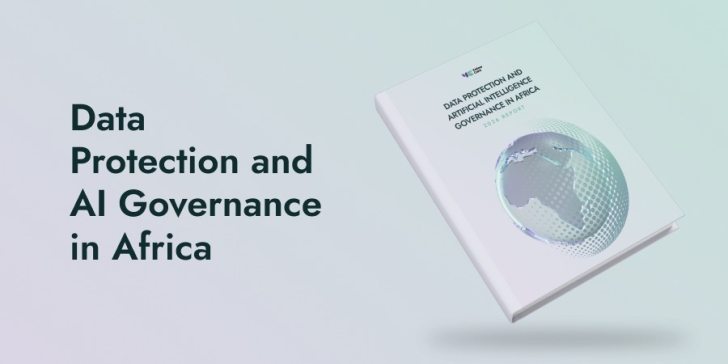
Yellow Card report reveals surge in AI governance and data protection across Africa
Yellow Card, a licensed stablecoin infrastructure provider focused on emerging markets, has published its 2026 report on data protection and artificial intelligence (AI) governance in Africa, outlining what it describes as a growing convergence between regulatory compliance and digital financial innovation.
The report, released in Accra on April 22, highlights a significant shift across the continent from the adoption of basic data protection laws to the active enforcement of AI governance frameworks, particularly within the financial services sector.
According to the findings, 45 African countries have enacted data protection legislation, with 39 regulatory authorities now fully operational. This, the report notes, reflects a maturing compliance landscape that financial institutions must navigate as they expand across multiple jurisdictions.
It further points to the rapid emergence of AI governance, with 16 countries having adopted national AI strategies. Key economies, including Nigeria, Angola, Morocco and Namibia, are moving towards enforceable regulatory regimes, signalling a transition from policy guidelines to stricter legal requirements.
The report’s author, Thelma Okorie, Group Data Protection and Privacy Counsel at Yellow Card, said the intersection of data protection and AI governance is no longer theoretical but has become an operational necessity for institutions operating in emerging markets.
She explained that organisations seeking to modernise payment systems and deploy technologies such as stablecoins must prioritise compliance with cross-border regulatory frameworks, noting that innovation is increasingly tied to an institution’s ability to manage complex legal environments.
The report identifies heightened regulatory enforcement as a defining feature of the current landscape, with authorities increasingly requiring Data Protection Impact Assessments and Algorithmic Impact Assessments. These measures, it said, are raising the cost of non-compliance and reinforcing the need for robust governance structures.
Particular attention is given to the financial sector, where the use of stablecoins for treasury management and cross-border payments is expanding. The report stresses that institutions adopting such technologies must ensure that their underlying systems meet stringent data security and privacy standards.
It also highlights the role of digital infrastructure in navigating fragmented regulatory systems, suggesting that integrated platforms capable of supporting compliance across multiple jurisdictions will be critical for institutions seeking to scale.
Yellow Card maintains that its infrastructure, including application programming interfaces and treasury management tools, is designed to simplify cross-border operations by enabling businesses to transact across multiple blockchain networks while adhering to regulatory requirements.
Ms Okorie noted that while stablecoins offer opportunities to improve efficiency, manage treasury operations and reduce exposure to foreign exchange volatility, their success depends on compliance with evolving regulatory standards.
The report ultimately positions regulatory alignment as central to the future of digital finance in Africa, arguing that institutions must embed privacy and ethical AI considerations into their systems to sustain growth and maintain trust in increasingly digitised markets.