

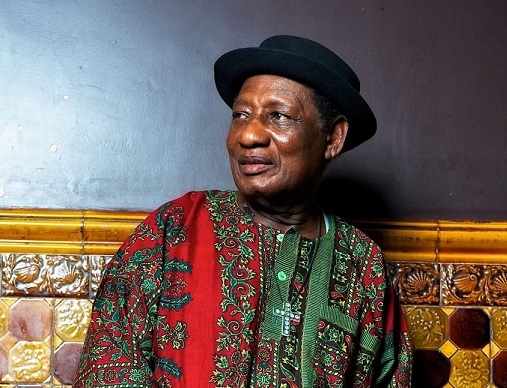
Ghana’s rich musical heritage has travelled far beyond our shores, and few names have carried it with as much grace and influence as Ebo Taylor.
A pioneering force in highlife and Afro-funk, Ebo Taylor’s career spans over six decades, during which he has become one of the most respected ambassadors of Ghanaian music worldwide. A world tourism feat that is unprecedented by any artist in Ghana since independence.
From the golden era of highlife in the 1960s and 1970s to the global resurgence of Afrobeat and African funk, Ebo Taylor’s sound has consistently reflected the soul of Ghana.
Blending traditional Ghanaian rhythms with jazz, funk and Afrobeat influences, he crafted a distinct musical identity that resonates across generations and continents.
His works have been sampled, reissued and celebrated by international DJs, record collectors and world music enthusiasts, introducing younger audiences in Europe, North America and Asia to authentic Ghanaian highlife.
Through international tours and festival performances, Ebo Taylor has proudly flown Ghana’s flag on some of the world’s biggest stages. His music has not only entertained but educated global audiences about Ghana’s cultural depth, linguistic beauty and rhythmic sophistication.
At a time when African music is enjoying unprecedented global attention, it is important to acknowledge that pioneers like Ebo Taylor laid the foundation decades ago.
Beyond performance, his legacy includes mentoring younger musicians, preserving indigenous sounds, and proving that Ghanaian music can evolve without losing its roots. He stands as a bridge between the old school and the new wave; a living archive of our musical journey.
As a nation, Ghana must intentionally celebrate such icons even as they are no more with us. National honours, lifetime achievement awards, music festivals dedicated to highlife, and inclusion of his works in educational curricula are meaningful ways to preserve his impact.
Documentaries, archives, and state-supported retrospectives would ensure that future generations understand his role in shaping not just Ghanaian music, but Africa’s global sound. Ebo Taylor is not just a musician; he is a cultural treasure.
In celebrating him, Ghanacelebrates itself, its history, resilience, creativity and global influence. The impact of Ebo Taylor on Ghanaian and African music is both foundational and far reaching. His influence cuts across sound, structure, identity, and global recognition.
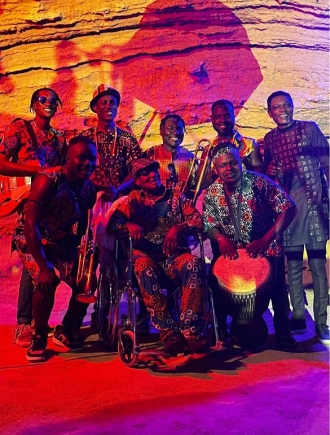
Redefining Highlife in Ghana
Ebo Taylor expanded traditional highlife by blending it with Afro-funk, jazz, and Afrobeat. At a time when highlife was largely dance-band oriented, he introduced deeper horn arrangements, complex rhythms, and socially conscious lyrics.
This evolution modernizedGhanaian highlife without stripping it of its indigenous roots.
Many contemporary Ghanaian artists, whether in highlife, hiplife, or Afrobeats, draw from the layered instrumentation and groove structures he helped popularize. The fusion style heard in today’s live-band revivals and alternative Ghanaian music owes much to his blueprint.
Bridging Ghana and Afrobeat – where is the controversy?
Although Fela Kuti is widely credited as the pioneer of Afrobeat, Ebo Taylor was among the early West African musicians who experimented with similar fusions of traditional rhythms and funk influences.
His collaboration and creative exchanges during the 1960s shaped a shared West African sound that strengthened musical ties between Ghana and Nigeria.
Inspiring Africa’s Modern Sound
Across Africa, the resurgence of Afro-fusion, live instrumentation, and vintage African funk samples in modern productions reflects Ebo Taylor’s legacy.
His records have been rediscovered by international DJs and sampled by global producers, positioning Ghana as a key contributor to Africa’s contemporary music renaissance.
Artists in the current Afrobeats movement—while more digitally driven—inherit the rhythmic DNA established by pioneers like Ebo Taylor: syncopated guitar lines, call-and response vocals, brass-heavy arrangements, and storytelling rooted in African realities.
Global Recognition of African Heritage Sounds
Through tours in Europe and North America, Ebo Taylor helped validate African highlife and Afro-funk as serious art forms on the global stage. Long before African music became mainstream internationally, he was proving that Ghanaian rhythms could command global audiences.
Cultural Confidence and Preservation
Perhaps his greatest impact is intangible: cultural confidence. Ebo Taylor demonstrated that African music could modernize without imitating the West. He preserved Ghanaian identity while innovating sonically, encouraging generations of musicians to value their roots.
In essence, Ebo Taylor did not merely create songs—he expanded the soundscape of Ghana and contributed to the architectural foundation of modern African music. His music is not just part of history; it is part of the living rhythm of Africa today.
His Masterpieces sampled by world-renowned artists;
Ebo Taylor’s work, rooted in Ghanaian highlife, Afrobeat, jazz, and funk fusion — became a rich source of samples for artists across many styles, from mainstream R&B (Usher, Kelly Rowland) to hip-hop and indie rap (Rapsody, Vic Mensa, Sadat X), highlighting how his grooves, rhythms and guitar work have reverberated in global music culture.
This shows how his Ghanaian highlife/Afrofunk legacy has influenced international music across genres like hip-hop, R&B, rap and Afrobeat.
Here are few among the lots who have sampled or reissued the masterpieces of Ebo Taylor;
1. “Heaven” (1977)
Usher feat. Ludacris – “She Don’t Know” (2010) – sampled multiple elements of Heaven.
Akwasi – “Na Wo Se Deng” (2020) – used elements of Heaven.
2. “Odofo Nyi Akyiri Biara” (1976)
One of Taylor’s most widely sampled songs internationally:
Black Eyed Peas – “RING THE ALARM Pt.1, Pt.2, Pt.3” (2018).
Kelly Rowland – “Black Magic” (2021).
Jidenna – “Feng Shui” (2020).
Vic Mensa – “RUMORS” (2023).
3. “Love and Death” (2010 / originally earlier)
This track has become a popular source for hip-hop and rap sampling:
Rapsody – “Back in My Bag” (2024).
Ruff Stuff – “Kiss of Death” (2018).
Curren$y & DJ Fresh feat. Guapdad 4000 – “Easy Hard” (2020).
(There are additional sample uses beyond these 3.)
4. “Come Along” (1970) by Ebo Taylor & The Pelikans
This highlife funk-groove track got noticed in hip-hop sampling:
Ghetto Concept – “Certified” (1993).
Sadat X – “Remember That” (2011).
Vic Mensa – “LVLN UP” (2023).
5. “Atwer Abroba” (1978)
This groove was picked up by producers in rap/urban music:
Makola – “This Is London” (2015).
Ruck P – “Belvedere” (2017).
6. “Mondo Soul Funky” (2004)
Flako – “Shake It Harder” (2011).
7. “Amponsah” (2009)
Mash Up International feat. Timbuktu, Gnucci, Vaz – “Lava Cabeza” (2012).
The legendary Ebo Taylor deserves a national honor or monument in Ghana in his memory for the following compelling reasons:
1. Pioneer of Afro-Funk & Modern Highlife
Ebo Taylor played a foundational role in shaping Ghana’s highlife sound by fusing it with Afrobeat, jazz and funk in the 1970s. His innovative arrangements influenced generations of musicians across Africa and beyond.
2. Global Cultural Ambassador
His music has been widely sampled by international artists, introducing Ghanaian highlife to global audiences. Through these samples and reissues, Ghana’s musical heritage has remained relevant in modern hip-hop, R&B and Afro-fusion.
3. Preservation of Ghanaian Musical Identity
While many artists adapted Western sounds entirely, Ebo Taylor maintained strong Ghanaian rhythmic structures, language and storytelling traditions — preserving indigenous identity within contemporary music.
4. Longevity & Consistency
With a career spanning over five decades, he remained active, relevant and respected both locally and internationally — a rare achievement in the music industry.
5. Inspiration to Future Generations
Many Ghanaian musicians and producers cite him as an influence. Honoring him formally would reinforce Ghana’s appreciation of artistic excellence and encourage younger creatives to pursue cultural authenticity.
6. National Pride & Historical Value
Just as Ghana honors political and traditional leaders, cultural icons who shape national identity deserve recognition. A monument or state honor would immortalize his contribution to Ghana’s creative economy and cultural diplomacy.
Ebo Taylor is not just a musician; he is a cultural institution whose work elevated Ghana’s sound onto the global stage. A national honor or monument built in his memory, would be a fitting tribute to his legacy and Ghana’s rich musical heritage.
