

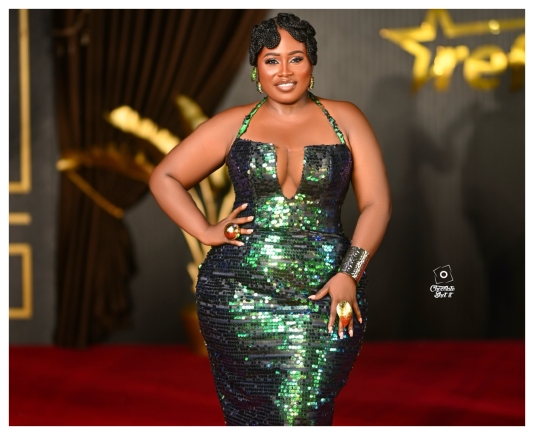
What Lydia Forson said about plus-size women once only cast as funny characters
Ghanaian actress and filmmaker Lydia Forson has opened up about the challenges she faced early in her career, revealing that plus-size women were often limited to stereotypical roles in the film industry.
Speaking in an interview with media personality Kafui Dey, Forson said that when she entered the industry, body size largely determined the type of roles actresses were offered.
According to her, plus-size women were typically cast as comic relief rather than being portrayed as desirable or complex characters.
“When I entered the film industry, plus-size women were usually cast as funny characters, never as sex symbols. To be seen as a sex symbol, you had to be slim, light-skinned, or have a certain type of hair, and I was none of those things,” she said.
Despite these limitations, Forson said she remained determined to challenge the status quo and create representation for women who look like her.
“But I pushed through because I wanted women who look like me to feel represented,” she noted, adding that criticism often targets physical appearance, including body size, skin color, and hair.
She further pointed to the role society and the media play in reinforcing narrow beauty standards, explaining how perceptions of attractiveness are often shaped by external influences.
“There was a time I wore a weave and posted it. Even friends said I looked ‘hot.’ But I’ve always been that person; it was just the weave,” she said. “We’ve been conditioned to see beauty in a certain way, so people admire it privately but hesitate to say it publicly.”
Forson observed that these standards continue to influence how people view themselves, with many striving to meet what is widely accepted as “ideal.”
Beyond issues of representation, the actress also highlighted ongoing structural challenges within the film industry, particularly in relation to inclusivity behind the scenes.
“As creatives, we have the power to break these barriers and show that you can be successful, dark-skinned, natural-haired, and still beautiful. But we’re still not there yet,” she said.
She revealed that even in 2026, she sometimes has to bring her own hairstylist to film sets due to a lack of professionals skilled in handling natural hair.
“Sometimes I even have to braid my own hair to prepare for filming. In Ghana, we are still dealing with this,” she added.
