
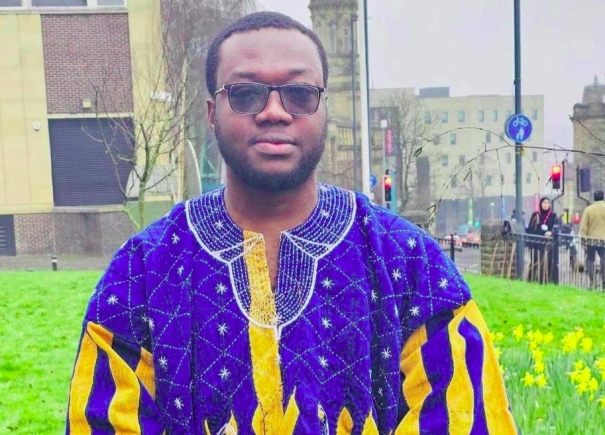
Carl Selorm Dovi's work raises a question that goes beyond his own career: can participatory models developed in African community contexts be transposed into Western institutional frameworks without losing their animating logic? His record in Bradford suggests a provisional yes, but the conditions matter.
There is a distinction, rarely observed in practice, between participation as decoration and participation as method. The first treats community involvement as a legitimising layer applied to a cultural production that has already been conceived without those communities. The second makes participation structural and inseparable from the aesthetic logic of the work itself. It is this second, more demanding version of participatory practice that defines the curatorial approach of Bradford-based cultural practitioner Carl Selorm Dovi.
Dovi's emergence as a distinctive voice within UK arts and cultural programming is partly a story of timing. He arrived in Bradford as the city was preparing to deliver one of the most ambitious civic cultural programmes in recent British history. But timing alone does not explain the coherence of his contribution. What distinguishes his work is a methodology with traceable roots: a participatory framework developed across artistic contexts in Ghana and subsequently adapted, with considerable fidelity to its original principles, for the institutional scale of Bradford 2025, UK City of Culture.
A Method Formed in Accra
The origins of Dovi's participatory model lie in Project Hope Ghana, a combined arts initiative he led between 2021 and 2022 that engaged students across more than 17 schools in the Accra metropolitan area. The project's subject, environmental education along Ghana's coastal communities, was addressed not through conventional public information campaigns but through an integrated multidisciplinary arts framework combining theatre, music, visual arts and storytelling.
What is significant about this intervention, viewed in retrospect, is less the scale than the structural logic. Participants, schoolchildren with no prior performance background, were not positioned as recipients of artistic content, nor as symbolic representatives of affected communities. They were embedded as active co-creators within the dramaturgical structure of the work. This is consistent with what arts theorist Suzanne Lacy, writing on new genre public art, identified as the critical difference between art made about communities and art made with and through them. Dovi's early practice sits clearly in the latter category.
During the same period, Dovi's commitment to inclusive creative practice was demonstrated through his creative artistic mentorship of a visually impaired performer who subsequently achieved national recognition on Ghana's Talented Kids platform. This is considered a concrete instance of participatory arts practice yielding individual transformation within a competitive public context.
The Institutional Transposition
The question of whether participatory models developed in African grassroots contexts can function within Western institutional frameworks is not straightforwardly answered. The risks are well documented in community arts literature: the institutional pull towards spectacle, the pressure to produce measurable outputs over organic process, and the tendency of large-scale programmes to subordinate participation to logistics. Dovi's work within Bradford 2025 is notable precisely because it appears to have navigated these pressures rather than been absorbed by them.
Working as part of the delivery team of Bradford 2025, his proposed Event Enhancers framework contributed to the design of cultural experiences that embedded community participants not as background performers or support roles, but as trained artistic contributors within the dramaturgical and aesthetic structure of large-scale events. The outcomes of this approach are, in at least one case, independently verifiable: approximately 15 community volunteers trained through the Bradford 2025 opening event RISE have since formed their own performance groups, are performing independently across Bradford, and have become members of the Magic Circle, a nationally recognised professional body. The participatory intervention, in other words, did not conclude with the event. It generated a permanent addition to the city's creative infrastructure.
This outcome, unplanned and therefore unmanaged in its origins, is arguably the strongest evidence of methodological integrity. Participation that produces independent creative agency in its participants is structurally different from participation that produces good audience numbers. The former is harder to design for and harder to claim credit for. Its occurrence here warrants scrutiny as a model rather than merely a pleasing anecdote.
Festival Curation and the Question of Authenticity
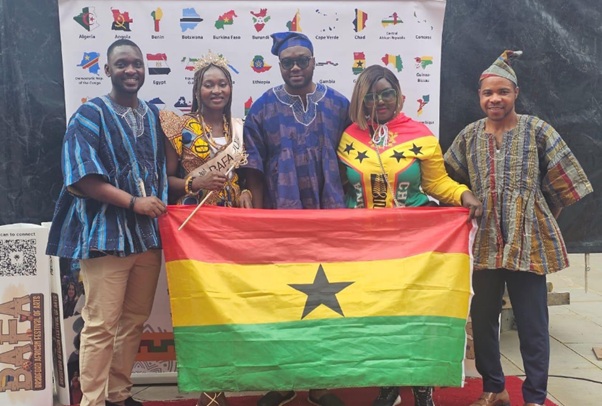
Parallel to his Bradford 2025, UK City of Culture work, Dovi has been a central figure in the Bradford African Festival of Arts (BAFA) since its inaugural edition in 2024, when he served as Artistic Programmer responsible for the curatorial coherence of a programme featuring 5 artists and 12 community groups. The challenge of maintaining artistic integrity across a programme of that diversity, local and international performers, multiple cultural traditions, a public-facing audience with varied expectations, is not trivial, and the critical record of the 2024 edition supports the view that it was met.
In the 2025 edition, Dovi's remit narrowed to the Ghanaian community performance, where his curatorial work involved the integration of distinct traditional Ghanaian dances, multiple festival narratives, traditional songs, and spoken word poetry into a single coherent performance. The Ghanaian community's success in the BAFA African Cultural Performance Competition, judged by an independent panel made of renowned academics, cultural practitioners and civic leaders that year, reflects, in part, the strength of that curatorial preparation.
The broader curatorial question raised by this work, how to present African cultural heritage within UK institutional contexts without reducing it to spectacle or flattening its complexity, is one that diaspora cultural programming has not consistently resolved. Dovi's approach, rooted in what might be called dramaturgical fidelity, treats Ghanaian performance traditions as living aesthetic systems with their own internal logic, rather than as cultural content to be adapted for palatability. Whether this approach can be sustained as BAFA grows in scale and institutional visibility is a question worth watching.
Threads of Identity and the Yorkshire Extension
Outside Bradford, Dovi's curation of Threads of Identity, a combined arts cultural programme presented at Halifax Unity in April 2025 as part of CultureDale Yorkshire's programme, extends the geographic reach of his practice and introduces a further dimension: material culture as a medium for participatory dialogue.
The programme, which explored African textile traditions from kente weaving to handcrafted basketry through storytelling, visual display and community conversation, was designed not as a conventional heritage exhibition but as an inquiry into the relationship between making, identity, and cultural continuity. By positioning traditional craftsmanship within a contemporary Yorkshire community space, the event asked its audience to consider how diaspora cultural knowledge circulates and transforms in new contexts, a question with relevance well beyond the immediate programme.
Its inclusion within CultureDale Yorkshire's civic programming is itself notable: it reflects a degree of institutional recognition that diaspora-led cultural practice is not supplementary to regional cultural infrastructure but constitutive of it.
The Structural Argument
Taken together, these projects suggest a practitioner whose significance lies not in any single production but in the coherence of a cross-contextual methodology. The theoretical underpinning of this methodology, participatory arts as a mode of cultural production in which communities are co-authors rather than subjects, has a substantial scholarly basis in community creative arts discourse. What is less common is a practitioner who has applied this framework consistently across both the informal conditions of grassroots African arts practice and the formal constraints of major UK civic cultural programmes.
The establishment of ReachArt Network CIC represents an attempt to institutionalise this methodology to create an organisational infrastructure through which the principles tested in Project Hope Ghana, Bradford 2025, BAFA and Threads of Identity can be systematically applied and further developed. Whether that institutionalisation will preserve or dilute the methodological rigour of Dovi's practice is, again, a question that only the organisation's future work can answer.
Participatory arts practice carries well-documented risks: the potential for exploitation of community participants, the subordination of artistic quality to social outcomes, and the institutional capture of grassroots models that lose their critical edge in the process of scaling. Dovi's work to date demonstrates awareness of these tensions. The Bradford magic circle outcome, independent creative agency generated, not merely documented, suggests that, at its best, his model produces something more durable than participation. It produces practitioners in the creative economy.
A Model Worth Examining
For Ghana, the significance of Dovi's trajectory is not primarily biographical. It is structural. As Ghanaian cities, Accra foremost among them, continue to position culture as a driver of civic development and economic diversification, the question of how participatory creative arts practice can be scaled without losing its community-rooted logic is one that urban cultural planners, arts organisations and funding bodies will increasingly need to engage.
Dovi's Bradford work offers one answer to that question: provisional, context-specific, and in ongoing development. Its value as a reference point lies not in its replicability in any simple sense, but in the rigour with which it has maintained creative participatory principles under institutional pressure. That rigour, more than any individual production, is what makes his practice worth watching from Accra.
