
“Ladies and gentlemen, we are now preparing for landing…”
The pilot’s calm voice drifted through the aircraft as Kotoka International Airport (KIA) came into view, lights twinkling beneath the wings like a city winking back at the sky.
The landing was gentle enough to calm the fatigue of a long-haul flight.
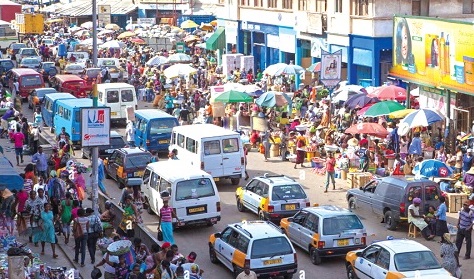
But stepping into Terminal 3 quickly reminded me of Accra’s peculiar rhythm, a space modern in architecture, yet perpetually overwhelmed.
With only two carousels straining under the weight of multiple international flights, waiting for luggage began to feel like a disaster drill.
Two hours passed before my suitcase finally appeared. Welcome home.
Outside the terminal, the city offered its first signature greeting: a barrage of sirens.
A long convoy burst through the roundabout close to the VVIP lounge at KIA Terminal 2, slicing through traffic like royalty on parade.
If you have lived in Accra long enough, this scene is hardly surprising.
If you’ve travelled the world, it becomes even more striking.
Big man phenomenon
In Ghana, the markers of success are unmistakable. A big car. A big title. A big convoy. Let’s get back to the spectacle at the roundabout.
A police outrider from the state protocol unit danced theatrically in front of the motorcade – whistles, hand movements, and bravado choreographed with the precision of a movie scene.
Every few seconds, he mounted his motorcycle seat, shouting aggressively at ordinary road users to “give way.”
On my drive home, exhausted from travel, I counted at least six similar convoys slicing through Accra’s notorious evening traffic.
Morning, afternoon, or night, our “big men and women” appear constitutionally allergic to staying in traffic like the rest of us.
These convoys have grown increasingly brazen.
They drive on the shoulders of the road, blast through red lights, and sometimes face oncoming traffic with astonishing recklessness.
And here’s the irony: most of these are not presidential convoys.
They are not transporting the Vice-President or the Speaker of Parliament.
Often, they are simply individuals whose access to state privilege has bred a culture of impunity.
The result? Ordinary citizens imitate.
Private cars now carry makeshift sirens and flashy LED lights.
Drivers behave like self-anointed VIPs, pushing others aside to claim the illusion of elevated status.
Lessons
Travelling exposes contrasts that become impossible to ignore.
In some western countries, the Prime Minister pedals to work—no sirens, no convoy, no outriders.
In London, ministers disappear into the Underground like ordinary commuters.
Boris Johnson always rode a bike when he was Mayor of the city of London.
In Berlin and Copenhagen, government officials routinely queue for trams and buses without fanfare.
These are societies where power is exercised quietly, not performed loudly.
Where public service means humility, not spectacle.
But in Ghana, the “Big Man” syndrome has taken on an Orwellian flavour.
The craving for titles, especially the once sacred “Honourable,” has reached absurd levels.
From district assemblies to unit committees, everyone wants the title.
And with the title comes a distorted sense of elevation: red lights become optional, queues become jumpable, rules become negotiable.
Mirroring its elite
This culture of entitlement trickles down to everyday life in Accra.
Trotro (public transport) drivers become traffic anarchists, weaving across lanes with the confidence of emergency responders.
Taxi drivers mimic the behaviour.
Private car owners, running late, simply switch on hazard lights and blast their horns as though the city owes them passage.
In banking halls, queues are treated as mere suggestions.
A latecomer walks past everyone, fabricates a dramatic emergency – usually a dying relative and demands immediate service.
At popular waakye joints, the queues are frequently invaded by people who believe patience is for the weak.
Challenge them, and you’ll receive a lecture on audacity.
Even in churches, this mentality thrives. Seats are “reserved” with bags, scarves, or folded newspapers – sometimes for people who stroll in just before the benediction.
Former IGP Dr George Akuffo Dampare’s reforms briefly tamed some of this behaviour. Red-light jumping, for instance, significantly declined. But good systems in Accra often collide with powerful individuals who believe order is a personal inconvenience.
Lawlessness
Accra is a city bursting with energy, ambition, and cultural vibrancy.
But beneath its vitality lies a dangerous habit – our addiction to unnecessary urgency, powered by a disregard for rules.
How long will motorcade courtiers be allowed to slap citizens aside on the roads?
How long will public officials hide behind sirens they have not earned?
How long will ordinary drivers imitate the same lawlessness they claim to detest?
A modern city cannot be built on the foundation of chaos.
A progressive society cannot thrive on privileges for the few and frustration for the many.
And no nation develops on the wheels of entitlement.
Sirens are for emergencies, not egos.
Motorcades are for necessity, not vanity.
And the law must exist for everyone, not selectively for the powerless.
Accra must slow down long enough to restore order, fairness, and dignity.
Because a city always in a rush eventually rushes past its own progress.
E-mail:
