
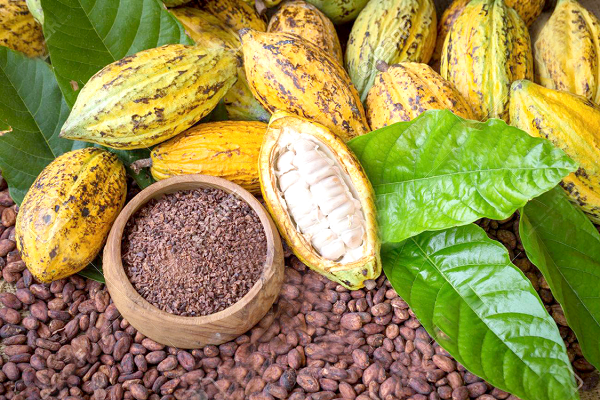
Protecting Ghana’s cocoa farmers from global price shocks: Why local value addition must be a national priority
A Policy Perspective
Introduction: A Crisis That Demands Structural Reform
Ghana’s cocoa sector is once again confronting the harsh realities of global commodity markets. The recent reduction in the farm-gate price paid to cocoa farmers, following a decline in international cocoa prices, has triggered widespread debate across the country. For the nearly one million smallholder farmers who depend on cocoa for their livelihoods, the price cut represents more than a policy adjustment as it represents lost income, increased financial uncertainty, and growing concerns about the sustainability of rural livelihoods. The global price collapse has exposed long-standing structural weaknesses in Ghana’s cocoa economy. International cocoa prices, which reached historic highs in early 2025, fell sharply by early 2026, forcing the government to realign domestic prices with global market conditions. This adjustment was necessary to maintain competitiveness in international markets, yet the consequences for farmers have been severe. Many farmers have faced delayed payments, rising debts, and declining purchasing power.
Recent analysis of the cocoa crisis highlights the magnitude of the problem. In February 2026, the government announced a reduction in the cocoa farm-gate price by nearly 29 percent following the collapse of international cocoa prices from over $8,000 per ton to approximately $3,500–$4,100 per ton. While the government’s reform package, including price realignment, domestic financing reforms, and proposals to increase local processing is a step in the right direction, the crisis reveals a deeper issue. Ghana’s cocoa economy remains heavily dependent on the export of raw cocoa beans, leaving farmers and the national economy vulnerable to international market shocks.
To protect farmers and secure the long-term sustainability of the cocoa sector, Ghana must adopt a bold strategy that prioritizes local content, domestic value addition, and farmer-centered economic policies.
The Vulnerability of Commodity-Dependent Economies
Commodity-dependent economies often experience cycles of boom and bust. When global prices rise, exporting countries benefit from increased revenues. However, when prices fall as has occurred in the current cocoa market, producers bear the burden of adjustment.
Ghana’s cocoa sector illustrates this dynamic. As one of the world’s largest cocoa producers, Ghana plays a critical role in the global cocoa supply chain. Yet much of the economic value generated from cocoa production is captured outside the country. Raw cocoa beans are exported and processed into higher-value products such as chocolate, cocoa butter, and cocoa powder in industrialized economies. This structure creates a fundamental imbalance. While Ghana produces a substantial share of the world’s cocoa, it captures only a small portion of the value generated from the global chocolate industry.
As a result, Ghana’s cocoa farmers remain highly vulnerable to fluctuations in international commodity prices. When global prices fall, farmers’ incomes decline immediately. Because many smallholder farmers operate within narrow financial margins, even modest price changes can significantly affect their ability to maintain production, invest in their farms, and support their families.
Without structural reform, Ghana risks remaining trapped in a cycle in which farmers absorb the negative impacts of global market volatility.
Why Local Value Addition Matters
One of the most effective strategies for reducing vulnerability to commodity price shocks is domestic value addition. Instead of exporting raw cocoa beans, Ghana can increase its economic gains by processing cocoa locally into intermediate and finished products.
Value addition provides several important benefits
First, domestic processing allows countries to capture a larger share of the global cocoa value chain. Chocolate manufacturing, cocoa butter extraction, and other processing activities generate significantly higher economic returns than raw commodity exports.
Second, value addition promotes industrial development and job creation. Establishing cocoa processing facilities creates employment opportunities in manufacturing, logistics, packaging, marketing, and distribution.
Third, local processing strengthens economic resilience by reducing dependence on volatile commodity markets. Countries that export finished products rather than raw commodities are better positioned to maintain stable revenues even when commodity prices fluctuate.
Ghana already possesses substantial cocoa grinding capacity, yet much of this capacity remains underutilized. Expanding domestic processing operations would allow the country to convert more of its cocoa beans into value-added products before exporting them.
Such a strategy would not only strengthen Ghana’s economy but also ensure that cocoa farmers benefit from the higher value generated within the supply chain.
The Importance of Farmer-Centered Policies
While structural reforms are essential, policies must also address the immediate needs of cocoa farmers. Smallholder farmers are the backbone of Ghana’s cocoa industry. Their productivity and well-being determine the long-term viability of the sector. However, when farmers face delayed payments, declining prices, and rising production costs, the sustainability of cocoa farming becomes uncertain.
Policies designed to protect farmers should therefore focus on several key areas.
Strengthening Agricultural Extension Services
Extension programs play a critical role in supporting farmers. Through training programs, technical assistance, and educational outreach, extension services help farmers adopt improved production practices, manage pests and diseases, and increase productivity.
Research in agricultural economics consistently shows that farmers who receive regular training and access to extension services are more likely to adopt innovations that improve yields and income stability.
Improving Financial Literacy and Access to Credit
Financial education programs can help farmers make better decisions regarding investment, savings, and risk management. Access to affordable credit can also enable farmers to invest in fertilizers, improved seedlings, and modern farming techniques.
Expanding Social Protection Mechanisms
Commodity price fluctuations can create sudden income shocks for farmers. Strengthening social protection programs, including crop insurance and savings schemes, can help farmers manage these risks.
Policy Coordination and Regional Cooperation
Ghana does not operate in isolation within the global cocoa market. Côte d’Ivoire, Ghana’s neighboring country, is the world’s largest cocoa producer, and together the two countries account for more than sixty percent of global cocoa production.
This means that coordinated policy actions between Ghana and Côte d’Ivoire can significantly influence global cocoa markets. Joint pricing strategies, harmonized marketing policies, and coordinated sustainability initiatives could strengthen the bargaining power of both countries.
Greater collaboration between cocoa-producing nations could also help stabilize global markets and improve income security for farmers across the region.
A Strategic Opportunity for Transformation
Despite the challenges currently facing Ghana’s cocoa sector, the present crisis offers a unique opportunity for reform. Periods of economic disruption often reveal structural weaknesses that might otherwise remain hidden. The recent price shock has exposed the risks associated with heavy dependence on raw commodity exports and has underscored the need for structural transformation.
By prioritizing local value addition, strengthening farmer support programs, and improving institutional governance within the cocoa sector, Ghana can build a more resilient agricultural economy. The goal should not simply be to stabilize cocoa prices in the short term but to create an economic system in which cocoa production generates sustainable prosperity for farmers and the nation.
Conclusion: Putting Farmers at the Center of Cocoa Policy
Ghana’s cocoa farmers have sustained the country’s agricultural economy for generations. Their work has built one of the most important cocoa industries in the world. Yet too often, the farmers who produce this valuable crop receive only a small share of the wealth generated within the global cocoa value chain.
Protecting farmers from international market shocks requires more than temporary policy adjustments. It requires a long-term commitment to structural reform, local value addition, and farmer-centered economic policies.
If Ghana can successfully implement these reforms, the country will not only protect its cocoa farmers but also position itself as a global leader in sustainable and value-added cocoa production.
The future of Ghana’s cocoa sector depends on the decisions made today.

The author, Sheila M. De-Heer is a PhD Candidate, Agricultural Sciences, Southern Illinois University
Research Expertise: Agricultural Economics, Rural Development, Agricultural Markets, and Producer Decision-Making
Email:
Email:
