
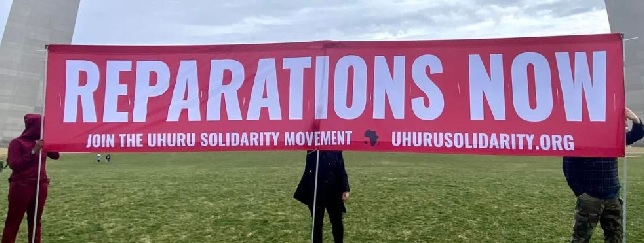
In 2001, just days before the September 11 attacks in the United States, the United Nations hosted a landmark conference in Durban, South Africa, on slavery, colonialism and reparations.
African leaders called for apologies and compensation from Europe and the Americas, arguing that slavery was a crime against humanity, whose consequences continue to shape global inequality.
The Durban Declaration acknowledged slavery’s brutality and its role in persistent poverty.
But history intervened. After 9/11, the world’s attention shifted sharply toward terrorism and war, pushing Africa’s demands to the margins.
Twenty-five years later, the issue has resurfaced.
The United Nations General Assembly has adopted a new resolution recognising the injustice of slavery, thanks in part to African leadership.
Slavery was morally abhorrent, and its condemnation is both right and necessary.
Yet, the renewed call for reparations demands scrutiny.
Who pays, who receives?
Buyers and sellers alike profited — and all are long dead.
Modern African nation-states did not exist at the time. Today’s borders cut across ethnic groups that once fought one another.
Ghana itself was formed by the amalgamation of separate territories with no shared national identity.
So who, precisely, should receive reparations — and on what basis?
Equally overlooked are the descendants of enslaved Africans in the Americas and the Caribbean, whose ancestors endured generations of forced labour, segregation, and racial terror long after Africa itself was no longer directly involved.
If reparations are about justice, they cannot be reduced to cheques paid to governments whose historical connection to the crime is indirect at best.
Slavery did not end; it evolved.
Across the world, particularly in the United States, mass incarceration disproportionately affects people of African descent.
Legal systems still extract forced labour from prisoners under the cover of law.
Jim Crow may be gone in name, but its logic persists. Even in Africa, imprisonment with “hard labour” often mirrors slavery cloaked in legal language.
Affirmative Action and diversity policies seek to correct historical wrongs, but they are insufficient.
Apologies and institutional reckoning matter, but symbolism alone cannot undo structural injustice.
An Akan proverb captures the danger succinctly: Bebi dehyeɛ etumi ayɛ bɛbi akoa — a royal can become a slave in another land.
Without building our societies, Africans who migrate elsewhere may still face exploitation and exclusion.
The call for reparations should, therefore, be reframed.
It should be a demand for equal opportunity, fair treatment, and human advancement for Africans and the African diaspora, not a pursuit of monetary compensation for governments.
True justice cannot be measured or bought with money.
Dignity, opportunity, and the ability to flourish are where it is truly found.
The writer is the financial crime, governance, and regulation sector.
