
Across Africa, a growing debate is taking shape — one that questions whether decades of dependence on foreign aid have strengthened the continent or weakened its ability to stand on its own.
Increasingly, some African leaders, intellectuals and young people are calling for a new path: one that prioritises sovereignty, dignity and self-reliance over dependency on external assistance.
For many Africans, the conversation is no longer simply about aid, but about power, control and respect in international relations.
The argument is that while foreign aid has helped address humanitarian crises, support health systems and finance development projects, it has also, in some cases, created unhealthy dependence, weakened local initiative and exposed African economies to geopolitical pressure from powerful nations.
The pushback against aid dependency is emerging at a time when global politics is becoming more competitive and uncertain.
Western powers, China, Russia, Gulf States and other emerging powers are all competing for influence in Africa through trade, military cooperation, infrastructure investments and strategic partnerships.
In this geopolitical contest, Africa often finds itself at the centre of competing interests.
Some African governments are, therefore, beginning to speak more boldly about protecting their sovereignty and rejecting what they see as conditional assistance or foreign interference.
Military-led governments in parts of the Sahel, for instance, have openly challenged traditional Western alliances, expelling foreign troops and redefining diplomatic relationships.
Elsewhere, there is increasing emphasis on intra-African trade, local industrialisation and strengthening African institutions through initiatives such as the African Continental Free Trade Area (AfCTA).
Supporters of this new thinking argue that no nation can achieve true independence while relying heavily on donor funding for essential services.
They point out that many African countries continue to export raw materials while importing finished goods at higher prices, a system they believe keeps the continent economically vulnerable.
Others argue that development priorities are sometimes shaped more by donor interests than by local needs.
Demand for dignity
The demand for dignity is especially strong among African youth, many of whom are questioning old development models.
There is growing frustration that despite decades of aid inflows, poverty, unemployment and infrastructure deficits remain widespread in many countries.
To them, sovereignty means more than political independence; it means economic control, technological advancement and the ability to make decisions without external pressure.
Yet the road toward self-reliance is not without risks or difficult questions.
Can African economies survive without substantial foreign aid?
Are governments prepared to fill funding gaps in health, education and humanitarian support? Can local industries compete in a highly unequal global economy dominated by powerful multinational corporations and advanced economies?
The reality is that many African countries still depend heavily on aid and concessional loans to support national budgets and social services. Without these inflows, sectors such as healthcare, food security and emergency relief can be stifled.
It is obvious that donor funding remains significant and an abrupt rejection of aid without strong domestic alternatives could worsen hardship for vulnerable populations.
Controls
Moreover, the developed world still controls much of the global financial architecture, including credit rating systems, international banking mechanisms and trade rules.
African countries that attempt to chart independent economic paths may face diplomatic pressure, reduced investment confidence or financial isolation.
This raises concerns about whether
Africa can truly escape what some critics describe as geopolitical “gimmicks” designed to maintain influence over weaker economies.
However, others believe the continent has enormous untapped potential.
Africa possesses vast natural resources, a youthful population, expanding digital innovation and growing consumer markets.
If properly managed, these assets could help reduce dependence on external aid over time.
Advocates of African sovereignty argue that the continent must focus on value addition, industrialisation, education, research, agriculture and regional integration rather than continued reliance on raw material exports.
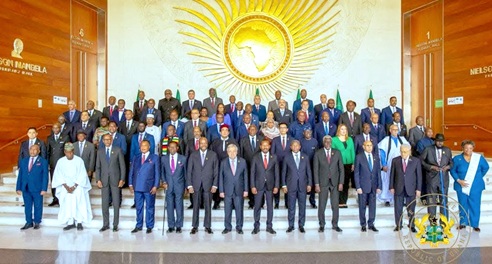
The African Union has repeatedly stressed the importance of Agenda 2063, which envisions “The Africa We Want” — an Africa driven by its own citizens and capable of financing its own development.
But achieving this vision will require stronger institutions, reduced corruption, prudent economic management and political stability.
The debate over aid and sovereignty is, therefore, not a simple rejection of international cooperation.
Rather, it reflects a growing desire for partnerships based on equality, mutual respect and shared benefit.
Africa does not necessarily seek isolation from the world; instead, many are calling for a reset in global relations where the continent is treated not as a passive recipient of charity, but as a strategic and capable partner.
Ultimately, the future of African sovereignty will depend on the choices African leaders and citizens make today.
The continent’s challenge is not merely to reject aid but to build resilient economies and institutions that can sustain genuine independence.
The journey may be difficult, but for many Africans, the pursuit of dignity, self-determination and control over their future is a cause worth pursuing.
