
A study conducted by the Department of Political Science of the University of Ghana has found that many Ghanaians are satisfied with the country’s democracy, although they are dissatisfied with the country’s economic conditions and efforts to tackle corruption.
The study, titled “Undertones and Public Perception of Military Rule and Democracy in Ghana”, surveyed 6,719 respondents across all 16 regions of the country and explored citizens’ views on democracy, governance and the growing interest in military regimes in parts of the Sahel.
The study found that 52.3 per cent of the respondents are satisfied with the country’s democracy, while 43.5 per cent rate the country’s democratic system as good and 10.3 per cent as very good.
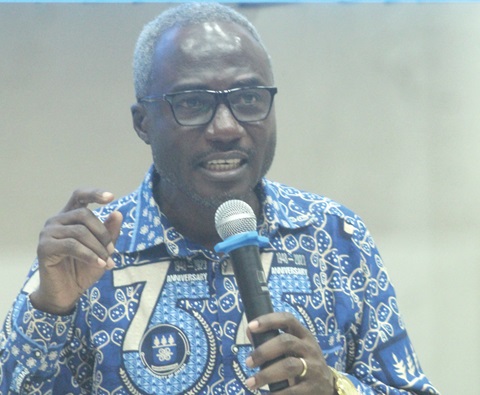
At a presentation of the findings in Accra last Wednesday, the head of the Department of Political Science, Prof. Isaac Owusu Mensah, said 92.3 per cent of respondents correctly understood democracy as a system based on the rule of law, protection of human rights and regular elections, while 93.1 per cent of those sampled were registered voters.
The research was conducted in collaboration with Konrad Adenauer Stiftung (KAS) Ghana, a German political foundation.
Democracy preferred
Prof. Mensah stressed that the admiration for military governments in neighbouring countries should not be interpreted as a rejection of democracy.
Rather, he argued that public sympathy for military regimes reflected dissatisfaction with shortcomings in the country’s democratic governance.
“The ostensible admiration for the Sahelian military regimes functions as a mirror reflecting democratic shortcomings rather than presenting a model to be emulated,” he said.
Economic hardship
Prof. Mensah said that, despite a strong understanding of and participation in democratic processes, the study revealed growing concerns about democracy’s ability to improve living conditions.
He said 85.2 per cent of respondents identified democracy’s inability to deliver economic development, particularly regarding unemployment and the high cost of living, as the country’s biggest democratic challenge.
Another 75.5 per cent said democracy had failed to address corruption effectively.
The report noted that those concerns had fuelled public frustration and contributed to discussions about whether military rule could offer a better alternative.
“These twin failures have fostered widespread popular disillusionment about democracy’s capacity to transform citizens’ lives,” Prof. Mensah stated.
Military rule
He said it was discovered that the support for military intervention remained conditional rather than widespread.
He said 34.5 per cent of respondents said they would consider supporting military rule if democracy failed to improve economic conditions, while 28.1 per cent would do so if corruption remained unchecked.
A further 13.9 per cent linked such support to the failure to create jobs for young people.
He said, “54.7 per cent of respondents believed the military would be more effective than civilian governments in combating corruption, while 49.5 per cent felt military leaders in the Sahel region were performing well,” Prof. Mensah said.
“However, focus group discussions conducted as part of the study showed that many participants remained wary of military rule because of concerns about human rights abuses, restrictions on freedoms and disregard for the rule of law,” he added.
Recommendations
He, therefore, urged political leaders to intensify efforts to fight corruption, strengthen accountability institutions and implement economic reforms aimed at creating jobs and improving living standards.
He also called for greater civic education to encourage citizens to engage in governance beyond voting during elections and stressed the need to improve transparency, responsiveness and trust in public institutions.
