
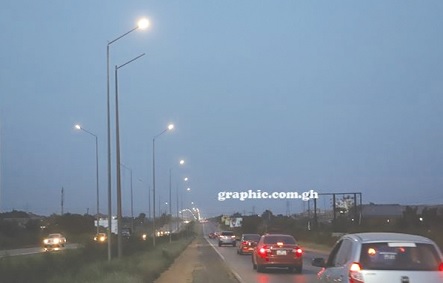
Over the last five years, Accra—Ghana’s bustling metropolitan hub of nearly five million people—has witnessed significant increases in electricity consumption.
Yet, persistent power instability, rising sector debt, and inefficiencies have turned this growth into an economic burden.
Once a symbol of national progress, the electricity sector is now weighed down by business disruptions, higher production costs and mounting fiscal strain.
Rising demand 2020–2025
Between 2020 and 2025, electricity consumption in Accra rose sharply due to urban expansion, widespread use of appliances, and growing commercial activities.
The shift to remote work and increased digital services during the COVID-19 pandemic further fuelled residential demand.
Households now consume more power through air conditioners, freezers and entertainment systems.
Meanwhile, commercial districts and industrial hubs put additional strain on the distribution network, especially during peak hours.
Despite efforts by the Electricity Company of Ghana (ECG) to upgrade transformers and expand the grid, supply has often lagged behind.
This has resulted in voltage fluctuations and frequent outages, especially in densely populated neighbourhoods.
Load management and scheduled blackouts became common between 2021 and 2023, exposing the system’s fragility.
The imbalance between growing demand and unreliable infrastructure has contributed to recurring blackouts and rationing, frustrating residents and slowing economic momentum in Ghana’s key urban centre.
Return “dumsor”
By 2021, Ghana saw a resurgence of “dumsor”—the term for persistent, unplanned power cuts.
Mounting debts and delayed payments to Independent Power Producers (IPPs) caused plants such as Sunon Asogli, which supplies up to 15 per cent of national demand, to scale back operations.
Earlier “dumsor” episodes cost Ghana an estimated two to six per cent of GDP annually.
The 2014 crisis alone wiped out nearly US $1 billion in productivity.
Newer estimates suggest that SMEs lose around US $686 million yearly—or over US $2 million daily—due to unreliable supply.
Power cuts damage household appliances, spoil food, interrupt hospital equipment and reduce public safety.
Energy sector debt
Ghana’s power sector debt has grown dangerously high. By mid-2022, energy sector liabilities topped US $2.3 billion—3.2 per cent of GDP—with projections showing possible escalation to US $8 billion by 2025 if no action is taken.
“Take-or-pay” contracts with IPPs, which oblige Ghana to pay for unused capacity, have worsened the financial drain.
State companies such as ECG and NEDCo struggle with operational losses.
ECG loses more than 30 per cent of power through system inefficiencies and collects only about half of billed amounts, leaving monthly shortfalls of around US $67 million.
By the end of 2023, NEDCo reported losses exceeding GH¢548 million.
Early in 2024, ECG even disconnected Ghana’s parliament for unpaid bills totalling GH¢23 million ($1.8 million).
Economic consequences
• Industry slowdown, rising costs
Manufacturers, service providers, and agribusinesses rely on steady power. Frequent outages force them to use expensive diesel generators, increasing costs and hurting competitiveness. Productivity dips, and potential investors are discouraged.
• Hardship for households
Power cuts damage appliances and limit daily life. Steep tariff hikes—27 per cent, then 30 per cent, then another 18 per cent between late 2022 and mid-2023—have deepened the burden on low-income families. PURC’s decision to reduce lifeline tariffs while removing subsidies after 30 kWh has added pressure.
• Public debt, fiscal pressure
To keep lights on, Ghana has spent nearly US $1 billion annually on subsidies since 2019.
Today, energy sector liabilities contribute significantly to Ghana’s high public debt, which reached 80 per cent of GDP by 2023.
Funds owed to IPPs and gas suppliers drain resources from other vital services.
Recovery
With President Mahama’s return to office, in May 2025, Ghana has begun tackling the crisis head-on.
Plans include restructuring US $1 billion in legacy debt and clearing about US $2.5 billion owed to IPPs and gas suppliers by the end of 2025. Private sector partnerships aim to improve ECG’s billing and revenue collection.
The Energy Sector Recovery Programme (ESRP) plans to renegotiate rigid power deals, switching from “take-or-pay” to “take-and-pay” to better match payments with actual demand.
Conclusion
Accra’s growing electricity usage is proof of urban expansion and better living standards.
Yet, persistent supply failures, runaway debts, and outages have turned this growth into an obstacle instead of an engine for progress.
Households feel the strain, businesses lose revenue, and public finances are stretched thin.
Achieving stable, affordable electricity demands tough reforms: fairer contracts, better billing, stronger private sector engagement, and upgraded infrastructure.
Ghana’s 2025 road map offers hope, but lasting change will require political commitment and follow-through—so electricity can power prosperity rather than drain it.
The writer is a graduate of Ghana Communication Technology University, Currently working with KFC.
