
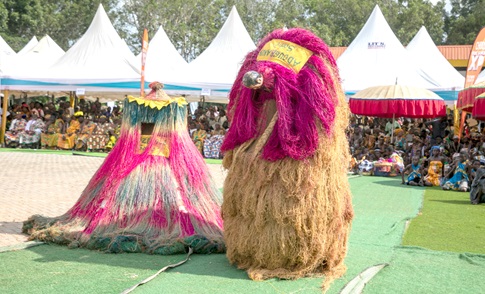
At the crossroads of myth and reality stands the Zangbetɔ — the mysterious “guardians of the night” whose presence continue to cast both awe and intrigue upon observers across West Africa, including communities in Benin, Togo, Nigeria, and among the Ewe people in Ghana’s Volta Region.
The name Zangbetɔ consists of two words: Zangbe, meaning “night,” and tɔ, meaning “people” or “owners.”
Together, they translate as “owners of the night” or simply “the night people” — a fitting description for these spiritual enforcers who stride the boundary between the physical and the mystical.
Originating from the Ogu people found in southwestern Nigeria, particularly in parts of Lagos and Ogun States, the Zangbetɔ tradition stretches back centuries.
It is said that long before the advent of modern policing, they served as the custodians of order, patrolling communities, settling disputes, and driving away evil forces believed to threaten peace and moral harmony.
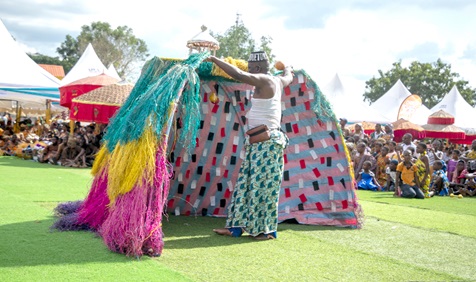
What moves the Zangbetɔ about remains a mystery as an open one shows no human in it
During ceremonies, the Zangbetɔ appear as towering, cone-shaped figures covered in layers of raffia, palm fronds, or colourful clothing.
Accompanied by drumming and chanting, they spin and glide in powerful, trance-like motions said to summon ancestral spirits.
To the faithful, these are not mere performances, but sacred manifestations of the spirit world.
Their mystique lies in the belief that no human occupies the costume during a ritual — that the spirit itself animates the form.
This notion fuels both reverence and fear, reinforcing their authority as protectors and purifiers.
Through their rhythmic dances, they are believed to cleanse communities of evil, heal the afflicted, and restore balance.
Beyond their spiritual powers, the Zangbetɔ hold deep social significance.
They embody discipline, uphold communal values, and serve as mediators in conflict.
Their rituals are a constant reminder that tradition and spirituality remain vital elements of community identity, even in a changing world.
Today, the Zangbetɔ continue to stand as powerful cultural symbols.
Festivals dedicated to them in Benin, Togo, and parts of Ghana attract both locals and visitors eager to experience one of West Africa’s most awe-inspiring traditions.
Whether viewed as mystical enforcers or cultural icons, the Zangbetɔ remain timeless guardians of faith, order, and heritage — keepers of the night whose whirling presence still commands respect under the moonlit skies of West Africa.
