
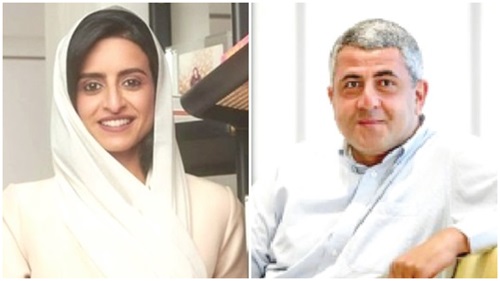
This week, the global tourism community has turned its gaze to Riyadh, Saudi Arabia, where the 26th UN Tourism General Assembly is underway. Delegates from across the world have converged to assess the state of the industry, debate its future direction, and, perhaps most symbolically, to witness the final assembly under Zurab Pololikashvili’s leadership as Secretary-General.
For the host nation, the assembly represents both prestige and proof of progress.
In just a few years, Saudi Arabia has repositioned itself as a global tourism player, investing heavily in infrastructure, destination branding and international partnerships.
For UN Tourism, this assembly marks a moment of both reflection and renewal – the culmination of one chapter and the quiet beginning of another.
Zurab’s legacy
When Zurab Pololikashvili took office in 2018, the global tourism landscape looked very different. International travel was booming, digital transformation was accelerating, and the conversation around sustainability was only beginning to gather pace.
Few could have imagined that within two years, a pandemic would halt the movement of people and paralyse the industry that employs one in ten workers worldwide.
It was during those difficult years that Zurab’s calm, pragmatic leadership came to define his tenure.
He steered the organisation – then known as the UN World Tourism Organisation (UNWTO) – through unprecedented disruption, coordinating global recovery efforts and working closely with governments and private stakeholders to rebuild confidence in travel.
Under his leadership, UN Tourism has focused on rebuilding smarter and more inclusively.
The organisation championed innovation, education, and partnerships as tools to drive recovery and resilience.
One of Zurab’s most visible achievements was the rebranding from UNWTO to UN Tourism in 2024, a move that simplified the brand identity and made the organisation more accessible and relevant to the broader public.
He also deepened engagement with regional blocs, especially in Africa, where his tenure saw increased technical cooperation, ministerial roundtables and the promotion of youth and innovation initiatives.
Zurab has often described Africa as the “next frontier of global tourism,” and his administration’s outreach to the continent underscored that belief.
New face, new phase
The Riyadh Assembly comes just six months after the Executive Council meeting in Segovia, Spain, where Shaikha Al Nowais of the United Arab Emirates was nominated as the next Secretary-General, pending ratification by the General Assembly.
If confirmed, she will become the first woman to lead the organisation in its 50-year history – a milestone that symbolises both progress and possibility.
Shaikha Al Nowais’s nomination signals a generational and professional shift.
Coming from the private sector, where she built a career in hospitality and corporate leadership, she brings a different perspective to the role—one rooted in innovation, empowerment, and results-driven management.
Her campaign focused on sustainability, inclusion, and investment, pledging to strengthen regional cooperation and ensure that the benefits of tourism reach communities at all levels.
Her appointment, if confirmed, will coincide with a period of transformation for global tourism.
The sector is navigating new realities shaped by technology, environmental urgency, sustainability, and evolving traveller expectations.
As the first woman to hold the position, her leadership will not only break a glass ceiling but also redefine how global tourism diplomacy is approached in the years ahead.
Defining moment for global tourism
The General Assembly is the highest decision-making body of UN Tourism, bringing together ministers, policymakers, and industry leaders from across its 160-plus member states.
Yet, beyond resolutions and declarations, this gathering in Riyadh is about vision.
It asks the sector to look beyond recovery and towards reinvention – how tourism can drive sustainable growth, foster cultural understanding, and contribute meaningfully to the world’s shared future.
As issues such as climate change, digital transformation and over-tourism reshape the global landscape, the assembly serves as a reminder that tourism’s future depends on shared responsibility.
Conversations around innovation, green investments, and the empowerment of local communities are taking centre stage, aligning closely with the United Nations’ Sustainable Development Goals.
Africa’s place in the conversation
For Africa, the Riyadh Assembly offers both visibility and opportunity.
The continent continues to record some of the world's fastest tourism growth rates, with destinations such as Kenya, Rwanda, Ghana and South Africa showing strong recovery and diversification. Yet challenges remain – from connectivity and infrastructure to marketing and visa access.
During Zurab’s tenure, Africa rose higher on the global tourism agenda.
The continent hosted several regional commissions and benefited from capacity-building and investment support.
With Shaikha Al Nowais expected to take over in January 2026, African leaders will be watching closely to see how she prioritises engagement with emerging markets and supports tourism as a driver of development.
Her stated interest in strengthening cross-regional partnerships, promoting women and youth in tourism, and building investment-ready destinations aligns well with Africa’s long-term aspirations. If the momentum built under Zurab is sustained, Africa could emerge as one of the organisation's key beneficiaries in its next phase.
Zurab’s swan song
For Zurab Pololikashvili, the Riyadh Assembly is more than a formal closing act – it is a swan song marking the end of an era.
Over eight years, he has guided UN Tourism through one of its most challenging and transformative periods.
His legacy lies not only in institutional reform but also in how he positioned tourism as a force for good – one that connects cultures, supports livelihoods and inspires global understanding.
As the gavel prepares to pass to Shaikha Al Nowais in January, the sense of transition is unmistakable.
The world of tourism is changing fast and leadership must evolve with it. What remains constant is the sector’s enduring ability to bring people together – to create not just economic opportunity but shared purpose.
In Riyadh this week, amidst celebration, reflection and debate, UN Tourism stands on the threshold of a new chapter.
And as Zurab bows out, his final assembly will be remembered not just for what it closes, but for what it opens – a renewed sense of direction, ambition and possibility for global tourism and for Africa’s place within it.
