
About five years ago, I travelled to the Volta Region from Darkuman in Accra, using the Dodowa route.
Anyone familiar with that stretch—particularly the Oyibi–Dodowa section at the time—will understand why I still remember the journey so vividly.
The road was in an advanced state of disrepair. It was a painful reminder of how infrastructure neglect quietly taxes citizens every day.
As fate would have it, the heavens opened on my return journey. Rain fell heavily and mercilessly, turning an already bad road into a foggy obstacle course.
If you have ever driven at night, in the rain, on a road that feels more like a lunar surface than a highway, you will appreciate my predicament.
Then it happened.
I slammed into a deep pothole. It was late, safety was paramount, and stopping by the roadside was not an option.
Thankfully, my 2004 six-cylinder black engine BMW 325i powered through, zooming heavier and deeper until I got home around 1:30 a.m.
It was only when I opened my gate that I saw the damage.
My front bumper was gone—completely gone.
The face of the car looked skeletal. The rough road had literally stolen my bumper.
That was a Saturday
On Monday, I set out for Abossey Okai, Accra’s famed spare parts hub.
I had been there many times before, but this was my most thorough and desperate search yet.
The first shop owner quoted GH¢1,700 for a used BMW E46 bumper.
The second asked for GH¢1,500.
The third, apparently selling gold-plated plastic, mentioned GH¢1,850. This was in 2020.
Just when despair was setting in and my mind was calculating how to “cough” money I did not have, I called a friend.
He directed me to a particular shop. I rushed there as if the bumper was the last lifeboat on a sinking ship.
I also had a desk full of work waiting at the office.
“Good afternoon, madam,” I greeted the woman at the shop.
“Good afternoon, dear,” she replied warmly, as if we had known each other for years.
“I want BMW E46 bumper,” I said quickly.
“GH¢750,” she replied casually.
I was stunned. I asked again, just to be sure.
She repeated it—GH¢750. After I paid, she even dashed me GH¢50 to help with fixing.
Only later did I learn that she was Nigerian.
Fast forward to just a few days ago.
A colleague at work developed a fault with his Hyundai Tucson gearbox.
Instead of buying the part locally, he imported it from Nigeria. Why?
Because even after transport costs, he saved over GH¢5,000.
We must not see these as isolated incidents.
They raise a fundamental question: why are spare parts significantly cheaper when sold by foreigners or bought from outside Ghana, yet outrageously expensive when sold by Ghanaians?
For years, traders have blamed high prices on the exchange rate, taxes, fuel costs and port charges.
Yet today, even when some of these variables stabilise or move favourably, prices remain stubbornly high. Indeed, it has taken ministerial visits and inspections of spare parts shops to even begin conversations about fair pricing.
The truth may be uncomfortable but necessary.
Greed, weak competition, and poor self-regulation are hurting the economy.
High spare parts prices increase vehicle maintenance costs, push transport fares up, fuel inflation, and ultimately punish the ordinary Ghanaian.
Ultimately drivers, commuters, businesses and households alike pay the price.
Interestingly and as expected, many local traders are vocally opposed to foreign participation in the retail sector, hiding under ta GIPC Act 2013 (act 865), which reserves petty trading and specific retail sectors exclusively for Ghanaian citizens.
But here is the rhetorical question we must ask: if these same traders were buyers—rational economic beings comparing prices—where and from whom would they buy their spare parts?
The answer is obvious.
An economy cannot grow on price exploitation disguised as patriotism.
True economic nationalism should be about efficiency, fairness and competitiveness, not protecting inefficiency at the expense of citizens.
The antidote lies in stronger competition, transparent pricing, consumer education, and firm but fair regulation.
Trader associations must discipline their own, while consumers must be empowered with information to resist exploitation.
Above all, we must change the mindset that sees every customer as an opportunity to “strike gold.”
Because when prices are unreasonable, everyone loses—including the economy itself.
And sometimes, all it takes is one pothole, one missing bumper, and one honest price to expose a much bigger problem.
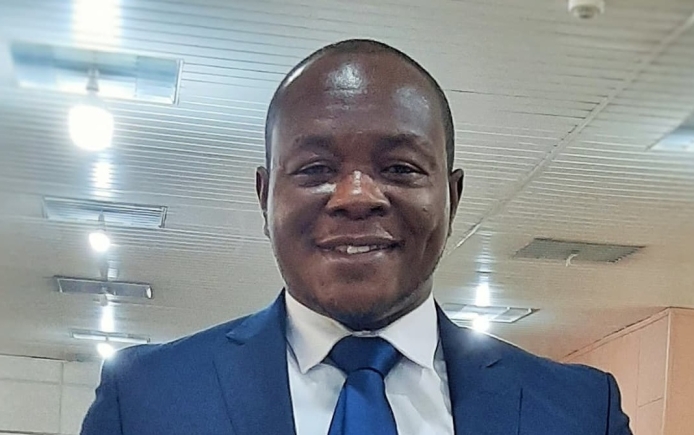
The writer is the Night Editor of the Daily Graphic
Email:
